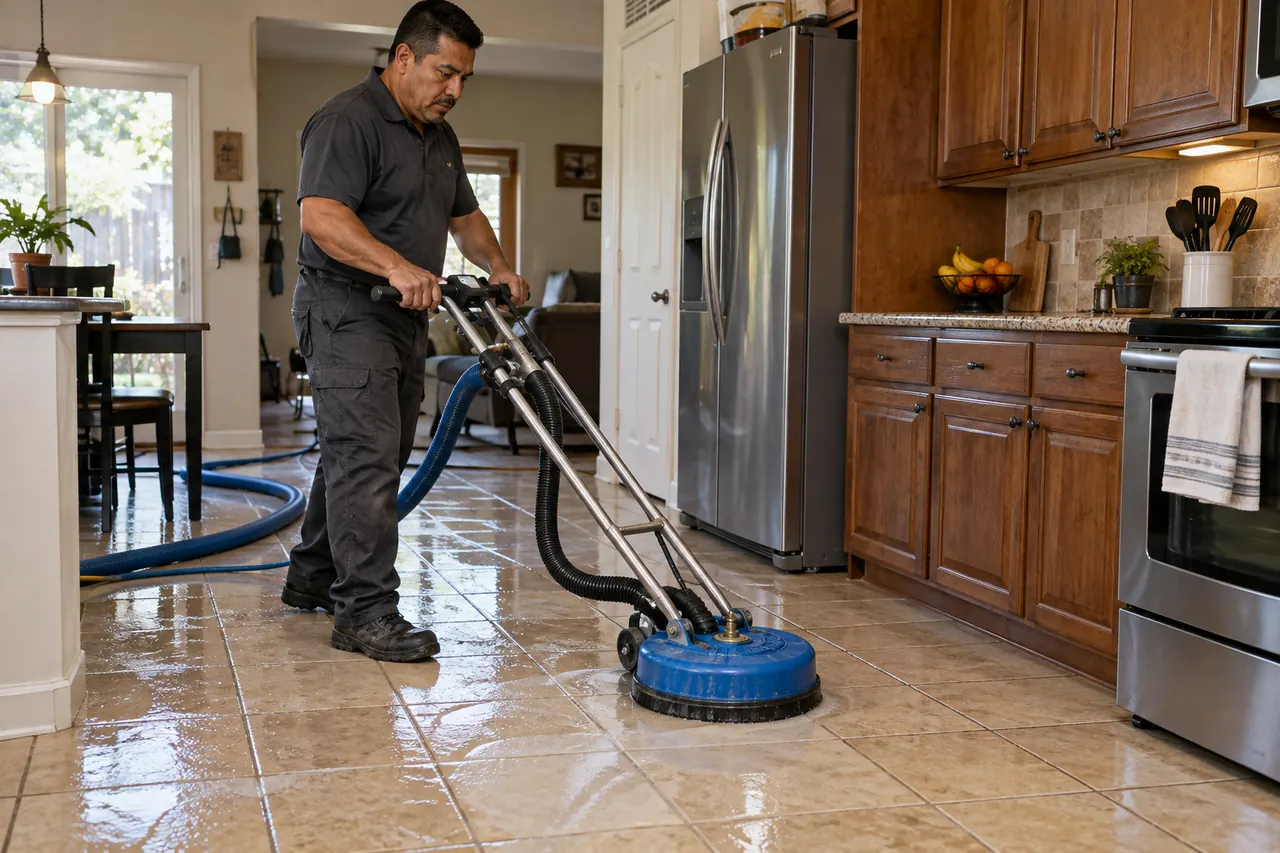

Apartment tile restoration removes embedded grime, revives dull floors, and protects grout so your South Florida rental or condo looks clean and cared for.
A floor can be freshly swept and still make an apartment feel tired. The usual cause is not loose dirt. It is the buildup settled into grout lines, the film left by mopping products, and the dulling that develops after months or years of daily traffic. Apartment tile restoration addresses those deeper problems, helping a rental, condo, or managed unit look cleaner without the cost and disruption of replacement.
For busy households and property managers in South Florida, tile takes a lot of wear. Sand and moisture come in from outside, kitchen spills leave residue, pets track in dirt, and high humidity can make neglected grout look darker faster. Restoring the surface is often one of the most noticeable ways to refresh a room before move-in, after a tenant moves out, or simply when the floor no longer feels clean underfoot.
What Apartment Tile Restoration Can Actually Fix
Restoration is more than a quick mop or a strong all-purpose cleaner. Professional tile and grout cleaning focuses on lifting the embedded soil that regular cleaning leaves behind. The goal is to bring back the tile's natural color and improve the appearance of grout without damaging the material.
In many apartments, the biggest change happens in the grout. Light-colored grout can turn gray, brown, or nearly black in busy areas such as entryways, bathrooms, kitchens, and around sliding doors. Grease, body oils, soap residue, and fine grit settle into its porous surface. Once that happens, even a clean tile floor can look neglected.
A proper service can also help with dull-looking ceramic or porcelain tile, hard-water marks, soap scum in tiled showers, and residue that leaves floors sticky or cloudy. If the property has natural stone such as marble, travertine, or terrazzo, the approach needs to change. Those materials may need careful polishing rather than standard tile cleaning, since acidic or abrasive products can permanently etch or scratch them.
There are limits. Deep chips, cracked tiles, missing grout, loose tile, and severe staining beneath a damaged finish may require repair or replacement. A trustworthy inspection should make that clear before work starts. Cleaning can produce a dramatic improvement, but it should not be sold as a fix for structural damage.
Why Regular Mopping Stops Working
Most apartment floors get maintained with a mop, a general cleaner, and good intentions. That routine helps with fresh messes, but it can gradually work against the floor when too much product is used or dirty water is spread from one section to another. The tile may look better while wet, then dry with haze or streaks.
Grout is the harder part. Unlike glazed tile, grout is textured and absorbent. A mop passes over the top, but it cannot consistently pull out what has settled below the surface. Scrubbing by hand can help in a small area, yet it is time-consuming and often uneven across an entire apartment.
Professional cleaning uses the right combination of pre-treatment, agitation, and extraction for the condition of the floor. The key difference is extraction. Instead of pushing loosened grime around, the process removes it from the tile and grout. This is why a restored floor often looks brighter even when the tile itself was never technically dirty-looking.
When to Schedule Tile and Grout Cleaning
There is no fixed schedule that fits every apartment. A quiet one-bedroom with careful occupants may only need a professional cleaning occasionally. A family home with kids, pets, frequent guests, or a beachside location may benefit from service more often.
For landlords and property managers, the best time is usually between tenants. Clean tile and grout photographs better, makes a unit feel cared for at a showing, and can prevent old buildup from becoming harder to remove. It is also a practical time to identify cracked grout, shower mildew, or worn caulk that needs attention before a new resident arrives.
Homeowners and renters often call when they notice that the floor never looks clean, bare feet feel grit after mopping, grout has changed color, or the bathroom looks worn even after a full clean. Those are good signs that surface-level cleaning is no longer enough.
If you are renting, check your lease before approving any work beyond cleaning. Professional restoration is generally a sensible maintenance service, but repairs, color sealing, or grout recoloring may require property owner approval. Taking a few clear before-and-after photos can also be helpful when documenting the condition of a unit.
The Restoration Process Should Be Straightforward
A good tile restoration visit starts with looking closely at the floor. The technician should identify the type of tile, test the condition of the grout, and note stains, buildup, chipped areas, or natural-stone surfaces that need special care. This step matters because porcelain, ceramic, marble, and terrazzo do not all respond to the same methods.
Next, the floor is treated to break down the soil and residue. Agitation helps reach the texture of the grout lines and any low spots in tile. Then the suspended dirt is extracted, leaving the surface cleaner rather than coated with leftover cleaning solution.
Once the floor is dry, grout sealing may be recommended. A sealer does not make grout indestructible, and it will not hide existing damage. What it can do is reduce how quickly liquids and dirt absorb into porous grout, making regular upkeep easier and helping the restored appearance last longer.
For a small apartment bathroom, the work may be fairly quick. Larger open-concept living areas, heavily soiled kitchens, and multiple bathrooms require more time. The condition of the floor matters more than the square footage alone. Asking for a photo-based estimate is often a convenient way to get an initial idea of the scope before scheduling an inspection.
Choosing the Right Service for Your Floor
Price matters, especially when you are preparing a rental or working within a turnover budget. But the lowest quote is not always the most economical choice if it covers only a light surface cleaning. Ask what is included, whether grout cleaning is part of the service, and whether the provider uses extraction rather than simply scrubbing and mopping.
It also helps to ask how they handle delicate surfaces. Marble and terrazzo need experienced care, while textured tile may require extra attention to remove buildup from grooves. A company should explain the process in plain language and be honest about what results are realistic.
First Choice Floor Care serves South Florida homes, apartments, and commercial spaces with a practical approach: inspect the surface, clean it thoroughly, and recommend protection when it makes sense. Clear expectations and respectful work inside an occupied home matter just as much as the visible result.
Keeping Restored Tile Looking Better Longer
After professional service, simple habits make a real difference. Sweep or vacuum dry debris before it gets ground into the floor. Wipe spills promptly, especially cooking oils, coffee, and pet accidents. Use a neutral cleaner in the recommended amount rather than adding extra product, which can create a dull film.
In bathrooms, drying wet areas and improving ventilation can slow soap scum and moisture-related discoloration. Place mats at entry points to catch sand and grit, but wash the mats regularly so they do not become another source of dirt. Avoid harsh acidic cleaners on natural stone and abrasive powders on finished surfaces.
A restored floor should make the apartment easier to live in, not add another complicated chore to your routine. When grout is clean, tile has its proper finish, and the room feels fresh again, the whole space gets a lift that residents and future tenants notice right away.
Unsure what your surface needs?
A clear assessment is more useful than guessing. Tell us what you’re seeing and we’ll discuss the next step.
Request an Estimate