Learn how carpet cleaning reduces dust, dander, and pollen, and find the best carpet cleaning for allergens in busy South Florida homes for local families
A carpet can look clean from across the room and still hold onto the things that make a home feel less comfortable: dust, pet dander, pollen, skin flakes, and fine particles carried in from outside. For families in Fort Lauderdale and across South Florida, where windows stay open, pets spend time indoors, and humidity is part of daily life, finding the best carpet cleaning for allergens is about more than removing visible spots. It is about making the rooms where people sit, sleep, play, and work feel fresher.
Carpet fibers act like a filter. They trap particles instead of allowing them to stay airborne all day. That can be helpful, but only if those particles are removed regularly. Once foot traffic, pets, and everyday use work debris deeper into the pile, a quick vacuum is no longer enough.
What Makes Carpet a Problem for Allergy Sufferers?
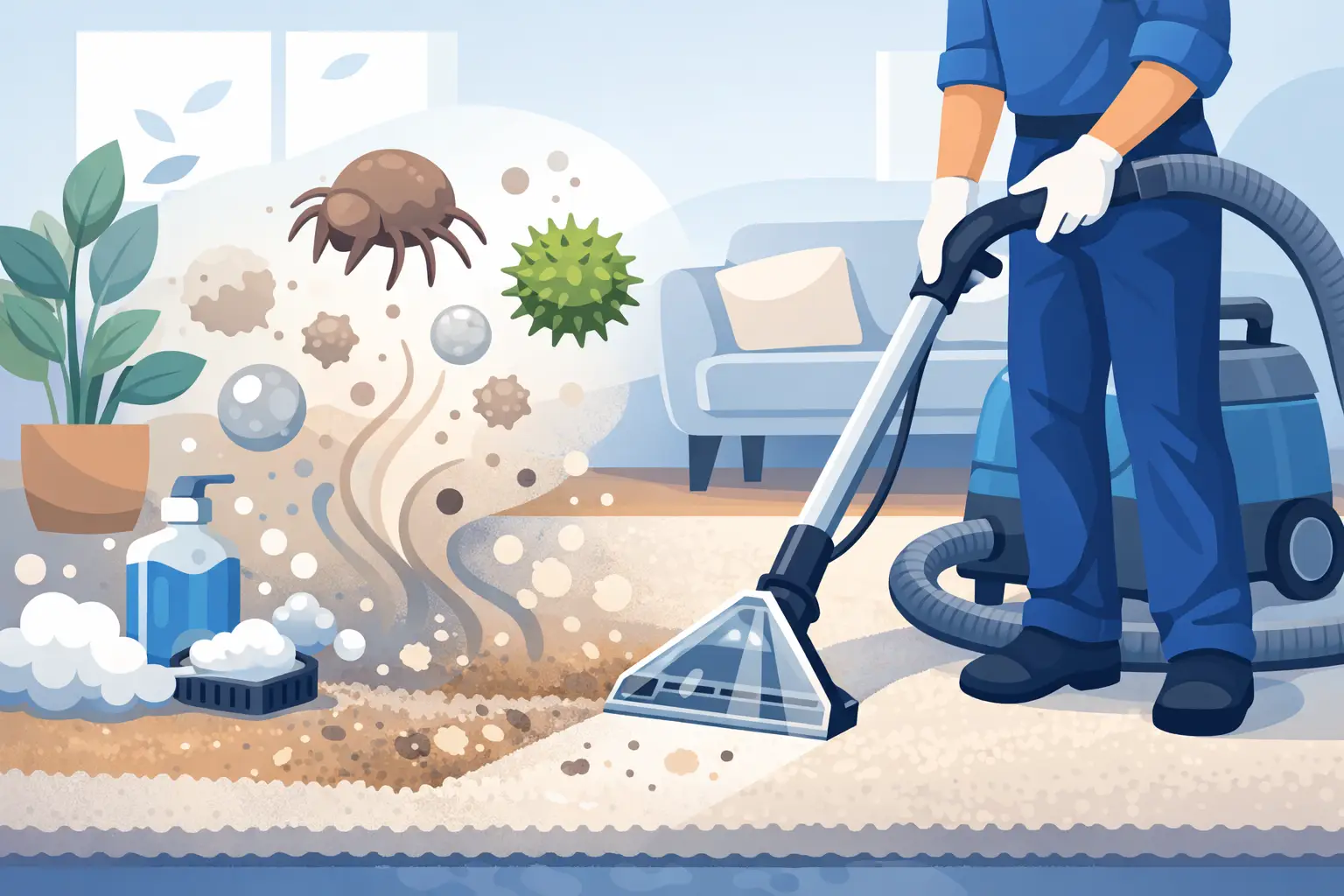
Allergens are not always obvious. A carpet may not smell musty or look dirty, yet its backing and fibers can hold dust mites, pet dander, pollen, and outdoor soil. When someone walks across the carpet, sits down, or vacuums with weak suction, some of that material can become airborne again.
South Florida homes have a few extra challenges. Humid conditions can slow drying when carpet is cleaned with too much water. Damp carpet can also create an environment where mildew odors and microbial growth become more likely, especially in rooms with limited airflow. Homes near the beach may also collect fine sand and outdoor particles that work down into the carpet over time.
Carpet cleaning cannot cure allergies or replace medical advice. But removing the buildup that settles in carpet can reduce one common source of indoor irritation and make routine home care more effective.
Best Carpet Cleaning for Allergens: The Method Matters
The best method depends on the carpet, the amount of buildup, the presence of pets, and how quickly the area needs to be back in use. The goal is not simply to make the surface look brighter. It is to lift embedded soil and residue while avoiding excess moisture and harsh fragrances that may bother sensitive people.
Hot Water Extraction for Deep Removal
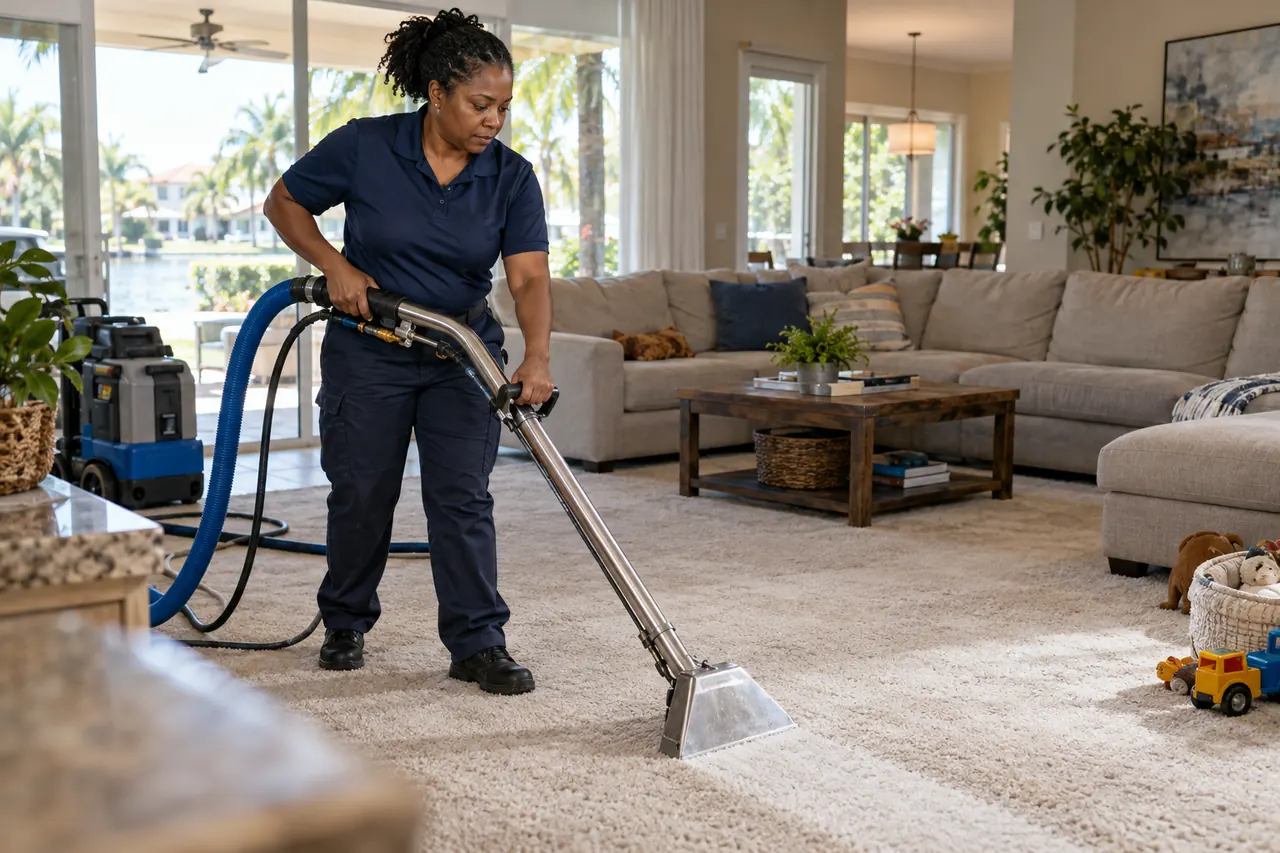
Professional hot water extraction, often called steam cleaning, is usually the strongest choice for carpets with established dirt, dander, and traffic buildup. A trained technician applies a cleaning solution as needed, agitates the fibers where appropriate, and uses powerful extraction to pull loosened debris and moisture out of the carpet.
The extraction step is what separates a deep cleaning from simply wetting the carpet. When done properly, it removes a significant amount of the material trapped below the surface and helps the carpet dry more efficiently. For busy family rooms, bedrooms, rental turnovers, and commercial carpeted areas, this is often the most practical choice.
Still, more water is not better. Over-wetting can leave a carpet damp for too long, particularly in humid weather. A professional should assess the carpet type, condition, and ventilation before choosing the process.
Low-Moisture Cleaning for Faster Drying
Low-moisture methods can be a good fit for offices, hotel areas, lightly soiled carpet, and households that need faster turnaround. These systems use less water and can leave carpet dry sooner. They are useful for maintenance between deep cleanings, especially where daily foot traffic makes closing off a room difficult.
The trade-off is that low-moisture cleaning may not remove the same level of heavy, deeply packed soil as hot water extraction. If there are pet accidents, sticky spills, visible dark traffic lanes, or years of buildup, it may be better as part of an ongoing maintenance plan than as the only cleaning method.
Dry Compound Cleaning Has a Place, But Not Every Place
Dry compound methods use absorbent material that is worked into the carpet and then vacuumed out. They can be convenient because the carpet is ready to use quickly. However, results depend heavily on the equipment, the vacuuming process, and the level of soil present.
For a lightly used room, dry cleaning can be a reasonable option. For allergy concerns tied to pets, heavy foot traffic, or visible buildup, a deeper extraction service is generally the more thorough answer.
Why Vacuuming Alone Falls Short
Regular vacuuming remains one of the best habits for controlling carpet allergens, especially with a vacuum that has strong suction and a HEPA filter. But even a good vacuum mainly addresses dry particles near the surface. It cannot fully remove oily residue, tracked-in grime, and dander that has bonded to fibers.
Think of vacuuming as routine maintenance and professional cleaning as the reset. In homes with pets, children, allergies, or a lot of visitors, vacuuming two or three times a week may be appropriate. High-traffic entryways and living spaces may need attention even more often. The right schedule depends on how the home is used, not just what the calendar says.
A Cleaner Process Starts With Inspection
No two carpets need exactly the same treatment. Before cleaning begins, the carpet should be inspected for fiber type, stains, traffic wear, pet concerns, and areas that may have been over-wet in the past. Wool, delicate fibers, older carpet, and heavily stained areas may need a different approach than standard synthetic carpet.
A careful process also includes pre-treatment where needed and extra attention to the places allergens collect most: edges, under furniture, near pet beds, hallways, and entry points. If an odor is present, it is worth identifying whether it is from surface dirt, an old spill, or a deeper pet-related issue. Covering the smell with fragrance does not solve the cause.
At First Choice Floor Care, the focus is on practical cleaning that improves what you can see and what you live with every day. Clear communication about the carpet’s condition, realistic expectations, and proper drying guidance matter just as much as the cleaning equipment itself.
How to Keep Allergens From Building Back Up
After a professional cleaning, a few simple habits help preserve the results. Use quality entry mats and clean them regularly so outside debris stays near the door. Remove shoes indoors when practical, particularly after beach days, yard work, or rainy weather. Keep pet bedding clean, and vacuum the surrounding carpet often.
Controlling indoor humidity also makes a difference in South Florida. Air conditioning, ventilation, and a properly sized dehumidifier can help rooms dry after cleaning and make the home less welcoming to dust mites. Change HVAC filters on schedule and consider using a high-efficiency filter that is compatible with your system.
If someone in the home is very sensitive to allergens, it can also help to reduce clutter on carpeted floors. Large piles of pillows, fabric storage bins, and rarely moved furniture can create places where dust settles undisturbed. This does not mean a home must look bare. It means the cleaning routine should match the way the room is actually lived in.
When It Is Time to Schedule a Deep Cleaning
Visible stains are not the only reason to call for professional carpet care. Persistent odor, increased sneezing in carpeted rooms, dull traffic paths, pet hair that seems impossible to remove, and carpet that feels gritty after vacuuming are all signs that deeper cleaning may be due.
For many homes, professional carpet cleaning every 6 to 12 months is a sensible range. Households with multiple pets, young children, frequent guests, or allergy concerns may benefit from more frequent service. A quiet guest room may need less attention than a busy living room, so there is no reason to pay for a one-size-fits-all schedule.
A cleaner carpet will not stop pollen from coming through the door or keep a shedding pet from being a pet. What it can do is remove the accumulation that makes everyday allergens harder to manage. When the carpet feels clean underfoot, dries properly, and no longer holds onto old dirt and odor, the whole room becomes easier to enjoy.
Unsure what your surface needs?
A clear assessment is more useful than guessing. Tell us what you’re seeing and we’ll discuss the next step.
Request an Estimate