Learn the best tile cleaning methods indoors, from routine mopping to deep grout care, so your floors look fresher and last longer at home every day.
A clean tile floor can still look tired when the grout is dark, the finish is hazy, or kitchen residue has built up in the corners. The best tile cleaning methods indoors do more than make a floor smell fresh for an afternoon. They remove the soil that gets pressed into textured tile and porous grout while protecting the surface underneath.
For homes, rentals, lobbies, and small businesses in South Florida, the right approach depends on the tile itself, how much traffic it sees, and what has been used on it before. A quick mop is useful for upkeep, but it cannot always lift old grime or restore a dull-looking floor. Here is how to clean indoor tile carefully and get results that last.
Start With the Tile, Not the Cleaner
Ceramic and porcelain tile are durable, but that does not mean every cleaner is safe or every floor needs the same treatment. Natural stone, including marble, travertine, limestone, and some terrazzo surfaces, needs more care. Acidic products can etch or dull stone, leaving marks that cleaning alone will not remove.
Check whether the surface is glazed, unglazed, polished, textured, or natural stone before choosing a product. When the material is unknown, begin with the mildest option: warm water and a pH-neutral cleaner made for hard floors. Test any new cleaner in a hidden spot first, especially on older tile, colored grout, or polished stone.
This small step prevents a common mistake: using a powerful bathroom cleaner to solve a grout problem, then discovering the surrounding surface has lost its shine.
The Best Tile Cleaning Methods Indoors for Routine Care
Routine cleaning keeps everyday dust, sand, pet hair, and cooking residue from turning into a stubborn film. In Fort Lauderdale homes, fine grit tracked in from patios, entryways, and pool areas can act like sandpaper under shoes. Sweeping or vacuuming before mopping matters more than most people realize.
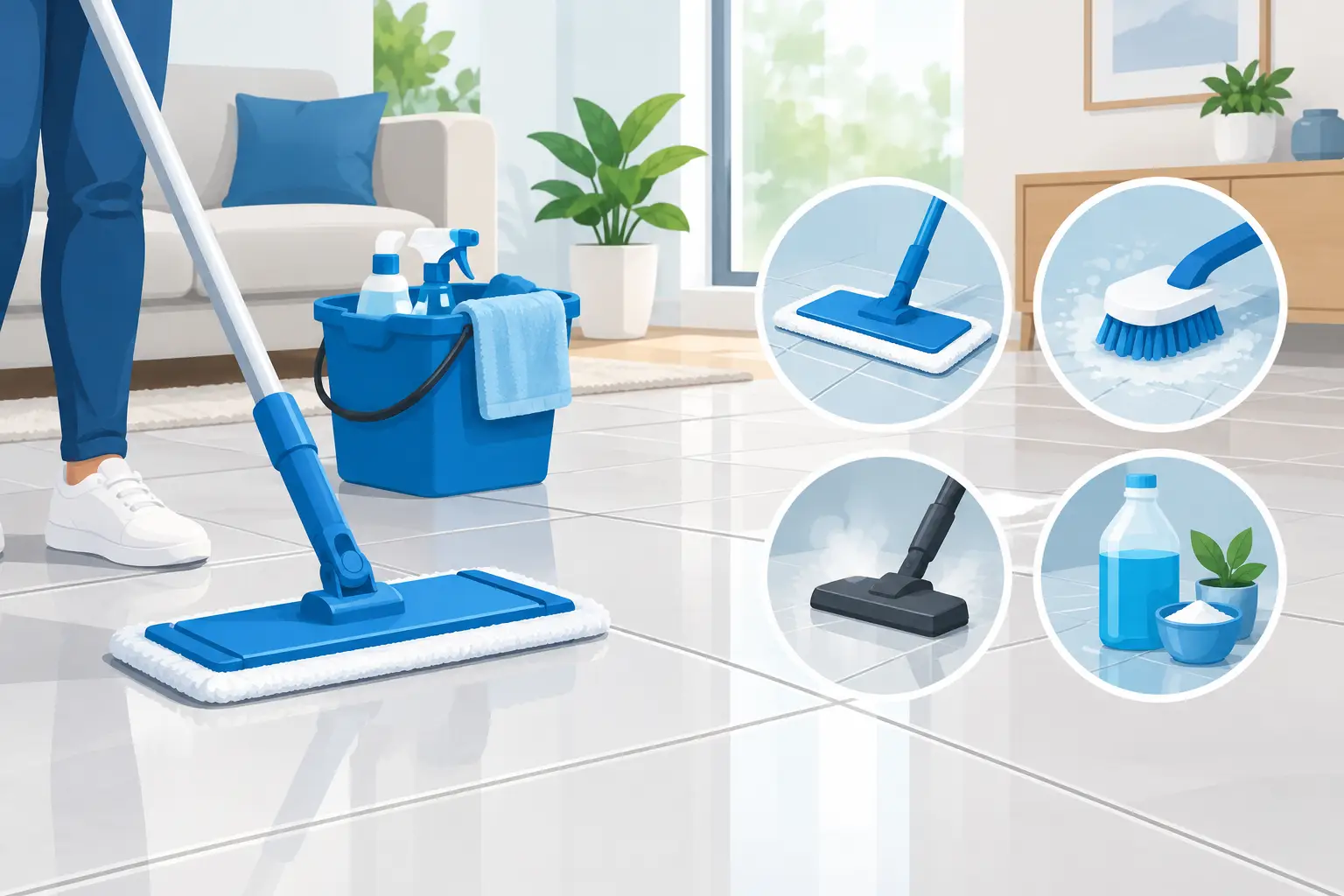
Use a soft broom, dry microfiber mop, or vacuum set for hard floors. Skip stiff brush attachments that may scratch glossy tile or pull at loose grout. Once loose debris is gone, mop with warm water and a small amount of neutral tile cleaner. A microfiber mop is usually a better choice than a heavily soaked string mop because it picks up soil instead of moving dirty water from one area to another.
Change the water when it turns gray. Reusing cloudy mop water is one reason a floor can look streaky or dull after cleaning. For a busy kitchen or family room, clean high-traffic areas once a week and spot-clean spills as they happen. Bathrooms may need more frequent attention because soap residue and humidity can create buildup along the edges of the floor.
After mopping, allow the floor to air-dry or buff it with a clean, dry microfiber pad. Buffing is especially helpful on glossy porcelain and ceramic tile because it removes leftover moisture before it dries into a haze.
Treat Grout as Its Own Surface
Tile is often easy to wipe clean. Grout is different. Most grout is more porous than tile, so it holds onto spills, oils, dirt, and moisture. Dark grout lines do not always mean the grout is permanently stained, but they do need more than a quick pass with a mop.
For light to moderate grime, apply a pH-neutral grout cleaner, let it sit for the label-recommended time, and scrub with a nylon grout brush. Work in small sections so the cleaner does not dry out before you can rinse it. Use steady pressure, not aggressive scraping. Metal brushes and sharp tools can damage grout joints and make them more likely to collect dirt later.
Rinse thoroughly with clean water and remove the dirty solution with towels, a wet vacuum, or a mop that has been rinsed often. Leaving cleaner in grout can attract more soil, especially in kitchens and entryways.
Baking soda paste is sometimes useful for small, isolated spots on ceramic or porcelain floors, but it is not a complete deep-cleaning plan. It can leave residue if it is not rinsed well, and it should not be used as a regular abrasive scrub on delicate stone.
Match the Method to the Mess
Different buildup calls for a different cleaning method. Cooking grease in a kitchen needs a degreasing cleaner that is safe for tile and grout. Soap scum around a shower needs a bathroom cleaner appropriate for the material. Mildew-prone areas need moisture control after cleaning, not just stronger chemicals.
Avoid mixing cleaning products. Combining bleach with ammonia or acidic cleaners can create dangerous fumes. Bleach can also discolor grout, weaken some sealers, and leave uneven light spots if used carelessly. If disinfection is needed, choose a product labeled for the purpose and follow its directions exactly.
For stubborn residue on ceramic or porcelain tile, a tile-safe alkaline cleaner may be more effective than adding extra force with a brush. Letting the product dwell for the recommended amount of time gives it a chance to loosen embedded soil. The trade-off is that stronger products must be rinsed completely, and they are not automatically safe for marble, travertine, or other natural stone.
Be Extra Careful With Marble, Terrazzo, and Other Stone
Natural stone floors can make a room feel bright and polished, but they are not cleaned like ordinary ceramic tile. Vinegar, lemon, and acidic bathroom products can etch marble and limestone. The damage often appears as dull spots or cloudy patches, especially when light hits the floor from a window.
For stone tile, use a stone-safe, pH-neutral cleaner and a soft microfiber mop. Clean spills quickly, particularly coffee, wine, juice, and bathroom products. Do not use harsh powders, scouring pads, or abrasive grout tools near the stone.
If a marble or terrazzo floor looks worn even after cleaning, the issue may be surface damage rather than dirt. Professional polishing can refine the surface and bring back a more even appearance. Cleaning removes soil; polishing addresses dullness, light etching, and wear in the finish. Knowing the difference can save you from repeatedly using stronger cleaners on a problem that needs restoration instead.
When Steam Cleaning Helps and When It Does Not
Steam can be useful on sealed ceramic and porcelain tile when used correctly. It can loosen grime in textured areas and reduce the amount of chemical cleaner needed. However, steam is not a universal answer for every indoor tile floor.
High heat and moisture may not be suitable for damaged grout, loose tile, unsealed grout, some vinyl-adjacent installations, or natural stone with existing cracks or weak sealers. Steam can also push moisture into vulnerable joints if it is used too slowly or too often. If the floor has cracked grout, hollow-sounding tile, or loose edges, solve those repair issues before using steam.
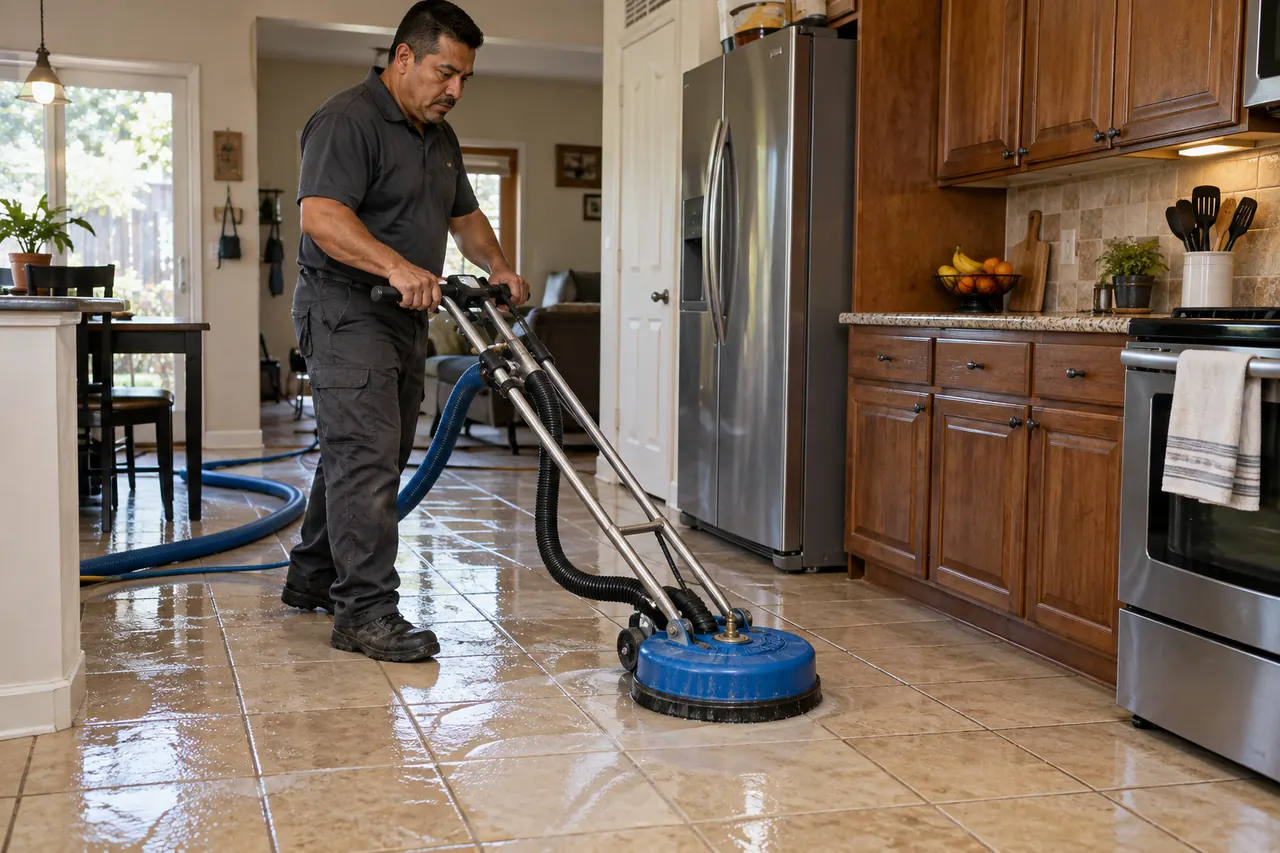
For deep cleaning large areas, professional equipment often provides more consistent results because it combines the right cleaning solution, controlled agitation, and powerful extraction. The extraction step is key. It removes the dirty water rather than allowing it to settle back into the grout.
Seal Clean Grout for Easier Maintenance
Once grout is thoroughly cleaned and completely dry, sealing can make regular upkeep easier. A quality penetrating grout sealer helps slow down absorption from spills, oils, and everyday moisture. It does not make grout stain-proof, and it does not replace cleaning, but it gives you more time to wipe up messes before they settle in.
Not every tile or grout installation needs the same sealer. Some dense porcelain tile does not need to be sealed, while natural stone and cement-based grout often benefit from the right protective treatment. A professional inspection can help determine whether sealing is appropriate and whether old sealer or residue needs to be addressed first.
Know When a Floor Needs Professional Cleaning
If the grout stays dark after careful cleaning, the tile feels sticky after mopping, or the floor looks dull no matter what product you use, it may be time for a deeper service. This is common in rental turnovers, homes with pets and children, commercial entryways, and bathrooms that have seen years of humidity and product buildup.
Professional tile and grout cleaning is designed for this level of soil. It can remove embedded grime from hard-to-reach joints, improve the look of heavily used floors, and prepare grout for optional sealing. For marble and terrazzo, professional polishing may be the better path when the problem is wear in the finish rather than surface dirt.
First Choice Floor Care helps South Florida homeowners and businesses assess the surface first, then recommend cleaning, restoration, or protection based on what the floor actually needs. That practical approach helps avoid paying for the wrong service or risking damage with an unsuitable cleaner.
A cleaner floor is not only about appearance. When tile, grout, and stone are maintained with the right method, rooms feel fresher, spills are easier to manage, and expensive surfaces have a better chance of looking good for years to come.
Unsure what your surface needs?
A clear assessment is more useful than guessing. Tell us what you’re seeing and we’ll discuss the next step.
Request an Estimate