Find the best tile sealers indoors for grout, ceramic, porcelain, and natural stone. Learn what protects your floors and when professional sealing helps.
A clean tile floor can still look tired when the grout has darkened, the surface absorbs spills, or natural stone has lost its even finish. The best tile sealers indoors are not one-size-fits-all products. The right choice depends on whether you have ceramic, porcelain, marble, travertine, slate, grout, or another surface - and whether your main concern is stains, moisture, easier cleaning, or restoring a more finished appearance.
For homes and businesses in South Florida, indoor floors see plenty of daily wear from wet shoes, pets, cooking spills, guests, and regular foot traffic. A properly selected sealer can make upkeep easier and help a deep-cleaned floor stay fresh longer. But applying the wrong product can leave behind haze, change the tile's look, or create a slippery finish. That is why understanding the surface comes before choosing the bottle.
What Indoor Tile Sealer Actually Does
Tile sealer is a protective treatment that reduces how easily a porous surface absorbs water, oil, dirt, and stains. It does not make a floor maintenance-free, and it cannot repair cracked tile, loose grout, or deep etching in marble. What it can do is give you more time to wipe up a spill before it settles into the material.
The biggest benefit is usually seen in grout and natural stone. Cement-based grout is porous, even when it looks smooth. Without protection, it can absorb mop water, cooking grease, pet accidents, and tracked-in soil. That absorption is one reason grout lines often become darker than the surrounding tile.
Many ceramic and porcelain tiles are much less absorbent, especially glazed varieties. In those cases, the tile itself may not need sealer at all. The grout around it still often does. Sealing a glazed porcelain or ceramic surface unnecessarily can leave a residue that attracts dirt or makes the floor look cloudy.
The Best Tile Sealers Indoors by Surface Type
Penetrating sealers for grout and natural stone
For most indoor grout, marble, travertine, limestone, slate, and unglazed tile, a penetrating or impregnating sealer is the practical choice. Rather than creating a coating on top, it soaks into the pores and helps resist staining below the surface. The finished look usually stays close to the tile's natural appearance.
This type of sealer works well in kitchens, entryways, bathrooms, laundry rooms, and living areas with natural stone. It is especially useful when you want protection without a shiny or plastic-looking finish. For a family home, that means easier wipeups after a dropped drink or muddy paw prints, without changing the character of the floor.
Penetrating sealers are not all equal. Some are formulated mainly for water resistance, while others offer stronger protection against oil-based stains. Kitchen floors and backsplashes benefit from stain resistance that can handle cooking oils, sauces, and food splatter. Always confirm that the product is rated for your specific material and for interior use.
Water-based sealers for low-odor indoor work
Water-based penetrating sealers are often a comfortable option for occupied homes, apartments, offices, and hospitality spaces because they generally have a lower odor and simpler cleanup than solvent-based formulas. They can provide reliable protection when applied correctly to clean, dry grout or stone.
They are a sensible fit for routine residential sealing, particularly after professional tile and grout cleaning. The trade-off is that some water-based products may need more frequent reapplication than high-performance solvent-based sealers, depending on traffic, cleaning habits, and the porosity of the material.
Solvent-based sealers for demanding stain protection
Solvent-based penetrating sealers can offer deeper penetration and strong stain resistance on very porous stone and grout. They may be appropriate for a heavily used commercial lobby, restaurant-adjacent area, rental property, or stone floor that has absorbed stains in the past.
The drawback is stronger fumes and more careful application requirements. Good ventilation matters, and the area should be kept clear until the product has cured as directed. For many occupied indoor spaces, the extra protection may be worthwhile only when the floor truly needs it.
Color-enhancing sealers for dull stone
Color-enhancing sealers deepen the natural colors in some stone, slate, tumbled tile, and textured surfaces. They can bring out a richer, darker “wet look” that makes faded material appear more alive. This can be attractive on certain floors, but it is a permanent-looking change compared with a natural-look penetrating sealer.
Test it in an inconspicuous spot first. A color enhancer can make uneven areas more noticeable, darken grout, or produce a look that does not match the rest of the room. It is generally not the first choice for polished marble, glazed ceramic, or porcelain tile.
What Not to Use on Indoor Tile
Topical sealers and floor coatings create a layer over the surface. While they can add shine or alter color, they are not automatically the best choice for indoor tile floors. On the wrong surface, they can scratch, peel, yellow, trap moisture, or become slippery when wet.
Avoid putting a topical coating over glazed tile or polished porcelain unless it is specifically designed for that material and application. The tile is already nonporous, so a coating may have little to grip. Also avoid using an acidic cleaner before sealing marble, travertine, limestone, or terrazzo. Acid can etch calcium-based stone and leave dull spots that sealer will not hide.
Wax is another common shortcut that can cause trouble. It may create temporary shine, but it can collect dirt and lead to buildup that makes future cleaning more difficult. If a floor looks dull because of embedded soil, worn grout, etching, or surface scratches, cleaning and restoration should come before any protective product.
How to Tell Whether Your Tile or Grout Needs Sealing
The simplest check is a small water test. Place a few drops of water on a clean, dry, inconspicuous part of the grout or unglazed stone. If the water quickly darkens the surface or absorbs within a few minutes, that area is likely porous and may benefit from sealer.
This test does not mean every darkening spot needs immediate sealing. Grout that is already stained, moldy, cracked, or coated with soap residue needs proper cleaning and repair first. Sealer locks in what is there. Applying it over dirty grout can leave the floor looking permanently dull or discolored.
A freshly cleaned floor is the best time to assess protection. When grout lines are returned closer to their original color and the stone is free of residue, the sealer can penetrate evenly and deliver a cleaner final result.
A Better Process Than Sealing Over Dirt
For homeowners and property managers, the goal should be more than adding a protective layer. Start with an inspection of the tile, grout, and any natural stone. Identify whether the problem is surface soil, embedded staining, hard-water residue, cracked grout, etching, or an old coating that needs to come off.
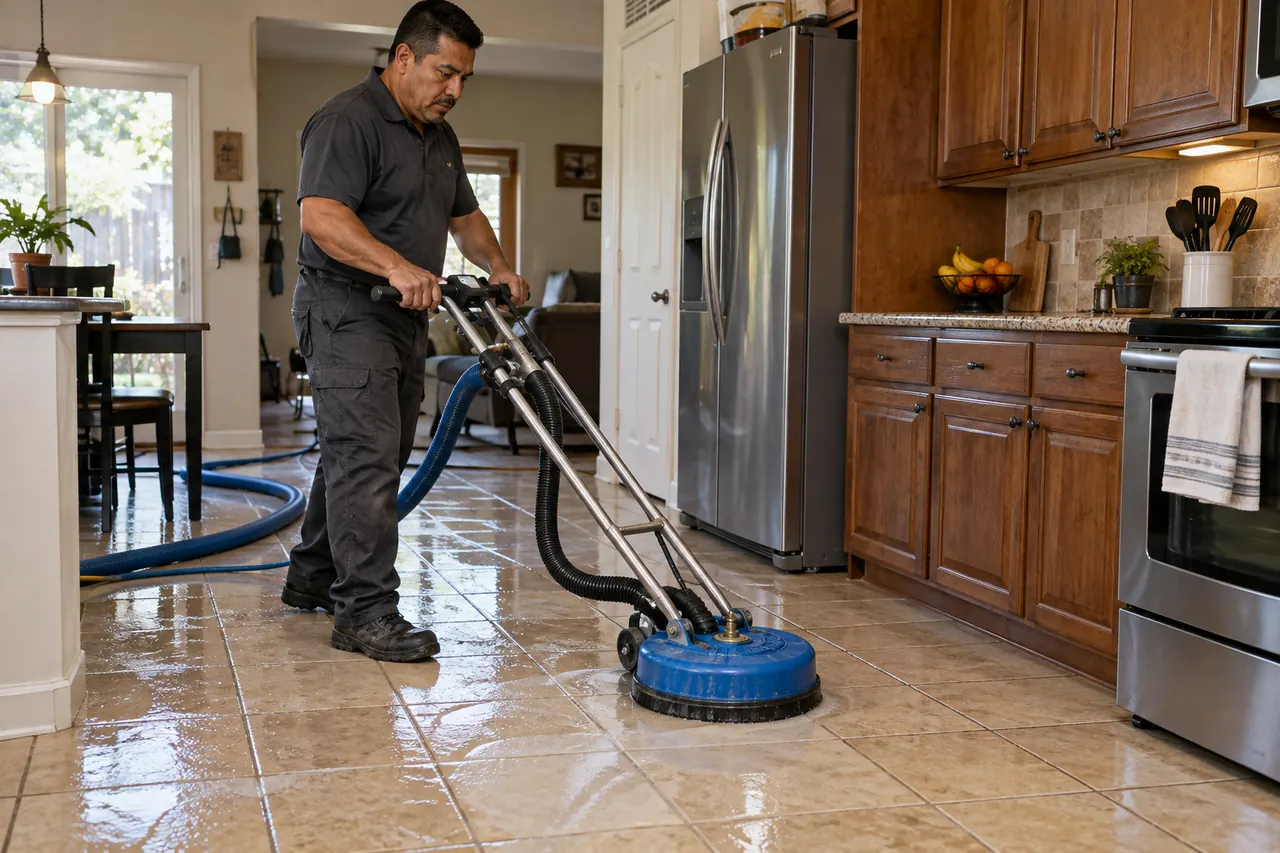
Next comes deep cleaning with methods suited to the material. High-pressure grout cleaning can lift years of soil from ceramic and porcelain installations, while natural stone requires products and techniques that will not damage its finish. Once the floor is thoroughly rinsed and allowed to dry, the right sealer can be applied evenly and buffed to prevent residue.
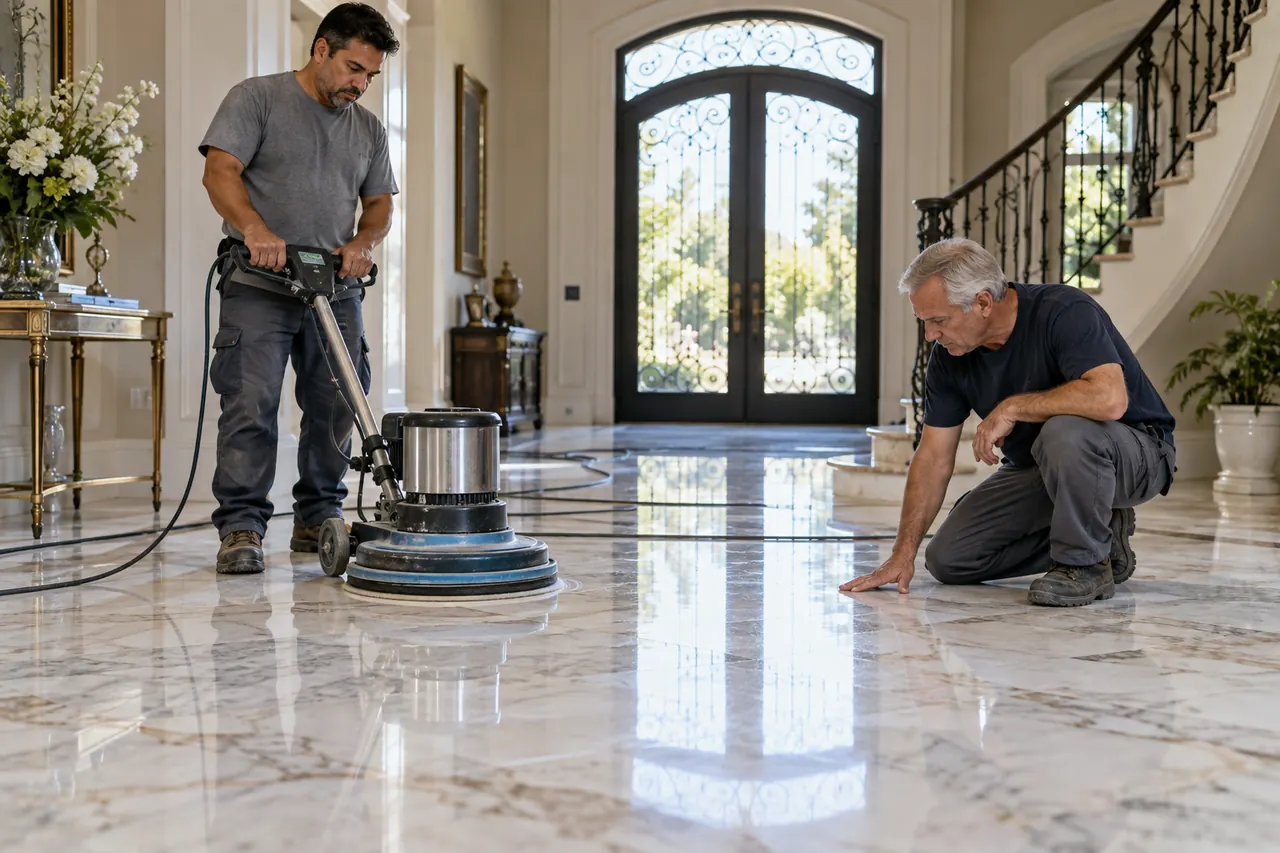
At First Choice Floor Care, sealing is treated as an optional protection step after professional cleaning or polishing, not a quick fix for a floor that has not been properly prepared. That approach helps homeowners and businesses get the visible improvement first, then protect it against the next round of everyday use.
How Long Indoor Tile Sealer Lasts
There is no single timeline. A lightly used guest bathroom may stay protected for several years, while a busy kitchen, lobby, pet-friendly home, or restaurant floor may need attention sooner. The material itself matters too. Very porous travertine and grout often need more regular maintenance than dense porcelain.
Cleaning habits also affect performance. Harsh chemicals, bleach-heavy products, acidic cleaners, and abrasive scrubbing can shorten the life of a sealer or damage the surface beneath it. A pH-neutral cleaner and regular dry mopping are usually better for sealed stone and grout. Wipe spills promptly, especially coffee, wine, oil, tomato sauce, and pet accidents.
When water no longer beads or darkens the grout quickly again, it is time to reevaluate. That does not always mean the entire floor needs to be resealed immediately. High-traffic paths may wear differently from edges, closets, or low-use rooms.
The best protection is the one matched to your tile, applied to a clean and dry surface, and maintained with realistic habits. If your grout is already dark, your stone looks dull, or you are unsure what was used on the floor before, start with a professional assessment. A careful cleaning and the right sealer can make a heavily used room feel cleaner, brighter, and much easier to enjoy again.
Unsure what your surface needs?
A clear assessment is more useful than guessing. Tell us what you’re seeing and we’ll discuss the next step.
Request an Estimate