Can marble etch? Learn what causes dull marks on marble, how etching differs from stains, and when professional polishing can restore a clean, even shine.
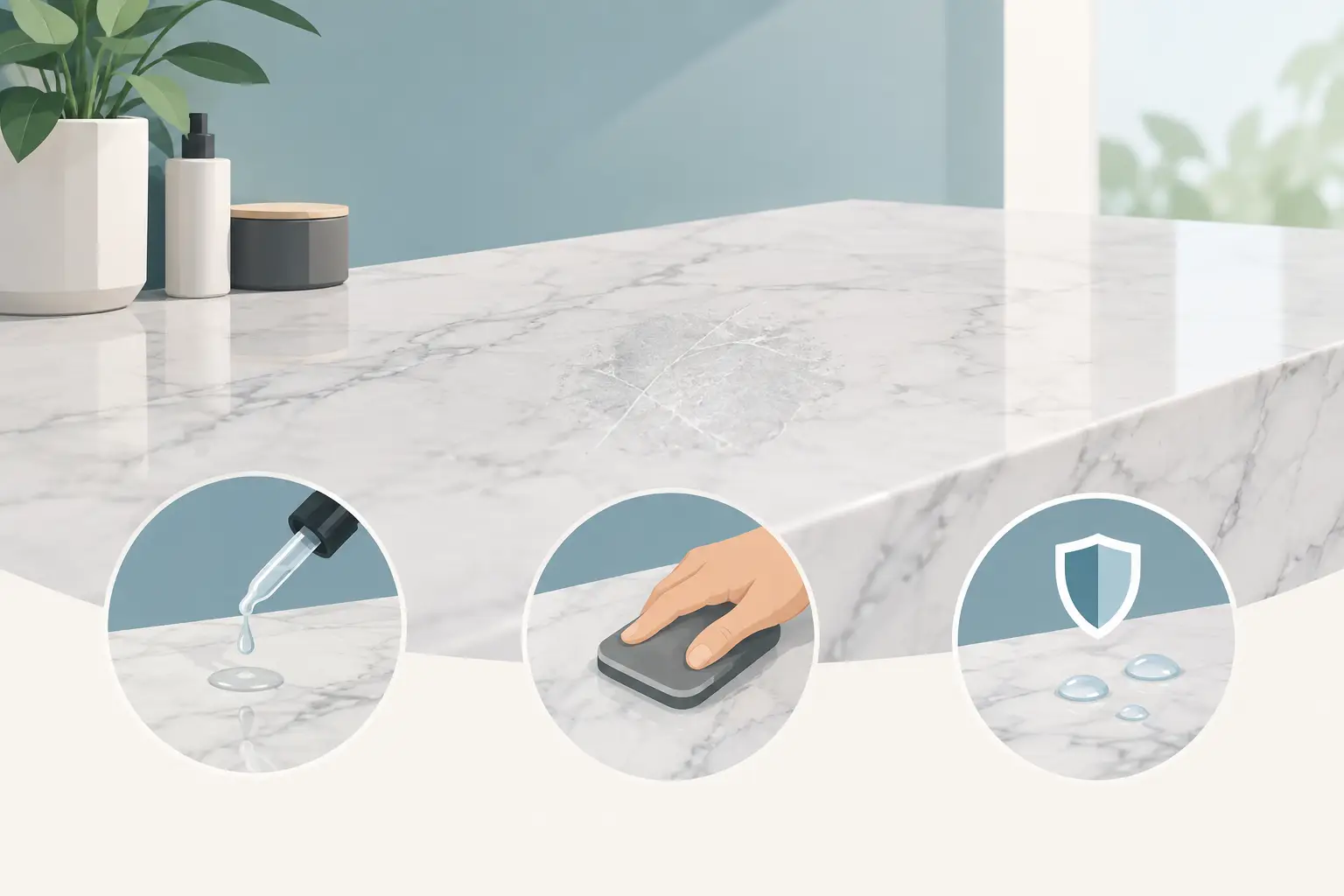
A beautiful marble floor or countertop can look dull overnight after a small spill, even when it was cleaned right away. So, can marble etch? Yes. Marble can etch when acidic foods, drinks, or cleaners react with the stone’s surface. The result is usually a lighter, cloudy, or rough-looking spot that changes how the marble reflects light.
For homeowners, property managers, and businesses, this can be frustrating because the mark may look like a stain but will not respond to normal stain removal. The good news is that most etched marble can be improved, and in many cases restored, with the right polishing process.
What Marble Etching Actually Is
Marble is a natural stone made largely of calcium carbonate. That gives it the elegant veining and soft glow people love, but it also makes it sensitive to acid. When an acidic substance sits on the surface, it can react with the polished finish and leave behind a dull mark. This is called etching.
Etching is not dirt sitting on top of the stone. It is physical damage to the uppermost layer of the finish. On polished marble, an etched area often appears lighter than the surrounding surface because it no longer reflects light evenly. On honed marble, which has a softer matte finish, etching may show up as a darker or lighter patch, a faint ring, or an area that feels slightly different under your hand.
A single lemon wedge on a kitchen island, a splash of orange juice at breakfast, or a drip of bathroom cleaner can be enough to create an etch mark. South Florida homes and hospitality spaces often see this problem around wet bars, vanities, dining areas, lobby floors, and pool-adjacent spaces where drinks, sunscreen, and cleaning products are part of daily use.
Can Marble Etch From Everyday Products?
Yes. Many common household and commercial products can etch marble. The strongest culprits are acidic, but harsh or abrasive cleaners can also take away the stone’s shine over time.
Common causes include:
- Citrus juice, wine, soda, vinegar, tomato sauce, and coffee
- Bathroom cleaners, toilet bowl products, rust removers, and grout cleaners
- Vinegar-based floor cleaners and homemade cleaning mixtures
- Certain soaps, cosmetics, perfumes, and hair products
- Abrasive powders, scouring pads, and rough cleaning tools
Vinegar is a frequent problem because it is often recommended as a general natural cleaner. It may work on some surfaces, but it should not be used on marble, travertine, limestone, or other calcium-based stone. The same goes for lemon juice and many multipurpose sprays labeled for kitchens or bathrooms.
Not every spill causes the same level of damage. A quick wipe may leave little or no visible change, while a spill that sits for several minutes can leave a more noticeable mark. The stone’s finish, the type of product, and how recently it was sealed all affect the outcome.
Etching vs. Staining: Why the Difference Matters
Etching and staining are often confused, but they need different solutions. A stain happens when a substance absorbs into the pores of marble and changes its color. Oil may create a darker area, while rust or certain dyes may create a colored spot. Since the issue is below the surface, stain removal may involve a specialized poultice or professional treatment.
Etching changes the surface finish instead. It is usually more visible at certain angles or under direct lighting. If a mark looks chalky, cloudy, faded, or less shiny than the marble around it, etching is likely. If the stone feels smooth but has changed color, staining may be the issue. Sometimes both happen at once, especially after a spill of wine, juice, or a beauty product.
This distinction matters because applying more cleaner to an etched spot will not bring back the shine. In fact, the wrong product can make the area larger. Before trying a do-it-yourself fix, it helps to identify whether you are dealing with a surface etch, a stain, scratches, or a combination of wear issues.
How to Handle a Fresh Marble Etch
When a spill happens, act quickly but gently. Blot liquids with a soft, clean cloth instead of wiping aggressively across the surface. Wiping can spread the acidic liquid over a larger area. Then clean the spot with water or a pH-neutral cleaner made specifically for natural stone, and dry it fully.
Do not reach for vinegar, baking soda pastes, abrasive sponges, or standard bathroom cleaner. Baking soda is alkaline rather than acidic, but its powdery texture can still scratch or dull a polished marble finish if scrubbed on the surface. Marble responds best to simple, gentle care.
Once the stone is dry, check it in natural light and with the room lights on. A minor etch may be less obvious once moisture has evaporated. If a dull ring or cloudy patch remains, the finish has likely been affected and will need polishing rather than cleaning.
Can You Repair Etched Marble Yourself?
Very light etching on polished marble may sometimes be reduced with a marble polishing powder designed for the specific type of stone. However, this is a job where good intentions can create uneven results. A polishing product may brighten one small spot too much, leaving a shiny circle that looks different from the rest of the countertop or floor.
DIY repair is most reasonable for a tiny, isolated etch in an inconspicuous location, provided you follow the product instructions carefully and test it first. It is less suitable for large floor areas, countertops with multiple marks, honed finishes, dark marble, soft marble, or stone with cracking and deep scratches. These surfaces can require a more controlled approach.
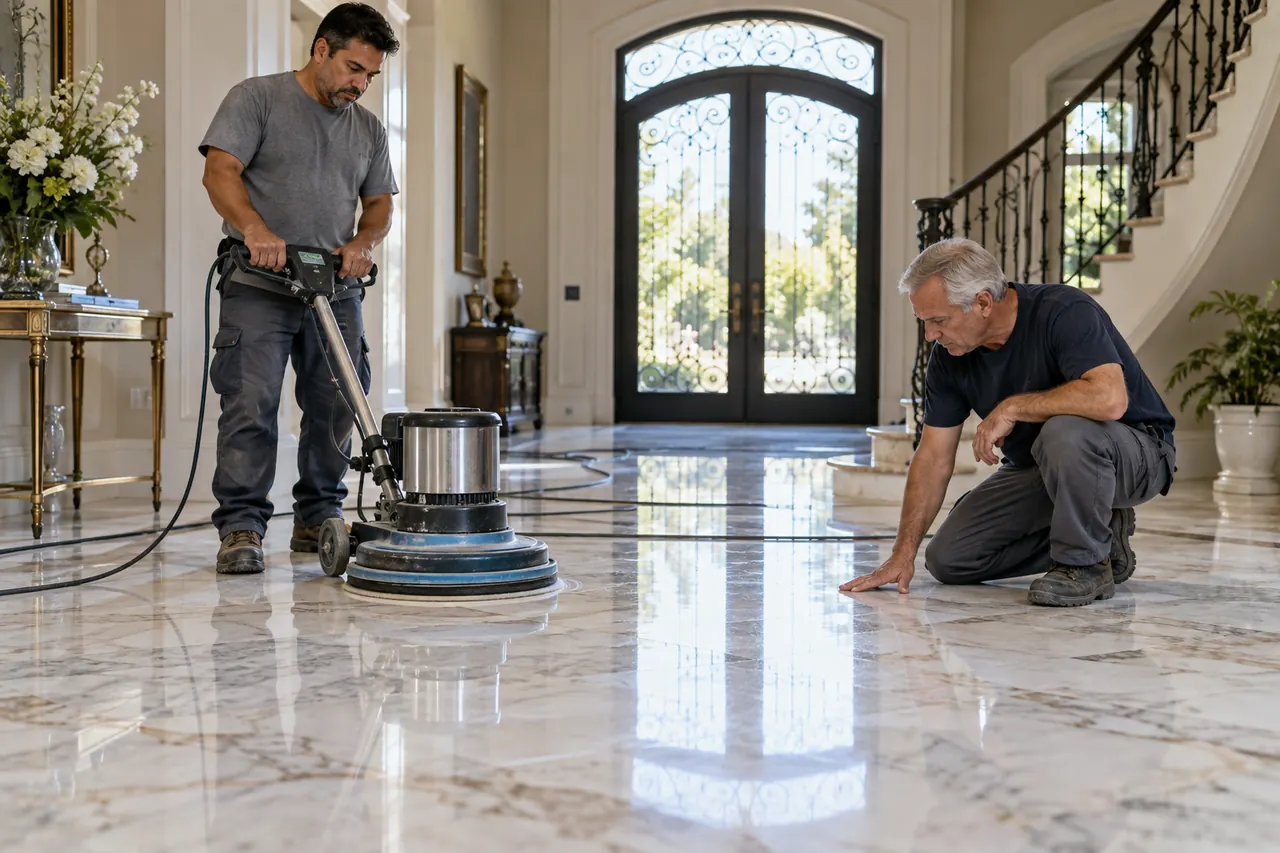
Professional marble polishing uses specialized compounds, pads, and equipment to refine the damaged surface and blend the finish into the surrounding stone. Depending on the condition, the process may involve cleaning, honing to remove surface damage, polishing for clarity, and sealing for added resistance to future staining.
At First Choice Floor Care, the focus is on inspecting the actual condition first. A floor that appears simply dull may have etching, traffic wear, residue buildup, scratches, or all three. Treating the right issue makes the difference between a temporary improvement and a surface that looks refreshed across the whole room.
Preventing Marble Etching in Busy Spaces
Marble does not have to be high-maintenance, but it does benefit from consistent habits. In kitchens, use trays under bottles and containers that may drip, especially oils, vinegar, citrus, and wine. Use coasters for drinks and wipe spills promptly. In bathrooms, keep acidic cleaners away from marble vanity tops, shower walls, and floors.
For floors, choose a pH-neutral stone cleaner and avoid products that promise to remove soap scum, rust, mineral deposits, or grout haze unless they clearly state they are safe for natural stone. Entry mats and area rugs can reduce grit that creates fine scratches, particularly in high-traffic homes, rental properties, restaurants, and lobbies.
Sealing is also helpful, but it has limits. A quality sealer helps slow down absorption, making it easier to clean up spills before they become stains. It does not create a protective shield against etching. Acid can still react with the surface of sealed marble, so regular care remains the best defense.
When Professional Marble Polishing Makes Sense
Professional service is worth considering when etched areas are widespread, the finish looks uneven, or do-it-yourself products have left visible patches. It is also a smart option before listing a home, opening a rental unit to new guests, preparing a business for inspection, or refreshing a high-traffic space that no longer looks as clean as it should.
A proper restoration can bring back a smoother, more even appearance without the expense and disruption of replacing marble. The right level of polishing depends on the stone and the damage. Sometimes a light polish is enough. Other times, deeper honing is needed to address scratches and etching before the final finish is restored.
Marble is meant to be enjoyed, not covered up or worried over every day. With quick spill response, stone-safe cleaning, and timely polishing when wear appears, your marble can stay a polished part of the space your family, guests, or customers see first.
Unsure what your surface needs?
A clear assessment is more useful than guessing. Tell us what you’re seeing and we’ll discuss the next step.
Request an Estimate