Carpet extraction versus dry cleaning affects stain removal, drying time, and cost. Learn which method fits your South Florida home or business best.
A carpet can look clean at first glance while still holding tracked-in grit, pet accidents, spilled drinks, and the residue left behind by past spot treatments. The choice between carpet extraction versus dry cleaning matters because the right method depends on what is in the carpet, how quickly the room needs to be used, and how the carpet fibers are holding up under everyday traffic.
For many Fort Lauderdale homes and businesses, hot water extraction provides the deeper reset. Dry cleaning can be the smarter option when low moisture and fast turnaround matter most. Neither method is automatically best in every situation. A proper inspection helps match the cleaning process to the carpet rather than using the same approach for every stain and every room.
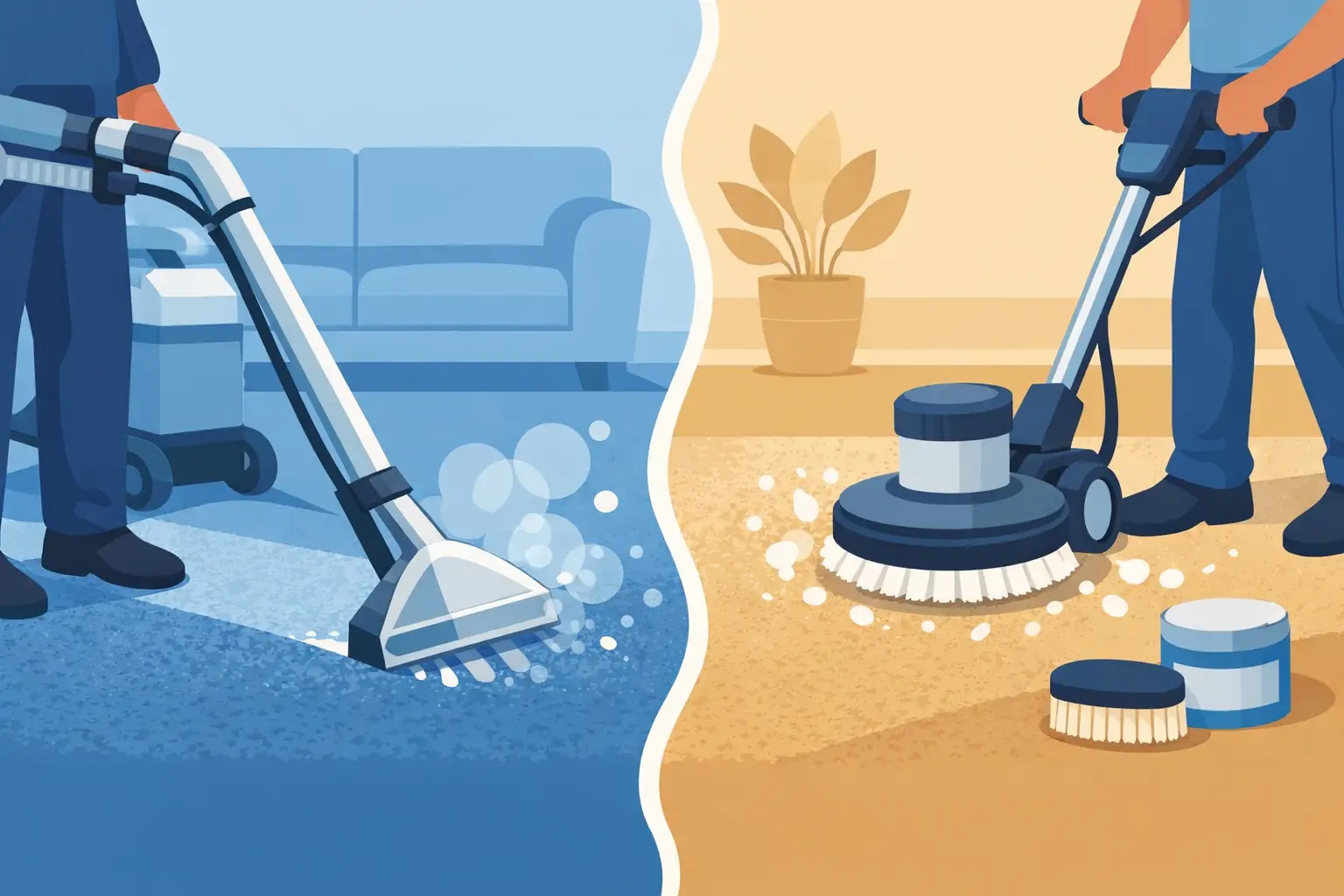
Carpet Extraction Versus Dry Cleaning: The Main Difference
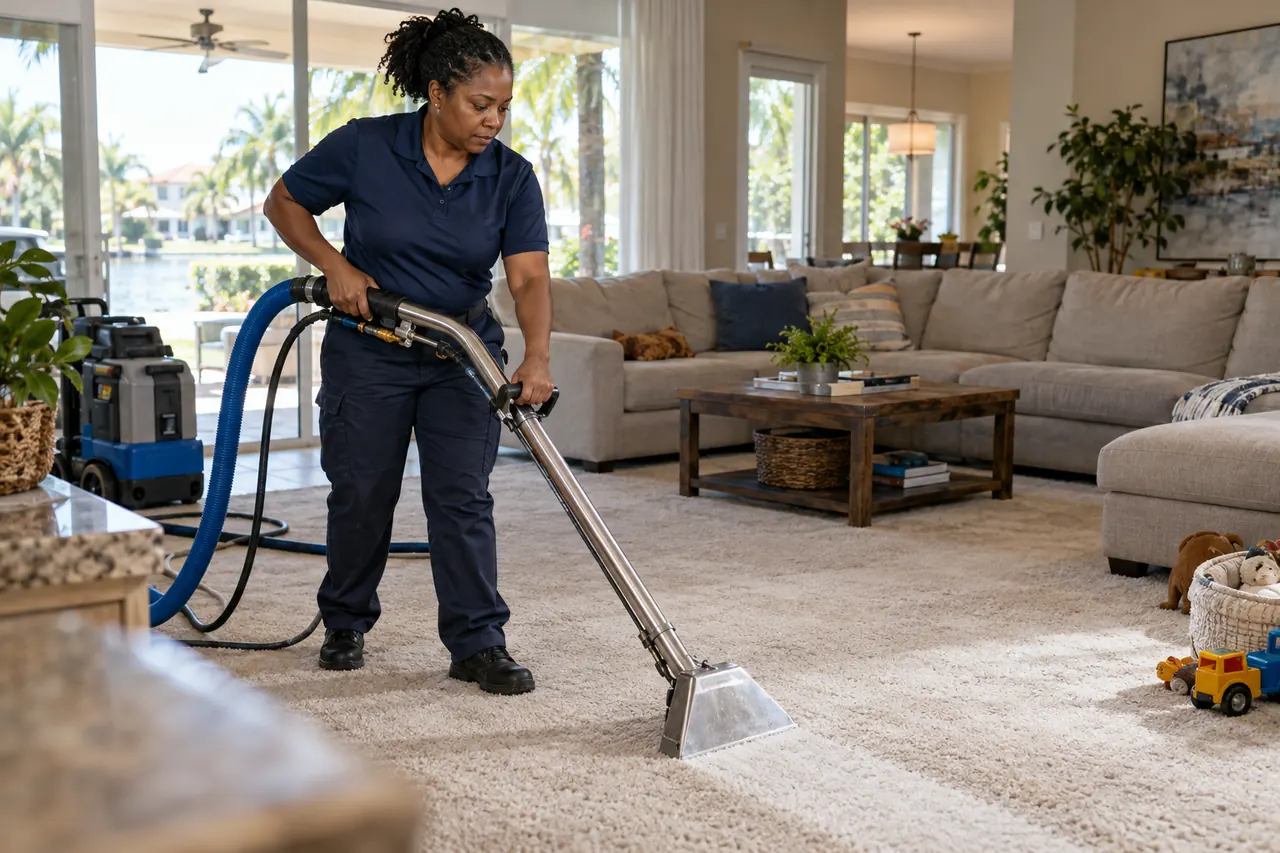
Carpet extraction uses water, cleaning solution, agitation, and powerful vacuum recovery to flush soil out of the carpet. It is often called steam cleaning, although professional equipment typically uses hot water rather than direct steam. The goal is to loosen embedded dirt and remove it from the fibers instead of simply improving the surface appearance.
Dry cleaning is a low-moisture process. Depending on the system, a technician may apply an encapsulating cleaning solution or work absorbent cleaning compounds into the carpet. The product surrounds soil so it can be vacuumed away, often with much shorter drying time than extraction.
Think of the difference this way: extraction is usually better for rinsing and deep soil removal, while dry cleaning is often chosen for maintenance cleaning and quicker access to the room. Both methods can improve a carpet's appearance, but they work differently below the surface.
How Carpet Extraction Cleans Deeply
Hot water extraction starts with an inspection of the carpet type, traffic patterns, stains, and any areas affected by pet odors. The carpet is vacuumed to remove loose debris, then a cleaning solution is applied to break down oily soil and stuck-on residue. Heavily used paths, spots, and edges may receive additional treatment.
Next, hot water is worked through the fibers and immediately extracted with strong suction. That recovery step is what makes the process effective. It removes dirty water, dissolved soil, cleaning solution, and moisture from the carpet rather than leaving them behind.
Extraction is often the stronger choice for family rooms, bedrooms, rental turnovers, restaurant seating, office walkways, and carpets that have not been professionally cleaned in a long time. It can also be useful for reducing odors caused by spills or pets, provided the source of the odor has been properly identified and treated.
Drying time varies with carpet thickness, ventilation, humidity, and how heavily soiled the carpet was. In South Florida, humidity can slow drying, so proper extraction technique and air circulation are especially important. A well-cleaned carpet should feel damp, not soaked. Fans and air conditioning can help it dry more comfortably.
When Extraction May Need Extra Care
More water is not always better. Delicate fibers, older carpet backing, loose seams, and certain natural-fiber carpets may require a modified process. Wool, for example, needs careful product selection, temperature control, and limited moisture. A qualified cleaner should test questionable dyes and inspect the carpet's condition before beginning.
Extraction also cannot guarantee that every old stain will disappear. Some spots permanently change the fiber color, while others may have traveled through the carpet and into the padding. Honest service means explaining what can be cleaned, what may improve, and what may need additional odor or spot treatment.
How Dry Carpet Cleaning Works
Dry carpet cleaning uses less water, which makes it appealing for spaces that need to reopen quickly. With encapsulation cleaning, a low-moisture solution is applied and agitated into the carpet. As it dries, it forms crystals around loosened soil. Vacuuming removes those crystals along with the dirt they captured.
Other dry-cleaning methods use absorbent compounds that are brushed through the carpet and then vacuumed up. These approaches can freshen carpet, improve traffic lanes, and handle routine surface soil without the longer drying period associated with a wet process.
For offices, retail spaces, hallways, hotel areas, and homes where people cannot stay off the carpet for long, dry cleaning can be practical. The carpet may be ready for light use much sooner, often within an hour or two depending on the method and conditions.
The trade-off is depth. Low-moisture cleaning may not flush out heavy buildup, sticky residues, or contamination as effectively as extraction. If a carpet has pet urine, deep food spills, oily traffic lanes, or several years of embedded grit, a dry method alone may leave too much behind.
Which Method Fits Your Carpet?
The condition of the carpet should lead the decision. If it feels crunchy, looks gray in the traffic lanes, has noticeable odor, or leaves dark marks around furniture and doorways, extraction is often the better starting point. It gives the carpet a more thorough rinse and can make a major visual difference in rooms that feel tired from daily use.
If the carpet is maintained regularly, only lightly soiled, and needed again quickly, dry cleaning may make more sense. It is also a useful maintenance option between deeper extraction appointments. A busy office may schedule low-moisture cleaning during operating hours and plan extraction during a quieter period when more drying time is available.
For Homes With Kids and Pets
Homes with children and pets tend to need deeper cleaning more often because soil comes from more than shoes. Crumbs, spills, pet dander, accidents, and oily residue can settle below the visible carpet surface. Extraction is usually the more useful option when odors or recurring spots are involved.
Still, the source matters. A pet stain that reached the padding may need targeted enzyme treatment, odor treatment, or inspection beyond standard carpet cleaning. Covering the smell with fragrance does not solve the problem. The goal should be to address the affected area as completely as the carpet's condition allows.
For Property Managers and Businesses
Turnover cleaning requires a practical balance between results and timing. A vacant unit with neglected carpet may benefit from extraction before new tenants move in. A busy lobby or small office may need a low-moisture option when same-day access is the priority.
Commercial carpet also responds well to a planned schedule. Regular vacuuming and interim dry cleaning can keep traffic lanes presentable, while periodic extraction removes the deeper buildup that routine maintenance cannot reach. Waiting until the carpet looks severely dirty can make restoration harder and may shorten its useful life.
Drying Time, Residue, and Cost Considerations
Drying time is one of the biggest reasons customers compare these methods. Dry cleaning generally wins when fast access is essential. Extraction takes longer, but professional equipment with strong vacuum recovery should remove most of the moisture. Good airflow helps prevent a damp, closed-in smell and gets the room back to normal faster.
Residue is another important issue. Too much cleaning product, poor rinsing, or do-it-yourself rental equipment can leave carpet feeling stiff and attract new dirt. Professional extraction should include proper solution control and recovery. With dry cleaning, thorough vacuuming after the process is needed to remove crystallized soil or cleaning compound.
Pricing should reflect the carpet's size, soil level, stain treatment needs, furniture movement, and whether odor treatment is required. The lowest starting price is not always the best value if it skips preparation, spot treatment, or proper soil removal. Clear expectations before work begins help avoid surprises and make it easier to choose the service that fits the space.
A Cleaner Carpet Starts With the Right Inspection
There is no reason to guess based on a label alone. A cleaner should look at fiber type, stain age, traffic level, odors, and drying conditions before recommending a method. That is how a service call becomes a real solution instead of a quick surface refresh.
First Choice Floor Care helps South Florida homeowners and businesses choose a carpet cleaning approach that fits the room, the schedule, and the condition of the carpet. A quick assessment can point you toward the deeper clean your space needs or the faster turnaround your day requires, so the room feels fresher and ready to enjoy again.
Unsure what your surface needs?
A clear assessment is more useful than guessing. Tell us what you’re seeing and we’ll discuss the next step.
Request an Estimate