Our commercial floor maintenance guide helps South Florida property managers protect tile, stone, carpet, and grout with practical care plans year-round.
A lobby floor can look clean at 8 a.m. and worn down by lunchtime. Sand, rainwater, food spills, rolling carts, wet shoes, and constant foot traffic all leave their mark. This commercial floor maintenance guide gives South Florida property managers and business owners a practical way to keep floors cleaner, safer, and more presentable without replacing them before their time.
The goal is not to make every floor look brand new every day. It is to prevent small issues from becoming permanent stains, dull traffic lanes, loose grout, odors, or costly restoration work. A dependable maintenance plan protects the first impression your customers, tenants, guests, and employees get when they walk in.
Start With the Floor You Actually Have
A cleaning schedule only works when it matches the surface. Tile, grout, natural stone, terrazzo, carpet, and vinyl all react differently to moisture, soil, cleaning products, and heavy use. Treating every floor with the same mop, chemical, and schedule can create more work later.
Ceramic and porcelain tile are durable, but grout lines are porous and collect dark soil quickly in entryways, restrooms, kitchens, and hallways. Natural stone such as marble needs more caution. Acidic cleaners can etch the finish and leave dull spots that ordinary mopping will not fix. Terrazzo can lose its shine from abrasive dirt and improper chemicals, while carpet holds dust, food particles, allergens, and odors below the visible surface.
Before setting a routine, walk the property and note where the floor changes. Look at entrances, elevators, break rooms, service counters, restrooms, waiting areas, and corridors. These areas rarely receive the same level of traffic, so they should not receive the same level of care.
Identify Traffic Patterns Before They Become Damage
The fastest way to build a useful plan is to separate high-traffic, medium-traffic, and low-traffic zones. A hotel lobby or medical office entry may need attention several times a day. A back office may only need regular vacuuming or dust mopping and a scheduled deeper clean.
Pay attention to where dirt enters the building. In Fort Lauderdale and across South Florida, rain, humidity, landscaping debris, and fine sand can be hard on polished floors. Entry mats help, but they need cleaning too. A dirty mat eventually becomes another source of tracked-in soil.
Daily Care Keeps Soil From Building Up
Daily cleaning should focus on removal, not heavy chemical use. Dry soil acts like sandpaper under shoes and wheels. If it stays on tile, stone, terrazzo, or vinyl, it can slowly wear down the finish and make the surface look hazy.
For hard floors, dust mop or vacuum first, then damp mop using a cleaner approved for that surface. Use clean water and change it when it becomes cloudy. Mopping with dirty water often spreads soil into grout lines and leaves a film behind.
Carpet should be vacuumed consistently, especially near entrances and seating areas. Spot spills right away rather than waiting for the weekly cleaning schedule. Blot liquids with a clean towel instead of scrubbing, which can push the spill deeper into the fibers and spread the stain.
Restrooms and food-service areas need extra attention because moisture and residue can create both appearance and safety concerns. Floors should be cleaned, dried, and checked throughout the day when traffic is high. A clean floor that stays wet is not a finished floor.
Schedule Deep Cleaning Before Floors Look Bad
Daily work protects the surface, but it cannot remove everything. Over time, tile and grout collect embedded soil, carpets develop traffic lanes, and polished stone loses clarity. Professional deep cleaning restores what routine janitorial care cannot reach.
The right frequency depends on the business and the surface. A busy restaurant, daycare, gym, retail store, or apartment common area may need professional service every three to six months. A quieter professional office may do well with an annual service, plus spot treatment when needed.
Signs it is time to schedule deeper service include grout that stays dark after mopping, floors that feel sticky or look dull, recurring odors, carpet paths that appear gray or flattened, and stone that has lost its reflective finish. Waiting until the floor looks severely neglected usually means more labor and a more involved restoration process.
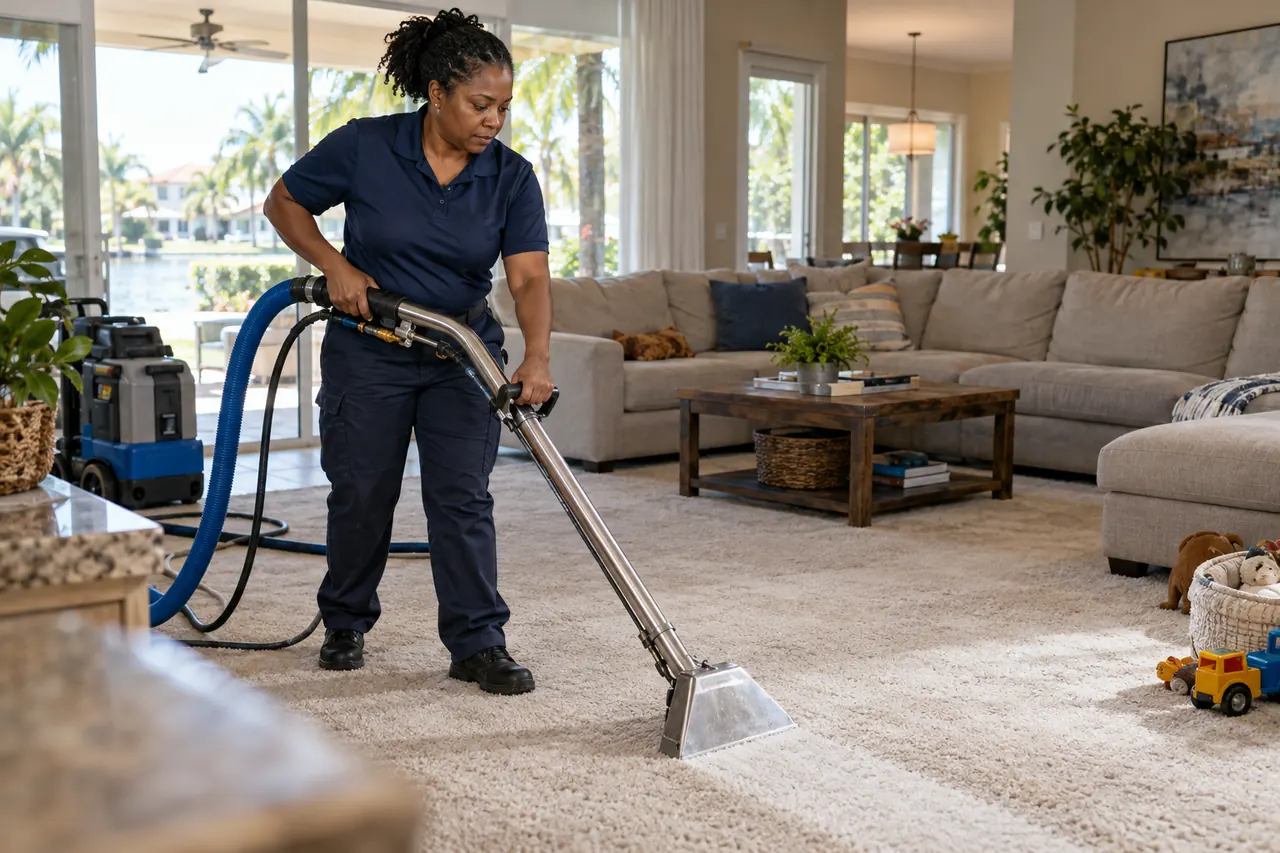
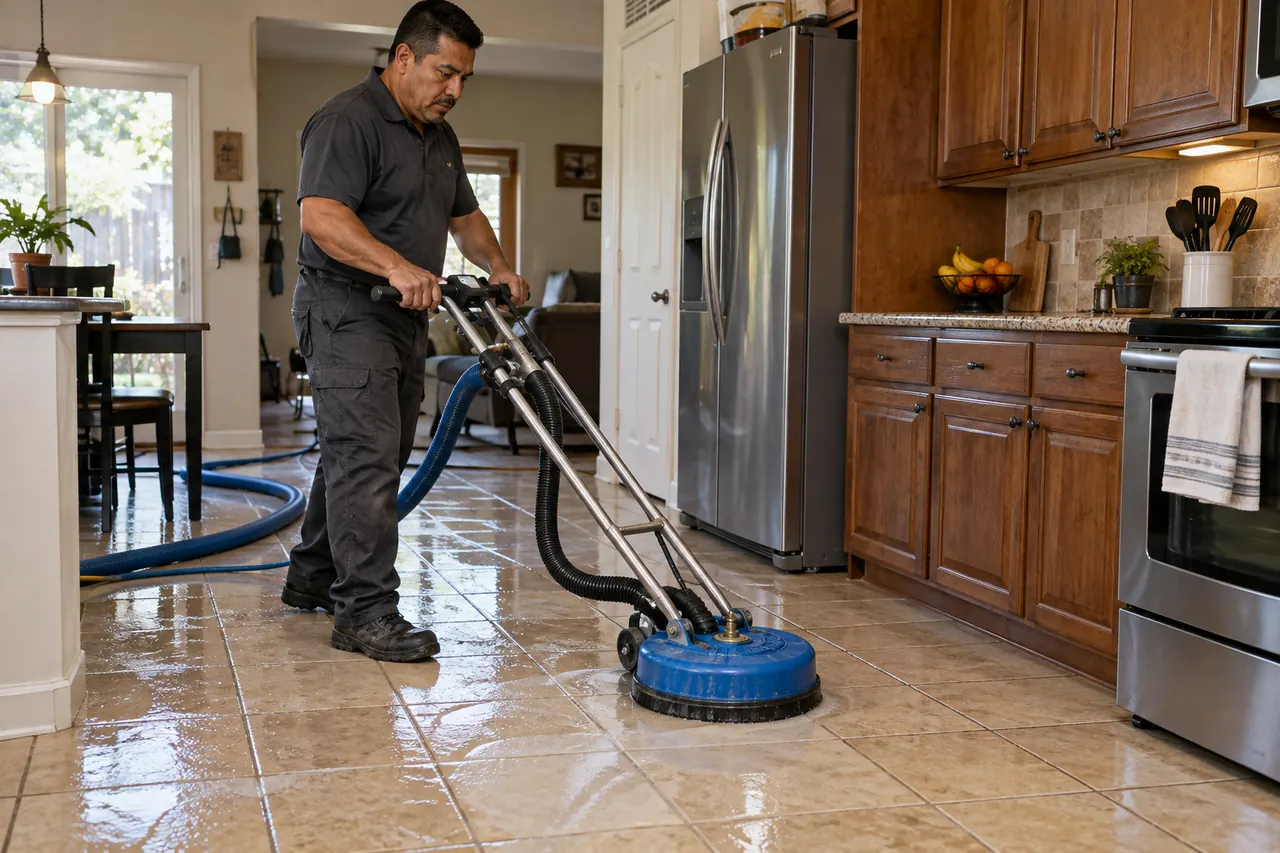
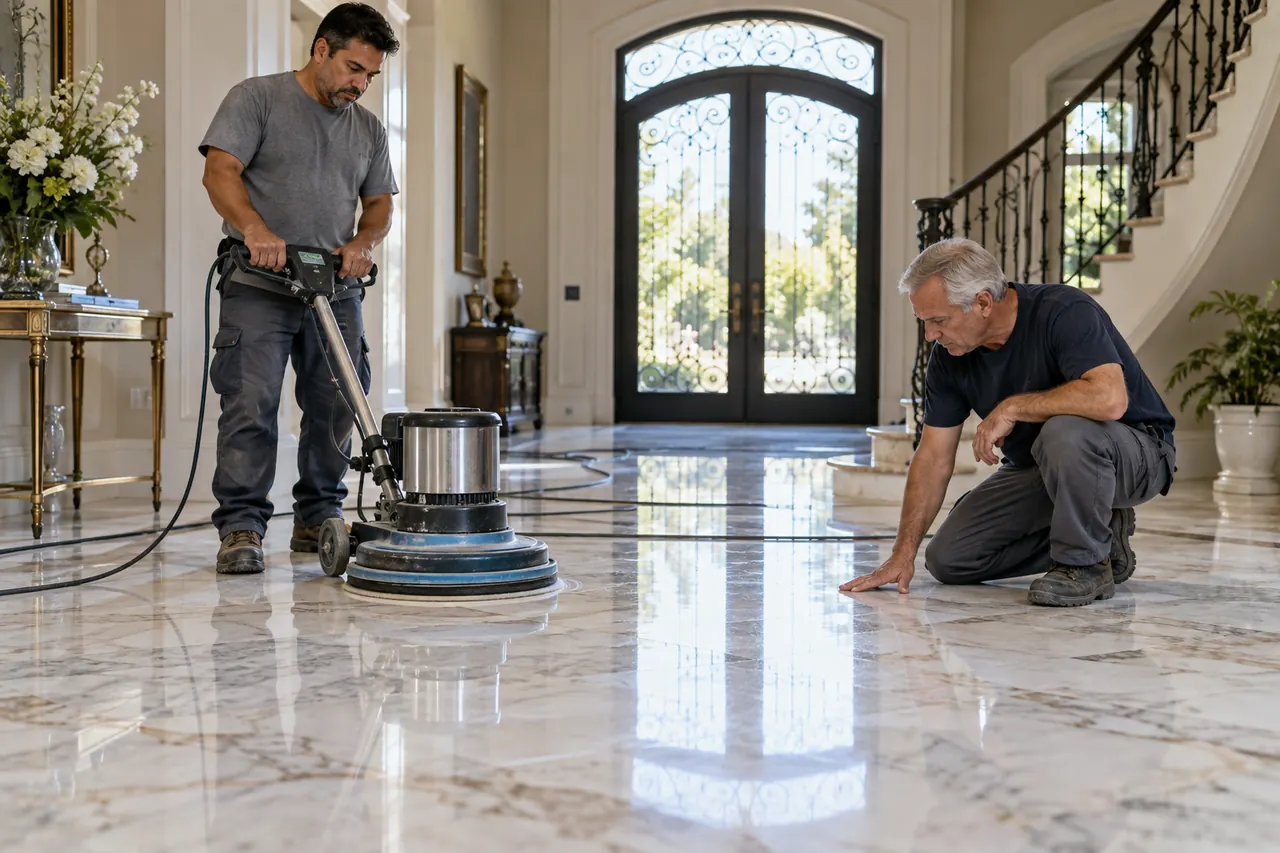
For tile and grout, professional equipment can lift embedded dirt from the pores and rinse it away more effectively than a mop. For carpet, hot water extraction can remove trapped soil and refresh the fibers. Marble and terrazzo may need cleaning followed by polishing to bring back a smoother, brighter appearance.
Use the Right Protection After Cleaning
A freshly cleaned floor is the best time to consider protection. Sealing grout, for example, can help reduce how quickly moisture, spills, and soil absorb into the lines. It does not make grout maintenance-free, but it can make routine cleaning easier and help preserve the restored color longer.
Natural stone sealing depends on the type of stone, its finish, and how the area is used. Polished stone may need a different approach than honed stone or textured tile. In a busy commercial setting, the right protection should support the floor’s use without leaving it slippery or changing its intended appearance.
Carpet protection can also be helpful in offices, waiting rooms, and hospitality spaces where spills happen often. Still, protection is not a substitute for prompt cleanup. Coffee, grease, ink, and food stains are always easier to address before they dry and set.
Avoid Shortcuts That Create Bigger Problems
Strong chemicals can be tempting when floors look dirty, but the wrong product can damage finishes, discolor grout, or leave behind a residue that attracts more dirt. Bleach and acidic products are especially risky on natural stone and can weaken or alter grout over time.
Over-wetting is another common issue. Too much water can seep into grout, under flooring edges, or into carpet backing. It can also create longer drying times that disrupt customers and staff. A good maintenance plan balances cleaning power with the needs of the material and the business schedule.
Avoid using rough pads or abrasive tools on polished marble, terrazzo, or delicate finishes unless they are part of a proper restoration process. A quick fix that scratches or etches the floor can turn into a polishing job later.
Build a Commercial Floor Maintenance Schedule
A simple written schedule keeps floor care from being handled only when someone complains. Assign responsibilities, record the products used, and make sure staff know which areas need extra attention after rain, events, deliveries, or busy weekends.
For most commercial properties, a practical schedule includes these four levels of care:
- Daily dry soil removal, spot cleaning, and attention to entrances, restrooms, and spills.
- Weekly detailed mopping, vacuuming, edge work, and checks for stains or buildup.
- Monthly inspection of grout, carpet traffic lanes, stone finish, mats, and areas near doors.
- Quarterly or scheduled professional deep cleaning based on traffic, surface type, and appearance.
Keep expectations realistic. A floor in a busy retail store will not wear like a floor in a small office, and a polished marble lobby requires a different budget than standard ceramic tile. The best plan is the one your team can follow consistently and adjust when the property’s needs change.
Choose Service Around Your Business Hours
Commercial cleaning should fit the operation, not interrupt it. Many businesses need service early in the morning, after closing, between tenant turnovers, or before a special event. Clear communication about access, drying time, furniture movement, and the condition of the floor helps avoid surprises.
First Choice Floor Care works with commercial clients who need straightforward surface care, from deep tile and grout cleaning to marble polishing, terrazzo floor polishing, carpet cleaning, and protective sealing. A proper inspection helps determine whether a floor needs cleaning, polishing, stain treatment, or a combination of services.
When a floor is maintained on schedule, customers notice the difference even if they cannot name the process. The room feels cared for, the surface looks brighter, and the business appears ready for the people walking through the door. That is a worthwhile standard to keep, one clean step at a time.
Unsure what your surface needs?
A clear assessment is more useful than guessing. Tell us what you’re seeing and we’ll discuss the next step.
Request an Estimate