Learn how to clean textured tiles safely, lift dirt from grooves, brighten grout, and know when professional deep cleaning is worth scheduling today.
Textured tile is made to add grip, character, and a more natural look to a room. The trade-off is that every small ridge, pit, and groove can hold onto dust, cooking residue, soap film, and tracked-in dirt. If you are wondering how to clean textured tiles without spending hours on your hands and knees, the answer is less about using a stronger cleaner and more about using the right method.
A smooth mop can make textured floors look better for a day, but it often skims over the surface while leaving grime in the low spots. With a few safe supplies and a little attention to the tile type, you can get a much cleaner result and help the floor stay fresh between deep cleanings.
Start by Identifying the Tile Surface
Not all textured tile should be cleaned the same way. Ceramic and porcelain tile are generally durable and can handle a neutral tile cleaner, warm water, and firm brushing. Textured natural stone, including travertine, marble, limestone, and slate, needs more care because harsh or acidic products can etch, dull, or discolor the surface.
If you are unsure what you have, avoid vinegar, lemon-based cleaners, bleach-heavy mixtures, and abrasive powders. These are common household shortcuts, but they can damage stone, weaken grout, or leave a hazy residue behind. A pH-neutral cleaner made for tile and grout is the safer starting point for most floors.
Also look at the condition of the grout. If it is darkened, cracked, or rough to the touch, the floor may need more than routine cleaning. Dirt often settles into porous grout first, making the entire room look worn even when the tile itself is in decent shape.
What You Need to Clean Textured Tiles
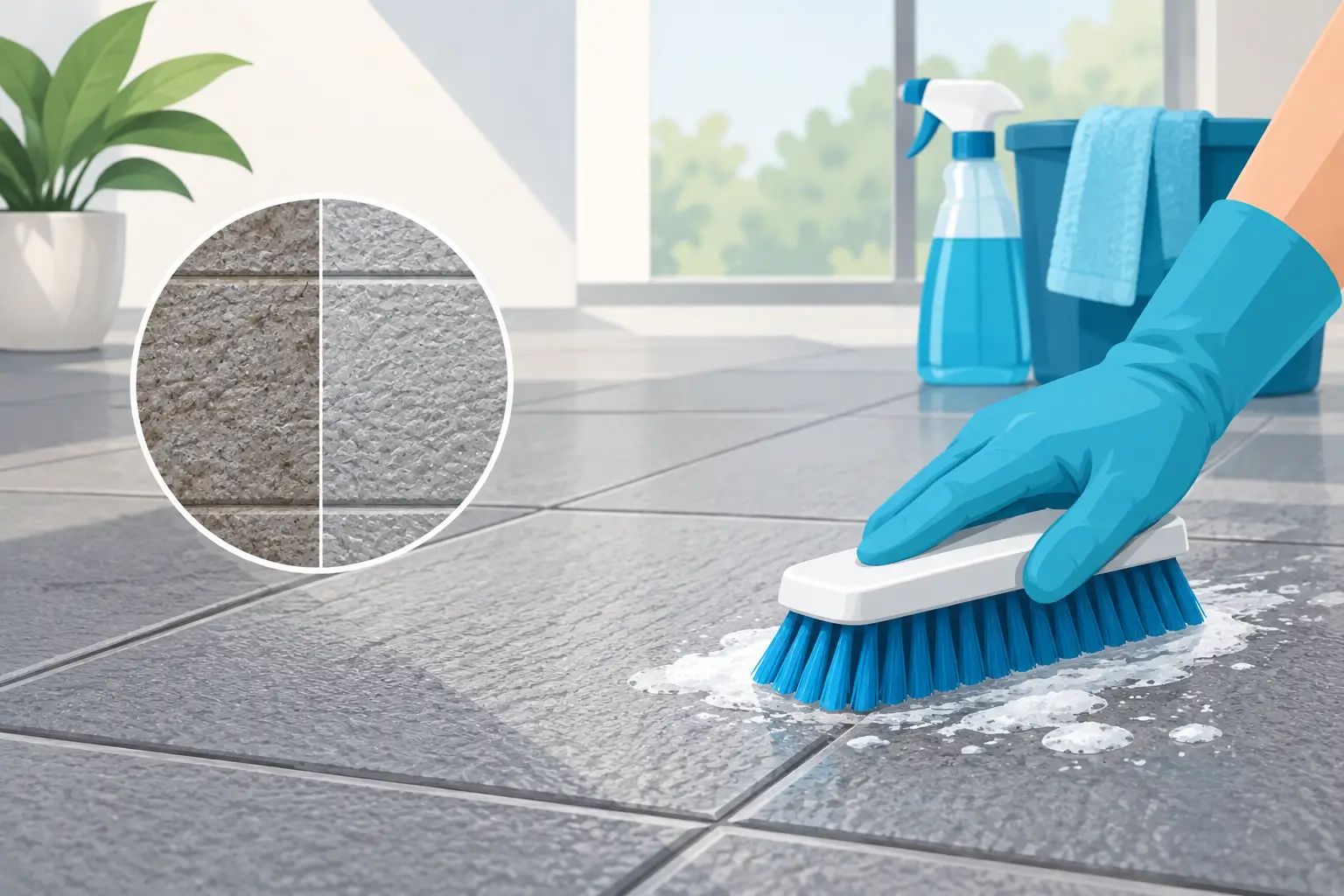
The best tools are simple. Use a vacuum with a hard-floor setting or a soft-bristle broom, a pH-neutral tile cleaner, a bucket of clean warm water, and a microfiber mop. For the grooves, keep a nylon scrub brush or grout brush nearby. A soft brush with short bristles works better than a sponge because it can reach into the texture instead of gliding over it.
Avoid steel wool, wire brushes, and highly abrasive scrub pads. They may seem effective in the moment, but they can scratch glaze, damage sealers, and create a rougher surface that catches even more dirt later. The goal is to loosen buildup, not grind away at the tile.
How to Clean Textured Tiles Step by Step
Begin by removing dry debris thoroughly. Vacuuming is usually the most effective option because it pulls sand, pet hair, and dust out of textured areas that a broom may miss. This matters in busy family rooms, entryways, kitchens, and commercial spaces, where grit can act like sandpaper under shoes.
Next, mix your cleaner according to the label directions. More product does not equal a cleaner floor. Too much solution can leave residue in the texture, making the tile look cloudy or feel sticky after it dries. Work in a small section rather than soaking the entire floor at once.
Apply the cleaning solution and let it sit briefly, usually a few minutes, so it can break down soil. Do not allow it to dry on the floor. Then scrub the textured surface with a nylon brush using short, overlapping strokes. Pay extra attention to walking paths, the area around the stove, shower edges, and doorways where dirt collects fastest.
Once the soil is loosened, pick it up instead of simply spreading it around. Use a microfiber mop with clean water, changing the water as soon as it turns gray. On heavily soiled floors, a wet-dry vacuum is especially helpful because it removes the dirty solution from the grooves. Finish by drying the floor with a clean microfiber towel or allowing good air circulation so no residue settles back into the texture.
Give Grout Its Own Attention
Textured tile and dirty grout often show up together. Grout is lower than the tile surface and more porous, so it absorbs spills and ground-in soil quickly. Mop water alone rarely restores grout lines once they have become noticeably dark.
For light buildup, apply a tile-safe grout cleaner and scrub with a narrow grout brush. Work a small area at a time, then rinse well. If the grout remains stained after careful cleaning, it may need professional deep cleaning rather than more aggressive chemicals. Strong products can strip grout, cause uneven color, or leave behind a chalky finish.
After the floor is fully clean and dry, consider sealing grout if it is unsealed or the existing protection has worn away. Sealer does not make grout maintenance-free, but it gives spills and everyday dirt less opportunity to sink in. This can make a real difference in bathrooms, kitchens, rental properties, and high-traffic business floors.
Common Mistakes That Leave Textured Tile Looking Dirty
The biggest mistake is relying on a mop alone. Mops are useful for maintenance, but they cannot always reach embedded debris in a textured finish. Another common issue is using too much soap. When cleaner is not rinsed away, it traps dirt and can leave a dull film that makes even freshly cleaned tile look tired.
Steam cleaning is another situation where the answer depends on the material and installation. Steam may be suitable for some sealed ceramic or porcelain tile, but excessive heat or moisture can be risky around damaged grout, loose tile, certain sealers, and natural stone. Always check the flooring manufacturer's recommendations before using a steam machine.
Finally, do not ignore the source of the dirt. A textured tile floor near an exterior door will get dirty again quickly if entry mats are worn out or too small. A bathroom floor may keep developing soap film if shower water is constantly tracked across it. Simple changes, such as using absorbent mats and wiping spills promptly, reduce the amount of scrubbing needed later.
When a Deep Professional Cleaning Makes Sense
Routine cleaning works well for normal dust and light soil. It is time to consider professional help when the tile still looks dingy after cleaning, the grout lines stay dark, the surface feels sticky, or there are visible stains in high-traffic areas. Property managers and hospitality businesses may also need a faster, more consistent result before tenant turnover, inspections, or guest arrivals.
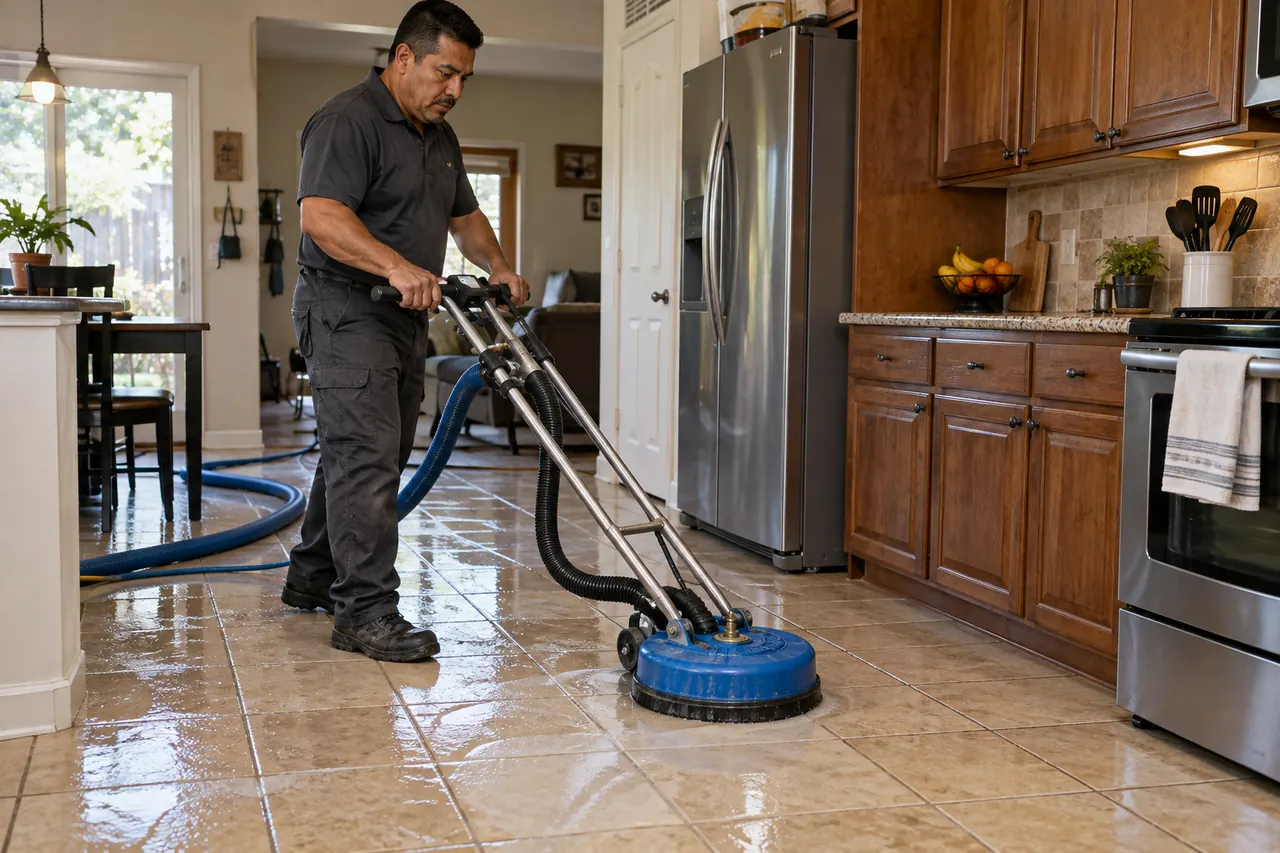
Professional tile and grout cleaning uses equipment designed to agitate, rinse, and recover soil from below the visible surface. That recovery step is what many household methods lack. Instead of pushing dirty water into grout lines and textured pockets, the process lifts it away.
For natural stone, the service may involve a different plan altogether. Marble, travertine, terrazzo, and limestone can require specialty cleaning, polishing, honing, or sealing based on the finish and the type of damage present. A careful inspection protects the surface and avoids treating valuable flooring like ordinary ceramic tile.
At First Choice Floor Care, the focus is on practical results: inspect the surface, remove built-up soil safely, and recommend protection when it will help the floor stay cleaner longer. For homes and businesses across South Florida, that can be a more affordable alternative to replacing tile that only looks beyond saving.
Keep Textured Tile Cleaner Between Deep Cleanings
A consistent routine is easier than waiting until the floor looks heavily soiled. Vacuum or sweep textured tile at least once or twice a week in active areas, then damp mop with a properly diluted neutral cleaner as needed. In homes with pets, children, or frequent visitors, entryways and kitchen floors may need attention more often.
Use the least aggressive method that gets the job done. Regular dry debris removal, quick spill cleanup, and clean mop water will protect both the look of the tile and the life of the grout. When the grooves begin holding dirt that ordinary cleaning will not release, a professional deep cleaning can bring back the fresh, cared-for appearance that makes the room easier to enjoy.
Unsure what your surface needs?
A clear assessment is more useful than guessing. Tell us what you’re seeing and we’ll discuss the next step.
Request an Estimate