Learn how to clean tile efflorescence safely, stop mineral deposits from returning, and protect ceramic, porcelain, and natural stone tile floors at home.
A chalky white film can make an otherwise clean tile floor look dusty, unfinished, or worn out. Learning how to clean tile efflorescence starts with one key fact: the white residue is usually a moisture problem showing itself on the surface, not ordinary dirt that needs stronger scrubbing.
Efflorescence is common on tile installed over cement-based materials, including mortar, concrete, and grout. Water moves through those materials, carries natural salts to the surface, and then evaporates. The moisture leaves, but the salts remain as a powdery deposit. In South Florida, humid weather, rain exposure, plumbing leaks, and damp slabs can all keep that cycle going.
The good news is that many light cases can be cleaned safely at home. The more important question is whether the residue comes back. If it does, the floor or wall may need a closer inspection before repeated cleaning turns into a frustrating routine.
First, make sure it is really efflorescence
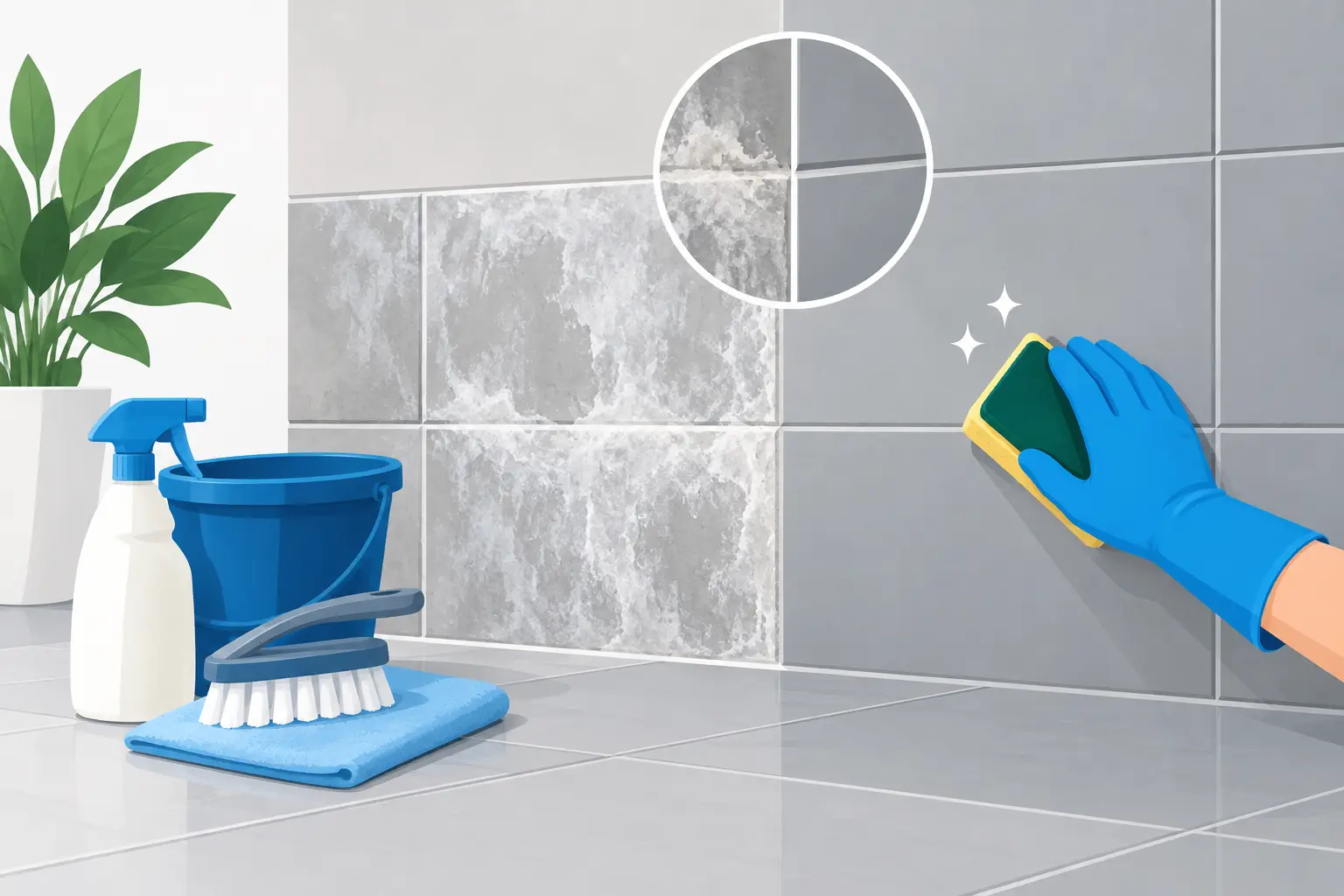
Efflorescence is normally dry, white or off-white, and powdery. It may appear along grout lines, at tile edges, across a concrete-look tile floor, or near the bottom of a shower wall. When you wipe it with a dry cloth, some of it often lifts away like fine dust.
Hard-water scale can look similar, especially near showers, sinks, pools, and exterior walls. Scale is usually harder, more crusty, and sits on top of the tile where water repeatedly dries. Grout haze is another look-alike. That is a light cement film left after tile installation, and it typically appears soon after grouting rather than months or years later.
The distinction matters because efflorescence needs both surface cleaning and moisture control. A cleaner may remove the visible salts, but it cannot stop water from pushing more minerals up from below.
What to use before you start
For a light buildup, keep the process gentle. You will usually need a dry microfiber cloth or soft brush, a vacuum with a brush attachment, a bucket of clean water, a pH-neutral tile cleaner, and a nylon scrub brush. A wet-dry vacuum or clean towels are helpful for drying the area afterward.
Avoid steel wool, stiff wire brushes, and abrasive powders. They can scratch tile glaze, dull polished stone, and roughen grout so it holds more soil later. Strong acid cleaners are also a poor first choice. They may react with cement-based grout, damage natural stone, or create uneven color changes that are harder to correct than the original white residue.
If your tile is marble, travertine, limestone, terrazzo, or another natural stone, skip vinegar and acidic descalers completely unless a stone-care professional has identified the surface and recommended a specific product. Acid can etch these materials, leaving dull spots or a rough feel.
How to clean tile efflorescence step by step
Start dry, not wet
Begin by vacuuming or gently brushing away as much loose powder as possible. This simple step is often overlooked. If you soak thick efflorescence immediately, you can turn it into a paste and spread dissolved salts across a larger area.
Use a soft, dry microfiber cloth for small spots. On floors, a vacuum with a soft brush attachment works well around grout lines and tile edges. Dispose of or rinse out the cloth afterward rather than using it on another room.
Wash with a neutral cleaner
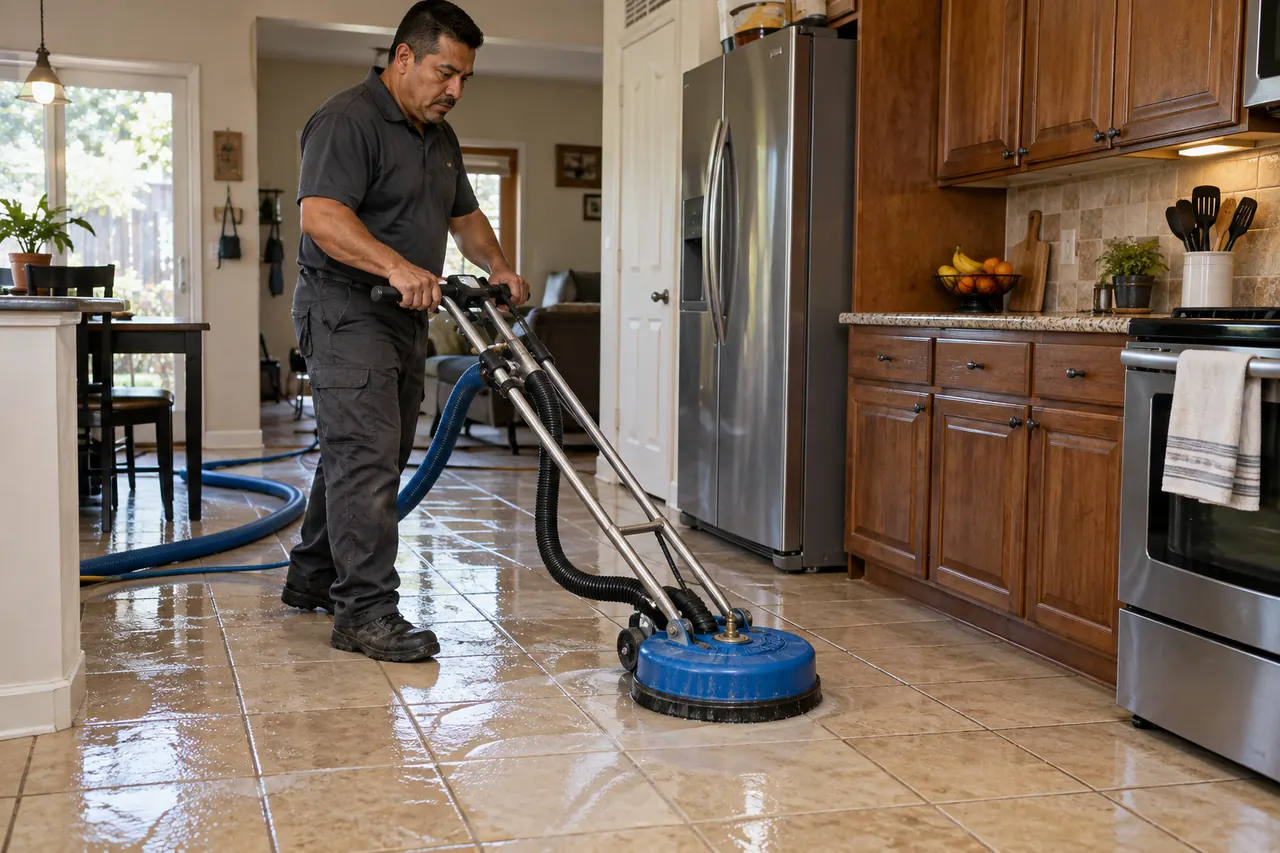
After removing the dry residue, apply a pH-neutral tile and grout cleaner according to its directions. Work in a small section at a time, especially on larger floors. Let the cleaner sit briefly if directed, then agitate gently with a nylon brush.
The goal is to lift the remaining film without forcing excessive water into the grout. Use enough solution to clean the surface, but do not flood the area. This is especially important if the efflorescence is related to moisture below the tile.
Rinse the section with clean water and immediately pick up the dirty water with towels, a mop that has been rinsed well, or a wet-dry vacuum. Leaving cleaning water behind can redeposit minerals as it dries.
Repeat only if the deposits are lightening
Some deposits need a second cleaning, particularly on textured porcelain or unsealed grout. Let the tile dry completely between attempts so you can see what remains. If the residue is clearly decreasing, a careful second pass may finish the job.
If the white marks do not change, feel hard and crusty, or return quickly after drying, stop escalating to harsher products. At that point, it may be hard-water scale, construction haze, damaged grout, or active moisture migration rather than a simple surface issue.
Dry the area thoroughly
Good drying is part of the cleaning process. Run ventilation in a bathroom, use fans in a damp room, and avoid covering the floor with rugs until it is fully dry. For commercial spaces, keep foot traffic away long enough to prevent tracked-in moisture and dirt from settling into the freshly cleaned grout.
Why efflorescence keeps coming back
A one-time light bloom may occur as a new tile installation or grout finishes drying. Repeated efflorescence usually points to an ongoing source of moisture. In a shower, that could be failing caulk, cracked grout, or water getting behind the wall. On a ground-level floor, moisture may be moving through the concrete slab. Around exterior tile, poor drainage or rainwater intrusion may be the cause.
Look for patterns. Residue that appears near a sliding door, exterior wall, baseboard, toilet, shower curb, or one isolated crack deserves attention. A musty smell, loose tiles, dark grout, soft drywall, or recurring dampness are stronger warning signs that cleaning alone will not solve the problem.
Sealing can help protect clean grout from stains and everyday soil, but it is not a repair for active moisture. Applying sealer over damp materials can trap problems below or leave an uneven finish. The area should be dry, stable, and clean before any protective treatment is considered.
When DIY cleaning is enough and when to call for help
Home cleaning is a reasonable option when the residue is small, dry, and limited to the surface, with no signs of leaks or loose tile. It can also work well for a minor white film after grout has cured, provided the installation is otherwise sound.
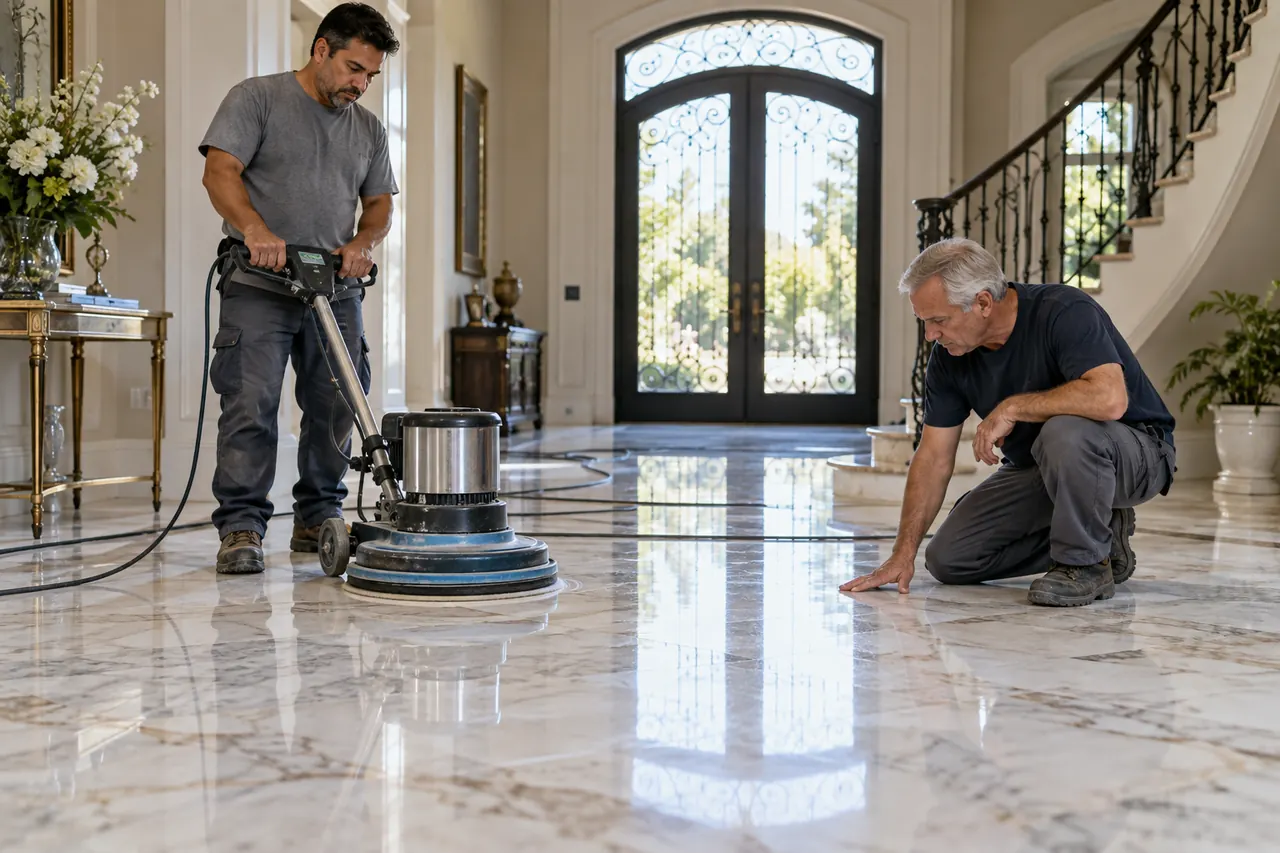
Professional help makes more sense when the buildup covers a large floor, returns repeatedly, affects natural stone, or appears with damaged grout and moisture stains. A trained surface-care team can identify whether the material needs deep cleaning, grout restoration, polishing, sealing, or a recommendation to address the moisture source first.
For heavily used homes, rental properties, lobbies, restaurants, and other busy spaces, professional cleaning also saves time and reduces the risk of using the wrong chemical on expensive finishes. First Choice Floor Care works with tile, grout, natural stone, and terrazzo surfaces, with a focus on restoring the appearance of the floor while helping clients make practical decisions about protection and maintenance.
Keep the white residue from taking over again
After cleaning, keep an eye on the same area for several days and again after heavy rain, showers, or mopping. Use a pH-neutral cleaner for routine maintenance, change mop water often, and dry wet areas promptly. In bathrooms, repair failing caulk and make sure exhaust fans are actually removing moisture.
For exterior and ground-level areas, check drainage and avoid directing sprinklers toward tiled surfaces. If a floor repeatedly develops powder along grout lines, treat that as useful evidence rather than a cleaning failure. The tile is telling you that moisture is traveling somewhere it should not.
A clean tile floor should make a room feel cared for, not create another chore waiting to return. Remove the visible residue gently, give the surface time to dry, and investigate recurring spots early before a small white film becomes a larger repair.
Unsure what your surface needs?
A clear assessment is more useful than guessing. Tell us what you’re seeing and we’ll discuss the next step.
Request an Estimate