Learn how to deodorize fabric sofa cushions safely, remove pet and food smells, and know when deep upholstery cleaning is the better solution at home.
A fabric sofa can look perfectly clean and still hold onto odors from pets, snack nights, damp towels, shoes, and everyday use. Knowing how to deodorize fabric sofa upholstery properly helps you freshen the room without leaving behind a heavy fragrance, water rings, or residue that attracts more dirt. The goal is not to cover the smell. It is to remove the odor source from the fabric, cushions, and hidden areas where it settles.
For South Florida homes, humidity can make this job more challenging. A small spill that did not seem serious can leave moisture inside a cushion, and that trapped moisture can lead to a musty smell days later. Start with the gentlest approach, check the furniture care tag, and allow plenty of drying time before putting the sofa back into regular use.
Find the Source Before You Add Anything
Odor removal works best when you identify what caused the smell. Pet accidents, body oils, food spills, smoke, mildew, and general stale fabric do not respond to the same treatment. A pleasant-smelling spray may improve the room for an hour, but it will not solve a problem that is still deep in the cushion foam or under the seat covers.
Remove throw blankets and loose pillows first. Smell the seat cushions, back cushions, arms, and the space beneath the cushions separately. Check for old spills, damp spots, pet hair, crumbs, or signs that a cushion has stayed wet. If one cushion has a much stronger odor than the others, focus your cleaning there rather than soaking the whole sofa.
Look at the upholstery cleaning code, usually found on a tag under a cushion. A W code generally means water-based cleaners are acceptable. S means use a solvent-based product only. WS allows either method, while X means vacuuming or professional cleaning only. This small step can prevent fading, shrinkage, and water marks on delicate upholstery.
How to Deodorize Fabric Sofa Upholstery at Home
Begin by vacuuming every reachable surface. Use the upholstery attachment along the seams, under cushions, behind cushions, and around the base. Dust, hair, crumbs, and dander can all carry odors, especially in homes with pets. Vacuuming may seem basic, but it gives deodorizing products a better chance to reach the fabric instead of sitting on top of debris.
For a dry, general odor, baking soda is often the safest first option on a sofa with a W, WS, or X cleaning code. Sprinkle a light, even layer across the fabric and let it sit for at least several hours. Overnight is helpful for a sofa that smells stale or has absorbed light pet odors. Keep pets and children off the sofa while it sits, then vacuum slowly and thoroughly.
Baking soda absorbs odors, but it does not remove grease, urine, or bacteria from the fibers. It is best for maintenance and mild smells, not for an accident that has soaked through a cushion. Do not mix it into a wet paste or rub it aggressively into upholstery. Fine powder left behind in seams can be difficult to remove, and excessive moisture can push odors deeper.
For a W or WS fabric, a light upholstery-safe cleaning solution can help with odors caused by food, skin oils, or a minor spill. Always test a hidden area first. Dampen a clean white microfiber cloth rather than spraying the sofa directly, blot the affected area, and avoid saturating the fabric. Work from the outside of a spot toward the center so the stain and odor do not spread.
After blotting, use another clean, lightly damp cloth to remove any cleaner residue. Then press dry towels into the area to pull out moisture. Leave cushions unzipped or standing on their sides when possible, and run ceiling fans or air conditioning to speed drying. A sofa should feel dry all the way through before anyone sits on it again.
Treating Pet Odors Requires More Than Fragrance
Pet odor is one of the most common reasons a fabric sofa stops feeling fresh. If the odor comes from urine, an enzyme-based upholstery cleaner is usually more effective than soap or deodorizing spray because it is designed to break down the organic material causing the smell. Use only a product labeled for your upholstery type, test it first, and follow its dwell-time instructions.
The trade-off is that enzyme cleaners need contact with the affected area to work. If urine reached the cushion foam, treating only the top fabric may not be enough. You may need to remove the cushion cover, if the manufacturer allows it, and treat both the cover and the foam carefully. Avoid oversaturating the foam. A wet cushion that cannot dry quickly can develop a larger odor problem than the original accident.
If the pet smell returns after the sofa dries, the source is likely still in the foam, lining, or frame. That is a good time to arrange professional upholstery cleaning rather than adding more products. Repeated DIY treatments can leave residue and make a deep clean more difficult.
Be Careful With Vinegar, Steam, and Scented Sprays
White vinegar is frequently suggested for fabric odors, but it is not a universal sofa cleaner. It can help neutralize some light smells when heavily diluted and used sparingly on compatible fabrics. Still, it may leave its own odor while drying, affect certain dyes, and will not solve embedded pet contamination or mildew. Never use it on an S-code or X-code fabric unless the furniture manufacturer specifically approves it.
Steam can also be useful, but only when the upholstery is suitable for water-based cleaning and can dry fast. Heat may set some stains, damage delicate fibers, or worsen a musty odor if the cushion becomes too wet. In humid weather, deep steam cleaning without strong extraction and airflow can leave moisture below the surface.
Scented sprays are best reserved for a finished, clean sofa, if you use them at all. They can be irritating for people with allergies, asthma, or fragrance sensitivities. More importantly, fragrance does not tell you whether the fabric is actually clean. A fresh sofa should smell neutral, not heavily perfumed.
Do Not Forget the Cushion Covers and Sofa Frame
Many lingering odors hide in places that are easy to miss. If removable cushion covers have care labels that allow laundering, wash them according to the instructions and dry them completely before reinstalling. Do not assume every zippered cover is machine washable. Some are removable only to make professional cleaning easier.
Vacuum the decking under the cushions, the crevice along the back, and the underside of the sofa. Wipe non-fabric legs or exposed frame areas with a suitable cleaner and dry them well. If a spill reached beneath the cushions, the fabric platform may need attention too.
Air circulation matters after cleaning. Open windows only if outdoor humidity is lower than the indoor air, or use air conditioning and fans to keep the room dry. In Fort Lauderdale and throughout South Florida, moisture control is part of odor control. A dehumidifier can help if the room feels damp or the sofa has a recurring mildew smell.
When a Fabric Sofa Needs Professional Cleaning
At-home deodorizing is practical for light, recent odors and routine maintenance. It becomes less reliable when odors are old, widespread, or tied to a deep stain. Professional cleaning is worth considering when the sofa smells worse after getting wet, the odor returns after several days, a pet accident soaked the cushion, or the fabric has a strong smoke or mildew smell.
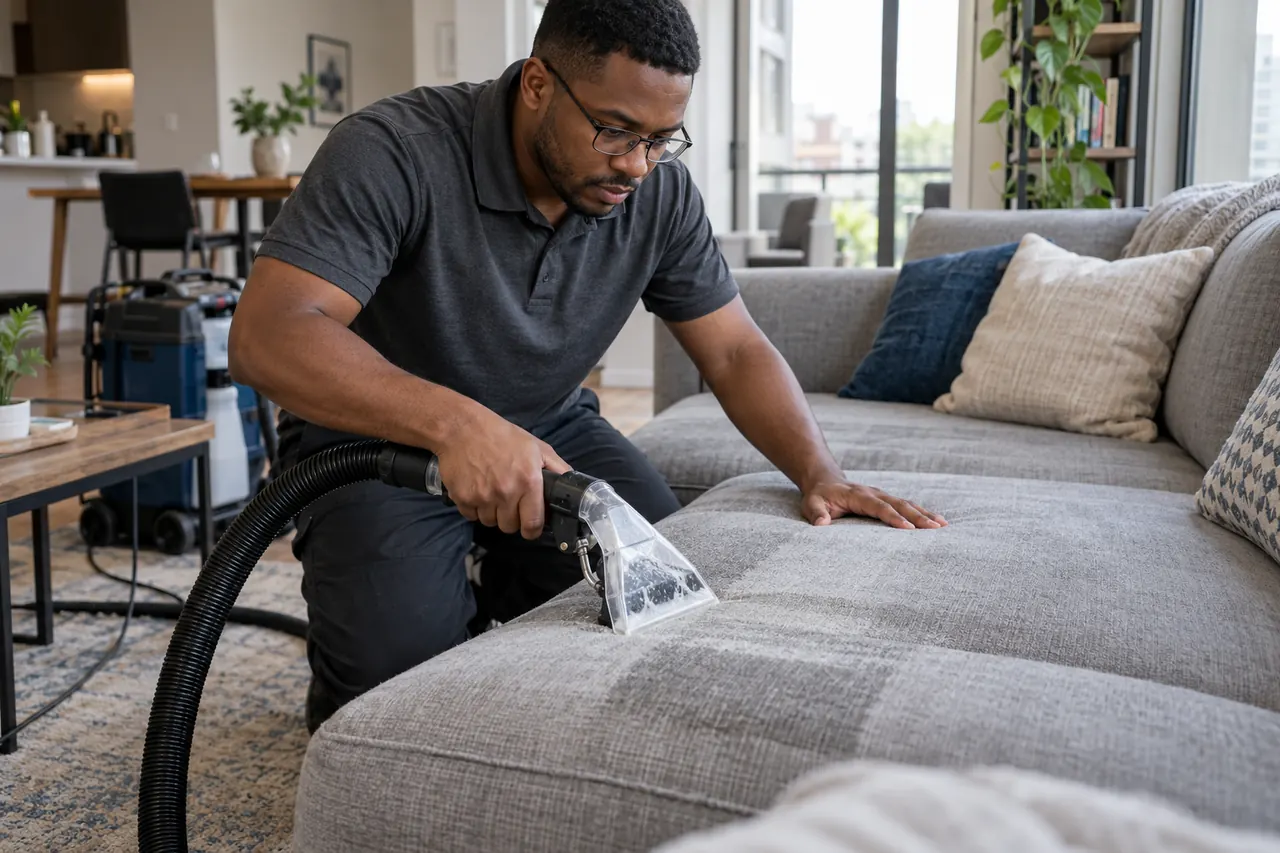
A professional upholstery cleaning service uses controlled cleaning methods and extraction to lift soil, oils, and odor-causing residue from beyond the surface fibers. The right method depends on the fabric, cushion construction, condition of the furniture, and the source of the odor. The benefit is not simply a stronger cleaner. It is getting the sofa cleaned without leaving it overly wet or risking unnecessary damage.
First Choice Floor Care helps homeowners, renters, and local businesses restore upholstered furniture that has seen daily wear, pets, spills, and heavy use. A clear inspection before cleaning helps determine whether a light refresh, stain treatment, or deeper upholstery cleaning is the right next step.
A sofa should be a comfortable place for family time, guests, or a quiet evening at home - not a source of odors you notice every time you walk into the room. Keep up with regular vacuuming, act quickly on spills, and give cushions time to dry completely. When the smell is deeper than the surface, professional care can help make the room feel clean and enjoyable again.
Unsure what your surface needs?
A clear assessment is more useful than guessing. Tell us what you’re seeing and we’ll discuss the next step.
Request an Estimate