Learn how to polish dull marble floors safely, spot etching and buildup, and know when professional restoration can bring back a clean shine at home.
A marble floor can look tired long before it is actually worn out. In South Florida homes and businesses, sand, humidity, spills, pet traffic, and daily foot traffic can leave a once-glossy surface cloudy or flat. Knowing how to polish dull marble floors starts with identifying what took the shine away. The right solution may be a careful cleaning, a light polish, or professional honing for deeper damage.
Marble is a natural stone, not a standard tile. It reacts to acidic products, abrasive scrubbers, and too much moisture. A little care can make a noticeable difference, but using the wrong cleaner or polishing product can create a bigger repair job.
Why Marble Floors Lose Their Shine
Dullness does not always mean the marble itself needs polishing. Often, the floor is covered by a thin film of soap residue, dirty mop water, hard-water minerals, or leftover cleaning chemicals. This buildup blocks light from reflecting off the stone, making a clean floor appear gray or hazy.
In other cases, the marble has etching. Etches are dull spots caused by acidic substances such as citrus juice, vinegar, wine, bathroom cleaners, or some grout products. Because South Florida homes often have open kitchens, pool access, and busy entryways, these marks can show up quickly in high-use areas.
Fine scratches are another common issue. Grit tracked in from outside acts like sandpaper under shoes, chair legs, and rolling carts. Over time, the scratches scatter light and reduce the floor's natural reflection. If the floor has a widespread, uneven haze rather than isolated spots, it may need honing before it can be polished properly.
Check the Floor Before You Polish
Start by cleaning a small, hidden section and letting it dry completely. If it becomes noticeably brighter after cleaning, the dull appearance is likely surface buildup. If the area still looks flat, feels rough, or has white rings and cloudy patches, you may be dealing with etching or scratches in the stone.
Look closely at the grout lines, too. Dark, dirty grout can make polished marble look less clean than it really is. A full floor restoration often needs both marble care and grout cleaning so the finished result looks even across the room.
There is a simple rule that protects expensive flooring: never try to shine marble before it is truly clean. Polishing over grime can trap residue, leave swirl marks, and make the floor look uneven in sunlight.
How to Polish Dull Marble Floors Safely
For marble that is intact but dulled by daily use, begin with a gentle cleaning process. Remove loose sand and dust with a soft broom, microfiber dust mop, or vacuum made for hard floors. Avoid stiff brush attachments that may leave fine scratches.
Next, use a pH-neutral stone cleaner mixed according to its directions. Apply it with a clean microfiber mop or soft cloth, working in manageable sections. Do not flood marble with water. Excess moisture can work into grout lines, leave mineral spots, and carry dirt back onto the surface as it dries.
Rinse the mop frequently and change the cleaning solution when it becomes dirty. This step matters more than most people expect. Mopping with gray water simply moves soil around the room and leaves the same dull film behind.
Dry the floor with clean microfiber towels or a dry mop rather than allowing it to air dry. This helps prevent streaks and lets you see the true condition of the marble. At this point, many lightly dulled floors already look fresher.
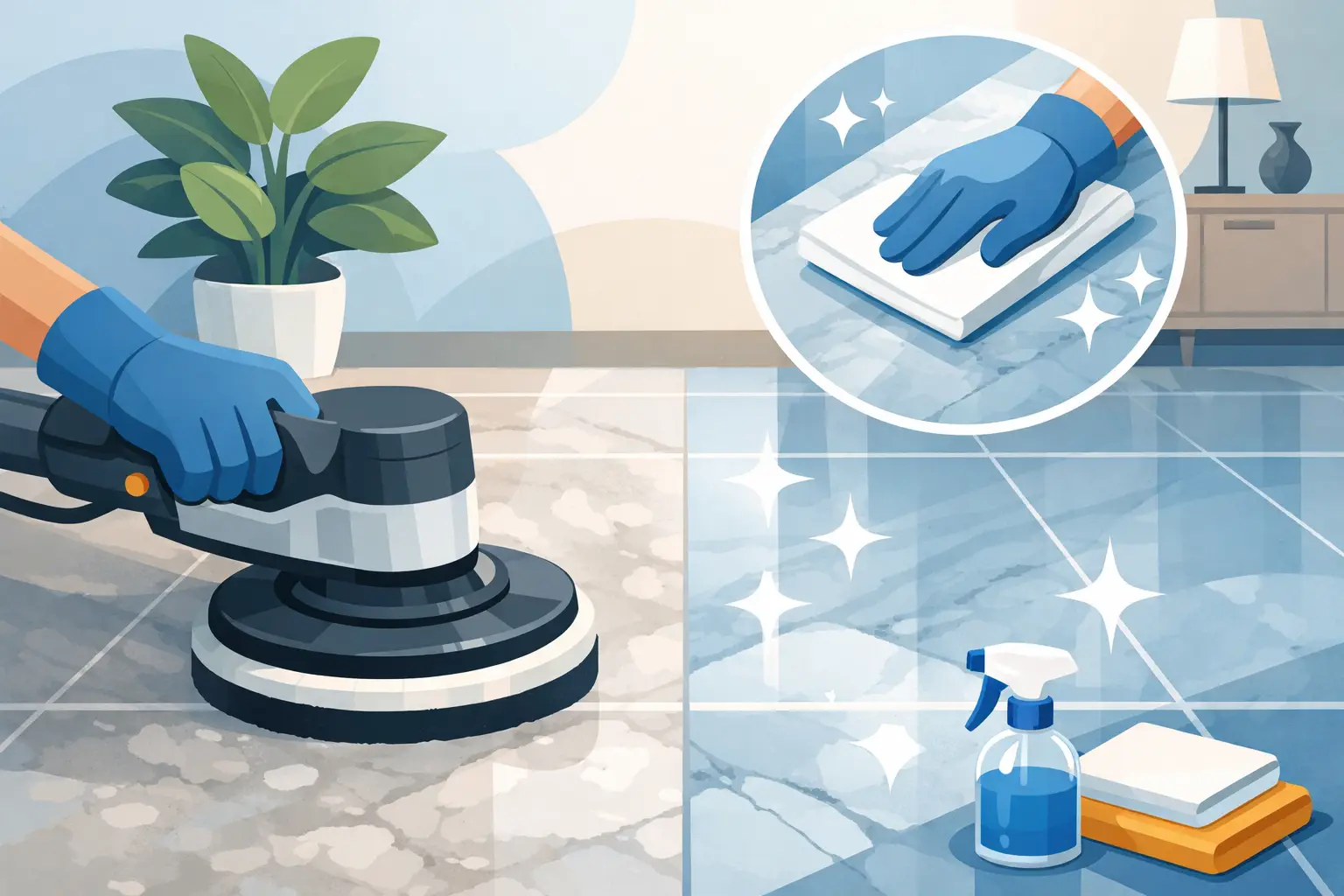
If the floor is clean but still lacks a consistent shine, use a marble polishing powder or compound specifically labeled for your type of natural stone. Test it in an inconspicuous area first. Follow the product instructions closely, use minimal water, and work gently with a soft pad. Wipe away all residue and buff dry with a clean microfiber cloth.
Do not expect a consumer polish to correct deep scratches, etched rings, lippage between tiles, or years of traffic wear. These products can improve a light haze, but they cannot rebuild the smooth surface needed for a true reflective finish.
What Not to Use on Marble
Marble responds badly to shortcuts. Keep vinegar, lemon-based cleaners, bleach, ammonia, and standard bathroom cleaners away from the floor. Even a product that smells clean can be too acidic or alkaline for natural stone.
Avoid scouring powders, steel wool, rough scrub pads, and hard-bristle brushes. They can scratch the surface or create a patchy look that is difficult to blend. Wax and acrylic floor finish are also poor choices for marble. They may create temporary shine, but they can yellow, peel, trap dirt, and eventually require stripping.
Steam cleaning is another case where caution matters. Some sealed stone floors may tolerate limited steam, but heat and moisture can affect grout, weaken certain sealers, and push contaminants into vulnerable areas. For a valuable marble floor, a pH-neutral stone cleaner is the safer everyday choice.
When Marble Needs Honing Before Polishing
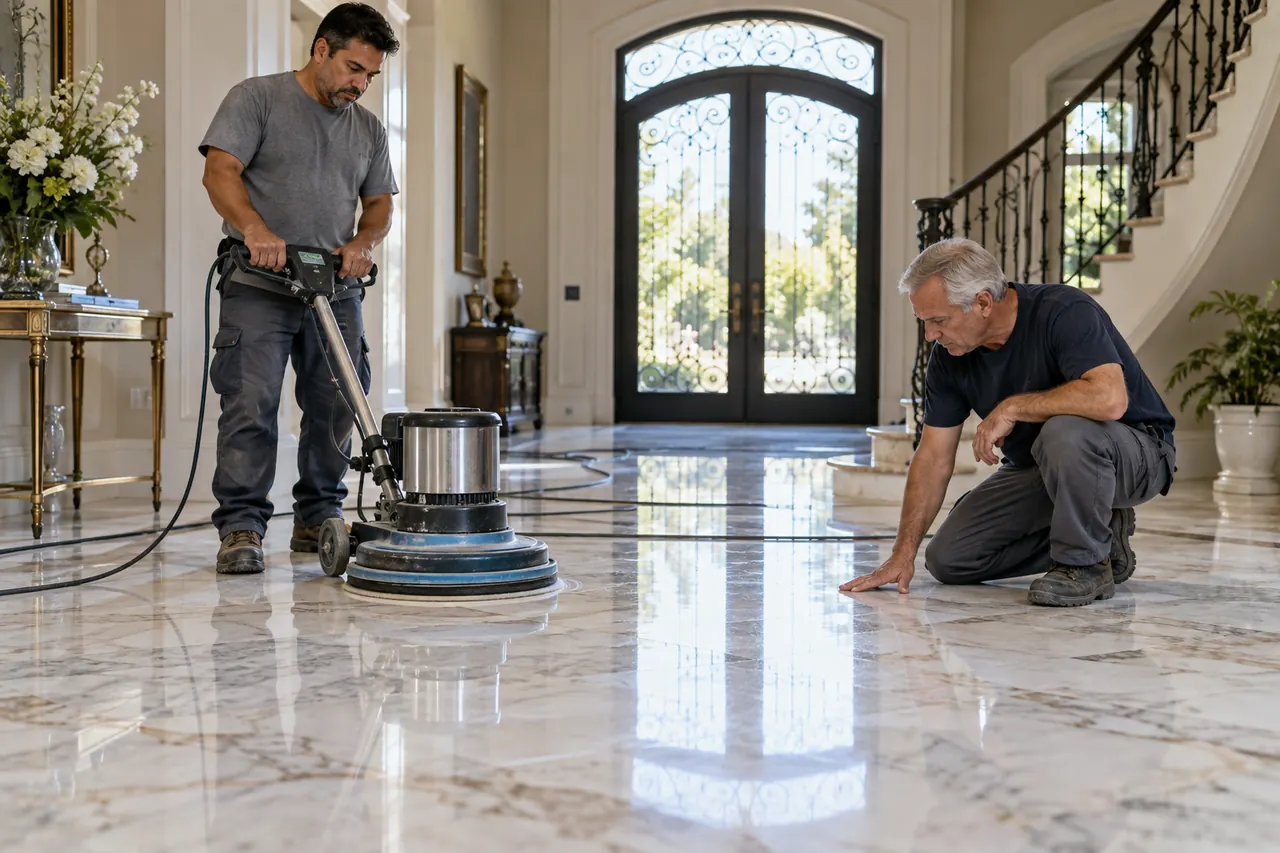
Professional marble restoration is usually the better option when dullness is widespread or the floor has visible damage. Honing uses specialized diamond abrasives to remove a very thin layer of stone, leveling fine scratches, etching, and traffic patterns. After honing, the marble can be polished to the desired finish, from a soft satin sheen to a higher-gloss look.
This is not the same as applying a topical shine product. The goal is to restore the marble surface itself, which creates a more natural and longer-lasting result. It is especially useful in entryways, kitchens, lobbies, bathrooms, and commercial spaces where the wear pattern is obvious.
The right finish depends on the room. A high-gloss polish looks striking in a formal foyer or hotel-style lobby, but it can show smudges and water spots more easily. A honed finish is more forgiving in busy family rooms, rental properties, and areas near pool doors. There is no single best choice - it depends on the look you want and how much daily traffic the floor handles.
First Choice Floor Care can inspect the marble, explain whether cleaning, honing, polishing, or sealing makes sense, and provide a clear recommendation before work begins. A professional assessment is especially worthwhile before trying to fix etched or uneven marble with store-bought products.
Protect the Shine After Restoration
A restored marble floor stays attractive longer with a few practical habits. Place mats at exterior doors and use runners in high-traffic walkways. Choose mats without rubber or plastic backings that could discolor the stone, especially in humid conditions.
Wipe spills promptly with a soft cloth, particularly juice, wine, coffee, sauces, and cleaning product splashes. Use felt pads under chairs and furniture, and lift heavy items rather than dragging them across the floor. These small changes reduce the grit and friction that create new scratches.
For regular maintenance, dust mop frequently and clean with a pH-neutral stone product as needed. A sealer can help reduce absorption from spills, but it does not make marble stain-proof or protect it from etching. Think of sealing as added breathing room for cleanup, not a substitute for wiping spills quickly.
A Quick Test for Sealer Performance
If you are unsure whether the marble is still protected, place a few drops of water in an inconspicuous spot. If the water beads on the surface, the sealer may still be performing well. If it darkens the stone quickly, the marble may be ready for resealing.
This test does not diagnose every issue. Etching can still occur on sealed marble because acids damage the stone's surface rather than simply soaking into it. If you see rings, dull spots, or a rough texture, polishing or honing may be needed instead of another coat of sealer.
Give Dull Marble the Right Kind of Care
A dull floor does not always need replacement, and it does not always need an aggressive repair. Start with a proper stone-safe cleaning, avoid harsh products, and judge the marble only after it is dry and residue-free. When etching, scratches, or heavy traffic wear are part of the problem, professional restoration can bring back the clean, cared-for finish that makes the whole room feel renewed.
Unsure what your surface needs?
A clear assessment is more useful than guessing. Tell us what you’re seeing and we’ll discuss the next step.
Request an Estimate