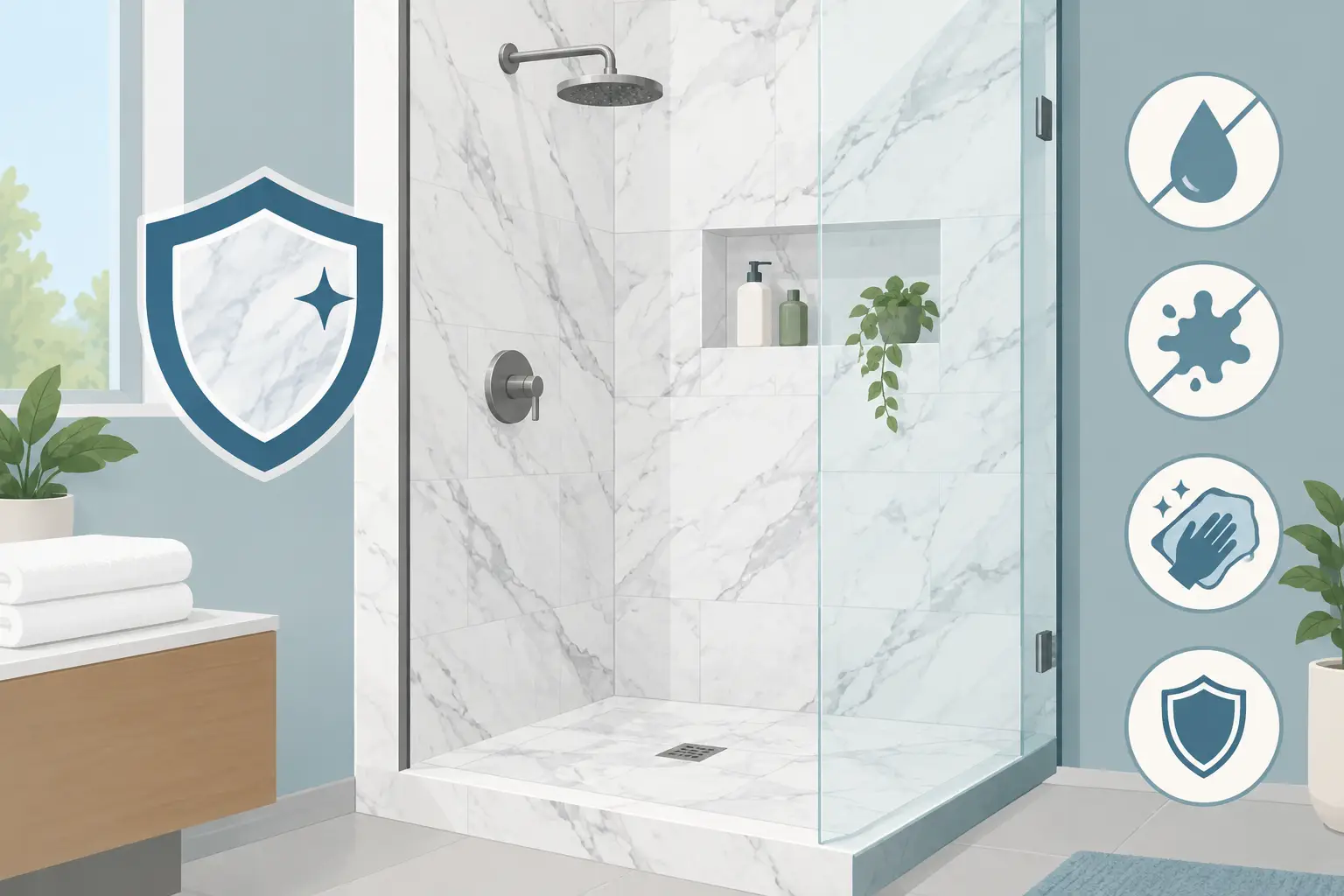
Learn how to protect marble shower surfaces from stains, etching, and dullness with simple cleaning, sealing, and daily care to help stone last longer.
A marble shower can make a bathroom feel clean, bright, and high-end, but it also shows neglect quickly. In South Florida, daily humidity, hard-water minerals, body products, and soap residue can leave marble looking cloudy or dull. Knowing how to protect marble shower surfaces comes down to a few consistent habits, the right stone-safe products, and early attention when something changes.
Marble is durable natural stone, but it is not maintenance-free. Its surface can absorb moisture and oils, and it can etch when exposed to acidic products. The good news is that regular care can preserve the color, smooth finish, and polished look that made you choose marble in the first place.
Understand What Can Damage Marble
Marble is made largely of calcium carbonate, which reacts to acids. That is why vinegar, lemon-based cleaners, many bathroom sprays, and harsh soap-scum removers can leave pale, dull marks on the stone. Those marks are called etches. They are not always stains, which means ordinary cleaning will not remove them.
Water itself is usually not the main problem. The issue is what water leaves behind: mineral deposits, shampoo residue, conditioner, body wash, and soap film. In a busy family bathroom or a rental property with frequent turnover, that buildup can develop faster than most people expect.
Marble shower floors need even more attention. They deal with standing water, foot traffic, bath products, and grout lines that can hold dirt and moisture. A sealer helps, but it cannot correct poor drainage, failing caulk, cracked grout, or water getting behind the tile.
How to Protect a Marble Shower Every Day
The most effective marble care happens after each shower, not during a major weekend cleaning project. Use a soft squeegee on the walls and glass to remove water before it dries. Follow with a clean microfiber cloth around corners, niches, ledges, and fixtures where water tends to sit.
Leave the shower door or curtain open after use and run the exhaust fan long enough to clear moisture from the room. Better airflow reduces the damp conditions that encourage mildew and keeps mineral-heavy water from lingering on the stone.
This does not have to become a time-consuming routine. A quick wipe-down takes a minute or two, yet it can reduce soap scum, hard-water spotting, and the need for aggressive cleaning later. For homes with several people using the same bathroom, that small daily step makes a noticeable difference.
Keep bottles off the marble whenever possible. Shampoo, facial products, hair color, shaving creams, and bath oils can leave rings or discolor the stone if they leak. A shower caddy or removable tray makes cleaning easier and helps protect shelves and bench tops.
Clean With Products Made for Natural Stone
For weekly cleaning, use a pH-neutral cleaner labeled safe for natural stone. Apply it with a soft microfiber cloth, non-abrasive sponge, or soft brush. Rinse well with clean water, then dry the surface rather than letting cleaner residue air-dry.
Avoid the products that are common in many cleaning cabinets but risky for marble:
- Vinegar, lemon juice, and other acidic homemade cleaners
- Acid-based bathroom or toilet cleaners
- Abrasive powders, scouring pads, and stiff brushes
- Strong bleach mixtures or ammonia-based cleaners
Even if a cleaner removes soap scum quickly, it may leave the marble less shiny or rougher than before. Once the finish has been etched, the stone may need professional honing and polishing to restore an even appearance.
For stubborn film, do not scrub harder. Start with a stone-safe cleaner, allow it to dwell according to the label directions, and use gentle agitation. Heavy white crust around fixtures may be hard-water buildup, but it should still be handled carefully. A professional can remove mineral deposits without using acids that put the marble finish at risk.
Seal Marble, but Know What Sealer Does
A quality penetrating sealer is one of the best ways to protect marble shower tile and grout. It absorbs below the surface and helps slow down the absorption of water, oils, and everyday bath products. This gives you more time to wipe up spills before they become stains.
Sealer is not a waterproof coating, and it does not make marble immune to acidic damage. It will not stop etching from the wrong cleaner or repair water problems behind the tile. Think of sealing as added stain resistance, not a replacement for good cleaning and shower maintenance.
How often marble needs resealing depends on the stone, finish, amount of use, product quality, and cleaning routine. Many showers benefit from checking the protection every six to 12 months, though some surfaces may need attention sooner or may hold protection longer.
A simple water test can help. Place a few drops of water on a clean, dry area of marble and watch for several minutes. If the stone darkens quickly as it absorbs the water, the sealer may be wearing off. Test an inconspicuous spot first, especially on honed or naturally varied marble.
Proper preparation matters. The shower needs to be thoroughly cleaned and completely dry before sealing. Applying sealer over soap residue, moisture, or existing stains can trap the problem beneath the protective layer. For heavily used showers, professional cleaning before sealing often produces a better, longer-lasting result.
Protect Grout, Caulk, and Shower Details Too
Marble does not work alone. Grout, caulk, drains, and edges all affect how clean the shower looks and how well it performs. Grout should be cleaned with a stone-safe method and sealed when appropriate, since porous grout can darken from moisture and collect soap residue.
Check caulk around corners, benches, fixtures, and the shower pan. Caulk that is cracked, peeling, or pulling away can allow water into places it does not belong. Likewise, water that pools on the floor after every shower may point to a drainage or slope issue. No amount of topical sealer can solve an installation or waterproofing problem.
Property managers and hospitality businesses should include these inspections in regular bathroom maintenance. Addressing a small caulk failure early is much less disruptive than dealing with damaged walls, loose tile, or a full shower repair later.
Know the Difference Between a Stain and an Etch
A dark spot usually suggests absorption or staining. A light, cloudy, or dull spot is often etching, especially if it appears where a cleaner, beauty product, or acidic item was used. The distinction matters because the solution is different.
Fresh stains may improve with the correct stone-safe cleaning process or a professional poultice treatment. Etching, however, changes the surface itself. Light etching on polished marble can sometimes be improved, while deeper damage may require honing and polishing to blend the finish.
Do not rely on DIY polishing powders without knowing the marble type and finish. A product that works on one stone can create uneven shine, swirl marks, or a visibly different patch on another. This is especially true with honed marble, which has a soft matte finish that can be difficult to match by hand.
When Professional Marble Care Is Worth It
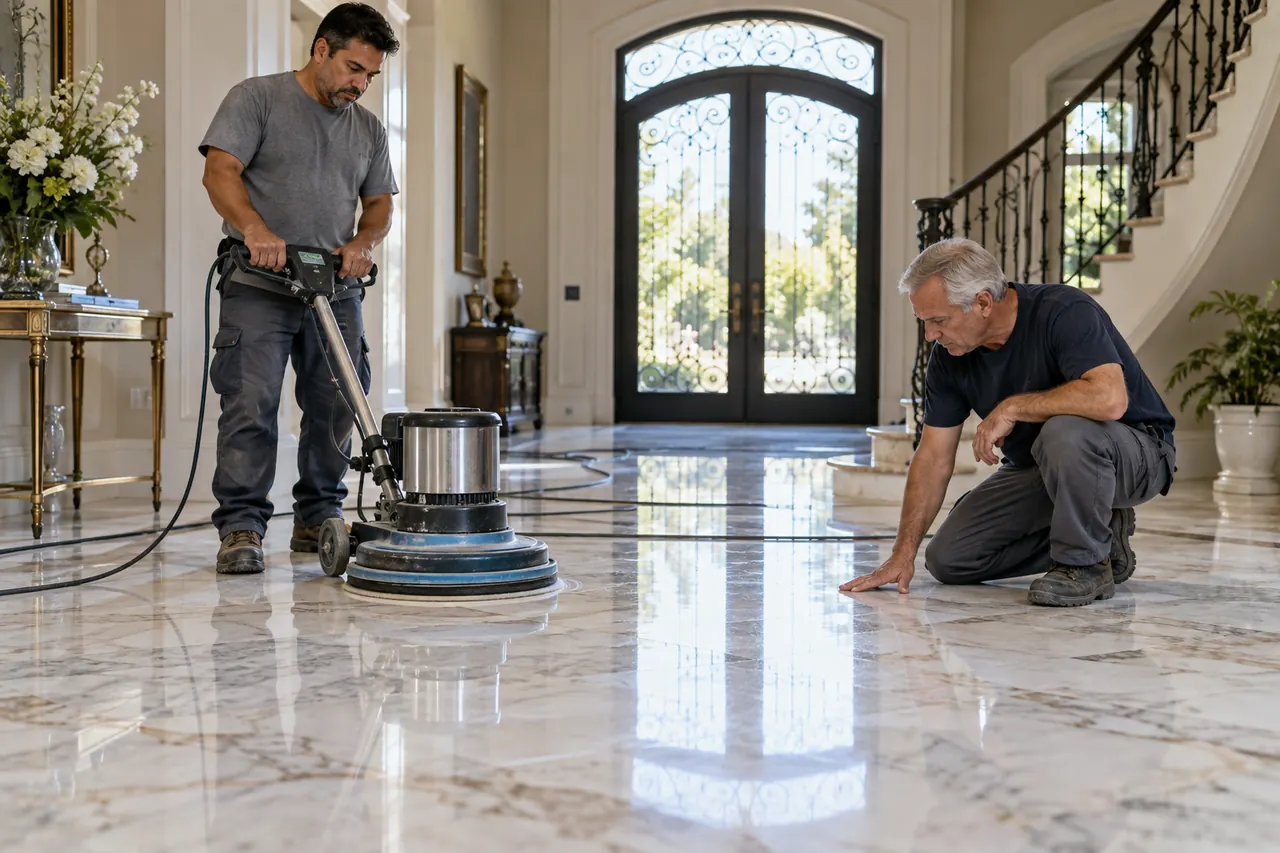
Call a stone care professional when your shower stays dull after cleaning, has widespread etching, shows darkened grout, or has hard-water buildup that will not release with gentle products. Professional service can include deep cleaning, stain treatment, honing or polishing when needed, and proper sealing for continued protection.
First Choice Floor Care helps homeowners and property managers restore worn marble surfaces with a practical inspection-first approach. The goal is not to sell unnecessary work. It is to identify whether the shower needs cleaning, polishing, sealing, or a closer look at grout and moisture-related issues.
A well-cared-for marble shower should feel like a clean place to start or end the day, not another surface you have to worry about damaging. Keep the routine simple, use products made for stone, and deal with dullness or water issues while they are still small.
Unsure what your surface needs?
A clear assessment is more useful than guessing. Tell us what you’re seeing and we’ll discuss the next step.
Request an Estimate