Learn how to remove pet odors from carpet, treat fresh and old urine smells, and know when professional deep cleaning is the right next step for your home.
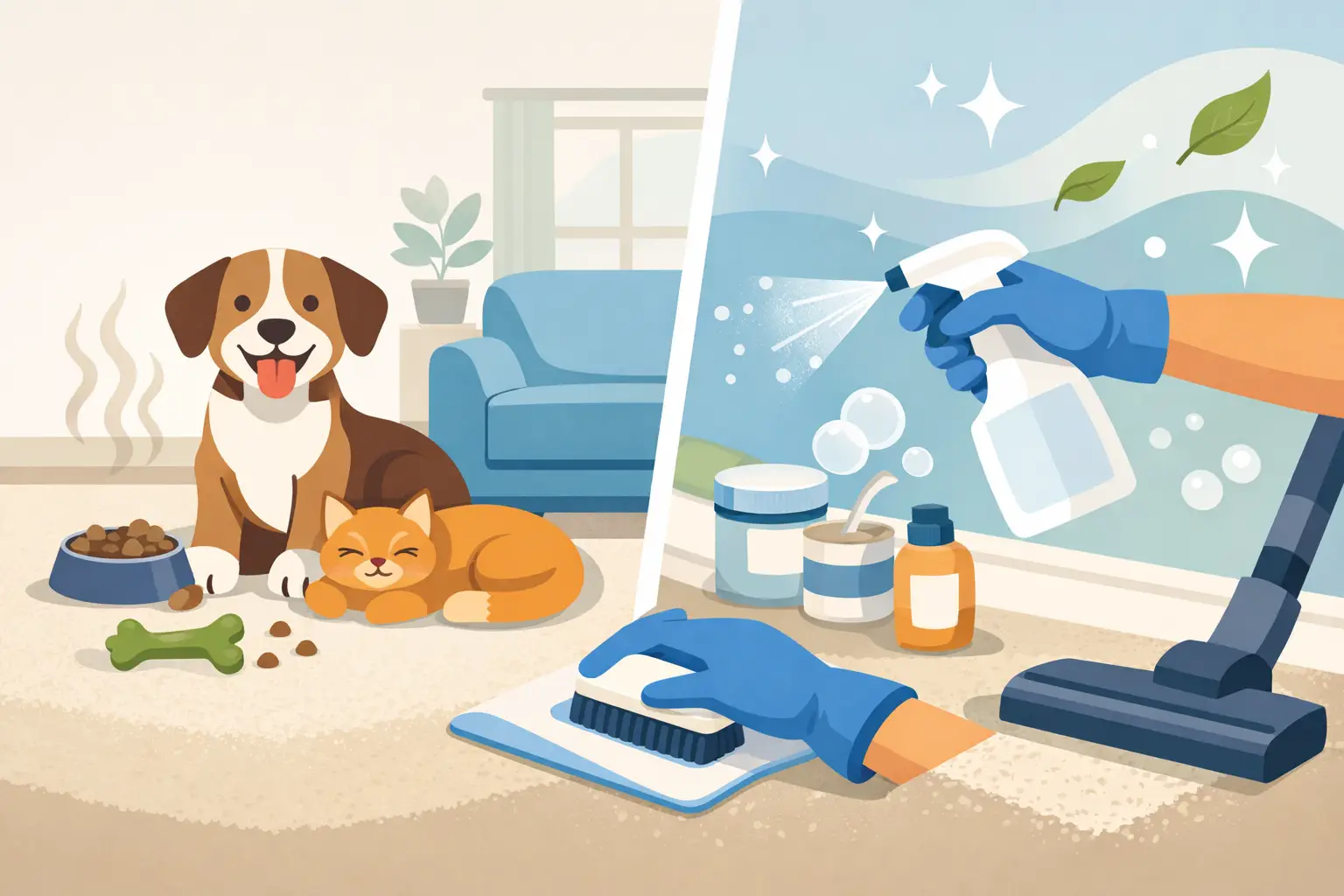
A carpet can look clean and still hold a pet odor that greets you the moment you walk through the door. If you searched “how to remove pet odors carpet,” the real answer is not to cover the smell with fragrance. You need to reach the source in the carpet fibers, backing, and sometimes the padding below.
For busy pet owners, renters, and property managers in South Florida, this problem can feel especially stubborn. Warm, humid conditions can make old odors seem stronger, and a quick surface spray often does little more than temporarily mask the issue. The good news is that many pet odors can be treated successfully when you use the right method and act before the residue has time to spread deeper.
Why Pet Odors Keep Coming Back
Most lingering pet odor comes from urine, not from pet hair or everyday dander. Urine leaves behind crystals and organic residue. When humidity rises or the area gets damp again, those crystals can reactivate and release odor. That is why a room may smell fine one day and noticeably worse after rain, steam cleaning, or a humid afternoon.
A standard carpet deodorizer is rarely enough because it does not break down the residue. Soap can also create a problem if too much is used. It may leave a sticky film that attracts soil, making the area look dingy while the odor remains underneath.
The depth of the accident matters. A fresh spot caught quickly may only affect the carpet surface. An older or repeated accident can soak through the fibers, into the backing and pad, and even reach the subfloor. At that point, the treatment needs to match the level of contamination.
How to Remove Pet Odors From Carpet After a Fresh Accident
Start by blotting, not scrubbing. Place clean white towels or paper towels over the wet area and press firmly. Stand on the towels if necessary to draw up as much moisture as possible. Replace them and repeat until they come away mostly dry. Scrubbing pushes urine outward and deeper into the fibers, which makes the affected area larger.
Once the area is blotted, apply an enzyme-based pet urine cleaner made for carpet. Enzyme treatments are designed to break down the organic material that causes the odor. Follow the label carefully, especially the recommended dwell time. The cleaner has to stay wet long enough to work, so spraying it on and immediately blotting it away can limit the results.
Avoid using hot water at this stage. Heat may set proteins in certain stains and can make odor treatment harder. Also, never mix cleaners. Combining products such as bleach, ammonia, vinegar, or peroxide can damage carpet color, create unpleasant fumes, or reduce the effectiveness of the treatment.
After the enzyme cleaner has had time to work, blot the area again and allow it to dry fully. Open windows when weather allows, run ceiling fans, or use air conditioning to help the carpet dry faster. In Fort Lauderdale homes, where moisture lingers, fast drying helps prevent musty smells from becoming part of the problem.
Finding Old Pet Urine Spots You Cannot See
Old accidents are often the reason a carpet smells unpleasant even when there is no visible stain. Check the places pets return to most often: corners, doorways, furniture edges, rugs, and areas near pet beds. A black light can help reveal dried urine residue, although it is not perfect. Some household materials, cleaners, and stains can glow too.
Use your nose as well as your eyes. Get close to the carpet, particularly after the room has been closed for several hours. If the odor is stronger in one section, treat a wider area than the visible stain. Urine can spread below the surface, so treating only a small circle on top may leave odor around the edges.
Before applying any product, test it in an inconspicuous spot. This is especially important with wool, patterned carpet, older carpet, and heavily dyed fibers. A cleaner that works well on one carpet may lighten or discolor another.
Treat the carpet fibers and the backing
For an old odor, lightly apply enough enzyme cleaner to reach as deep as the original accident likely went. This does not mean flooding the carpet. Too much liquid can create drying problems and may spread contamination. The goal is controlled saturation of the affected area.
Give the product its full dwell time, then blot excess moisture and dry the area thoroughly. One treatment may be enough for a minor old spot. Repeated accidents usually require more than one application because each incident leaves additional residue behind.
Do not judge the result while the carpet is still wet. Some cleaning products have their own scent, and moisture can temporarily make the odor seem stronger. Wait until the carpet is completely dry before deciding whether further treatment is needed.
What to Avoid When Deodorizing Carpet
A few common home remedies can make a manageable problem more difficult. Perfumed sprays may leave the room smelling fresh for a few hours, but they do not remove the source. Steam can be helpful in professional carpet cleaning when used with the right extraction process, but applying heat before urine residue is properly treated may lock in odor or spread it through the padding.
Baking soda can absorb mild surface smells, but it is not a dependable fix for urine that has soaked into the carpet. If large amounts are worked into the fibers and not fully removed, the powder can remain in the carpet and affect vacuum performance. Vinegar may help with some general household odors, yet it is not a replacement for an enzyme treatment on pet urine.
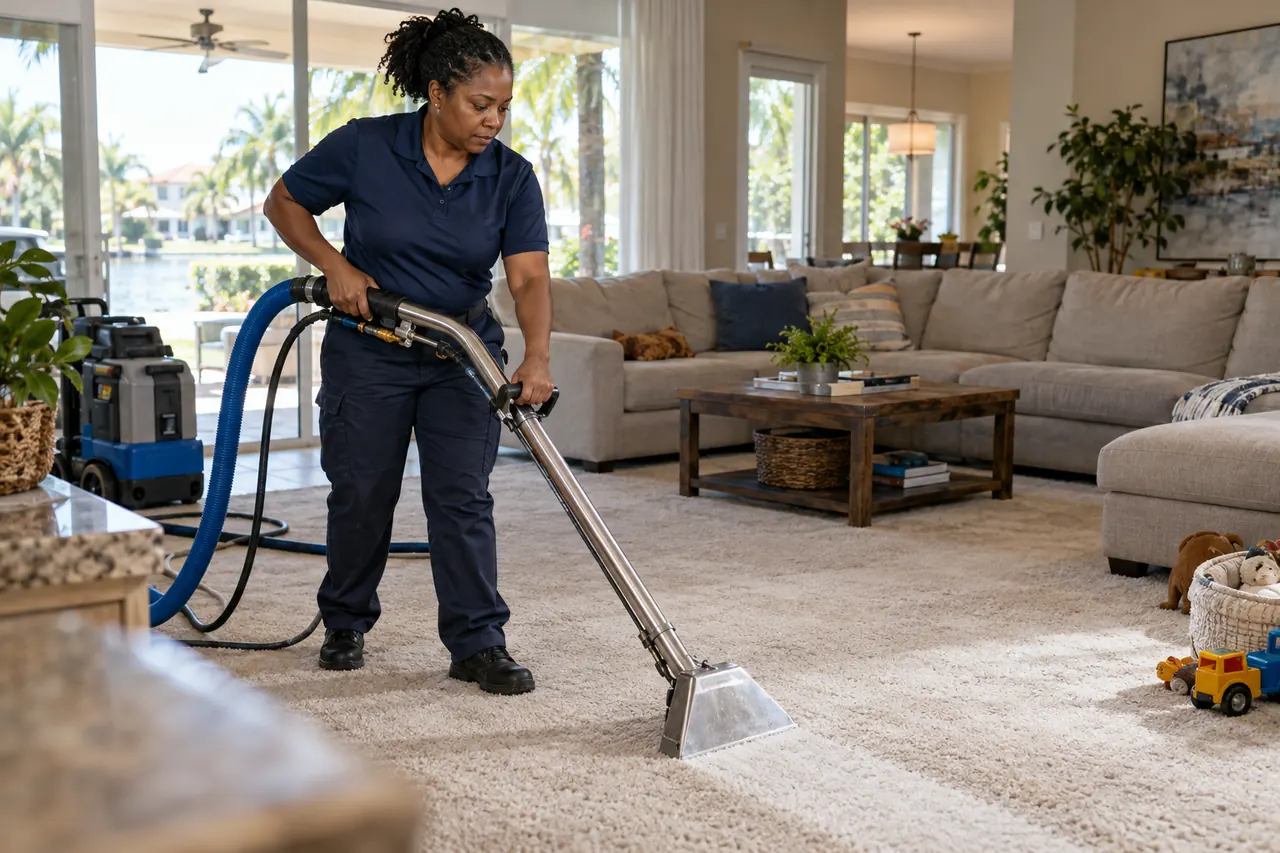
Be careful with rental carpet cleaning machines as well. They can improve the appearance of a carpet, but over-wetting is common. If the machine does not extract enough moisture, the carpet can take too long to dry, leaving a damp smell behind. For severe odor, appearance and odor removal are separate jobs. A carpet may look brighter after cleaning but still need targeted treatment underneath.
When Professional Pet Odor Removal Makes Sense
Professional help is a practical choice when the odor returns after home treatment, the affected areas are large, or a pet has used the same location more than once. It is also worth calling for help before listing a rental, preparing a home for sale, turning over a unit, or welcoming guests into a business or hospitality property.
A proper service starts with inspection. The technician identifies affected areas, considers the carpet type, and determines whether odor is limited to the fibers or has reached the pad and subfloor. From there, the process may include targeted enzyme treatment, deep extraction, odor neutralization, and careful drying. In more severe cases, the carpet may need to be lifted so the padding or subfloor can be addressed directly.
That last step is not always necessary, and an honest inspection matters. There is no benefit in recommending replacement when deep cleaning can restore the carpet. At the same time, no cleaning method can promise a permanent result if contaminated padding or subfloor is left untreated. The right solution depends on the age of the accident, the amount of urine, and how often it happened in the same place.
First Choice Floor Care provides carpet cleaning for homes and businesses that need more than a quick cover-up. A focused treatment can help restore the fresh, comfortable feel of rooms where your family, guests, tenants, or customers spend time every day.
Keep the Smell From Returning
Once the carpet is fresh again, prevention protects your cleaning investment. Take pets out on a consistent schedule, clean accidents right away, and keep an eye on locations where they have had accidents before. Pets are often drawn back to areas that still carry even a faint odor humans cannot detect.
Wash pet bedding regularly and vacuum carpet often to remove hair, dander, and tracked-in soil. If your pet is having frequent accidents, a veterinarian can help rule out health issues, while a trainer may help with behavior or routine changes. For homes with several pets or high traffic, periodic professional carpet cleaning can keep buildup from turning into a larger restoration job.
A pet-friendly home does not have to smell like one. Treat the source thoroughly, let the carpet dry completely, and get professional help when the odor has moved below the surface. A fresher carpet makes the whole room easier to enjoy.
Unsure what your surface needs?
A clear assessment is more useful than guessing. Tell us what you’re seeing and we’ll discuss the next step.
Request an Estimate