Learn how to steam clean upholstery safely, remove everyday soil and odors, and know when delicate fabrics need a professional cleaner instead at home.
A sofa can look clean until sunlight hits the cushions and reveals the buildup from pets, kids, meals, and daily use. Learning how to steam clean upholstery can freshen fabric and lift embedded soil, but the wrong method can leave water rings, shrinkage, color loss, or a lingering musty smell. The goal is not to soak the furniture. It is to clean it thoroughly while keeping the fabric, padding, and drying time under control.
For many South Florida homes and businesses, upholstery also has to dry in humid conditions. That makes careful moisture control just as important as stain removal. A lightly cleaned chair that dries quickly is usually a better result than a heavily saturated sofa that stays damp for two days.
Start by Checking the Upholstery Fabric
Before bringing out a steam cleaner, find the care tag. It is often under a cushion, beneath the sofa, or on the underside of a chair. The cleaning code tells you what the manufacturer considers safe.
A W means water-based cleaning methods are generally allowed. An S means use solvent-based products only, so steam cleaning is not a good choice. WS means either water- or solvent-based products may be used, though a test spot is still necessary. An X means vacuum only or professional cleaning, because moisture and cleaning solutions can damage the fabric.
Steam cleaning is best suited to durable, colorfast upholstery with a W or WS code. Synthetic fabrics such as polyester, microfiber, and some nylon blends often respond well. It depends on the specific piece, though. A microfiber sectional may have a W code but still show water marks if it is over-wet or allowed to dry unevenly.
Do not steam clean silk, velvet, suede, leather, linen, rayon, wool blends, antique upholstery, or furniture with loose dyes unless the manufacturer specifically permits it. Decorative trim, glued backing, and heavily padded cushions also call for extra caution. When a piece is expensive, sentimental, or difficult to replace, professional inspection is the safer first step.
What You Need to Steam Clean Upholstery
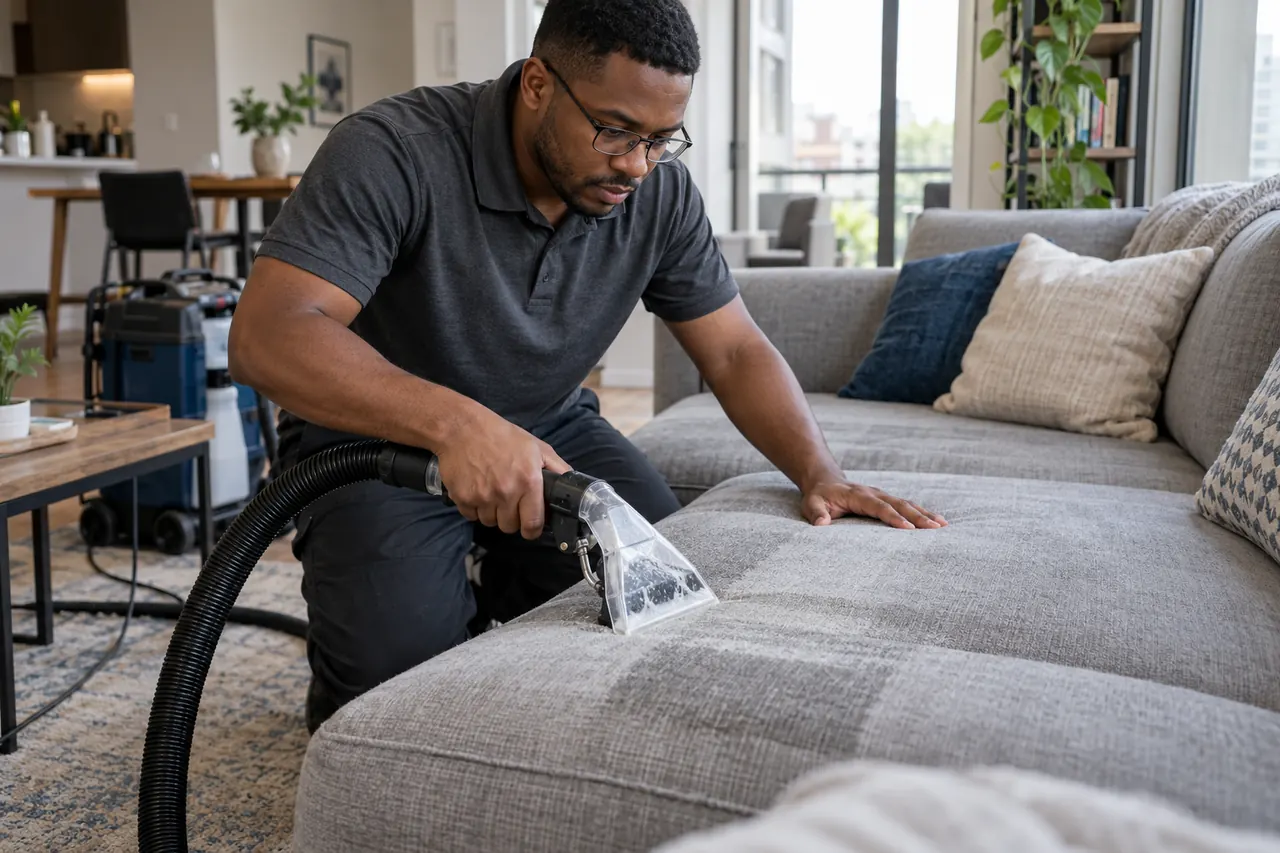
A dedicated upholstery cleaner or carpet extractor with an upholstery tool is usually the most practical machine for this job. These machines spray a controlled amount of cleaning solution, agitate the surface, and pull dirty moisture back into the recovery tank. That extraction step matters.
A handheld steamer can sanitize surface areas, but it does not remove much suspended dirt or excess moisture. Used too close to the fabric, it can force hot vapor into the cushion and make drying harder. If you use one, keep it for light surface refreshing rather than deep cleaning.
Gather a vacuum with an upholstery attachment, clean white microfiber cloths, a soft upholstery brush, a water-based upholstery cleaner approved for your machine, and fans for drying. Avoid colored towels, strong degreasers, dish soap, bleach, and more detergent than the product instructions call for. Too much solution can leave residue that attracts new soil faster.
Vacuum Before You Add Any Moisture
Dry soil is easier to remove before it turns into mud. Vacuum the full piece slowly, including seams, creases, piping, cushion edges, and the space under removable cushions. Use a crevice tool where crumbs, pet hair, and dust collect.
This step makes a visible difference, especially on family room furniture and restaurant seating. It also helps the cleaning tool make better contact with the fabric instead of dragging loose grit across it. If pet hair is stubborn, a dry rubber brush or upholstery brush can loosen it before vacuuming.
Pre-Treat Spots, but Keep It Gentle
Look at stains before cleaning the entire piece. Food spills, body oils, pet accidents, makeup, and ink do not all respond to the same treatment. Start by blotting fresh spills with a clean, dry white cloth. Press down and lift. Do not scrub, because scrubbing can spread the stain and roughen the fibers.
Apply a small amount of appropriate upholstery spot treatment to a hidden area first, such as the back skirt or underside of a cushion. Wait for it to dry completely, then check for fading, texture changes, or a water ring. If the test area looks normal, lightly treat the visible spot and give it a few minutes to work.
For odor from pets or food, an enzyme-based product may help when it is compatible with the fabric code. The product needs time to work, so follow its label rather than immediately flooding the area with steam. Old stains that have been heat-set, especially urine or ink, may need a different approach than standard upholstery washing.
How to Steam Clean Upholstery Step by Step
Fill the machine with warm water and the correct amount of approved cleaning solution. Do not use water that is excessively hot unless the equipment instructions allow it. High heat and too much moisture are a rough combination for delicate fabric, glued components, and cushion foam.
Begin on the least noticeable area. Hold the upholstery tool flat against the fabric and make one slow, even pass. Use the spray only while moving the tool, then make one or two dry passes with no spray to recover as much moisture as possible. The fabric should feel lightly damp, not wet enough to leave your hand soaked.
Work in small sections, usually one cushion panel or arm section at a time. Overlap each pass slightly so you do not leave clean stripes beside dirty ones. Avoid repeatedly going over the same area with solution. If the recovery water is dark, use extra dry passes instead of adding more product.
Clean removable cushions on both sides when possible. This helps them dry evenly and reduces the chance of a clean front side looking different from the rest of the furniture. For attached cushions, clean the seating surface, front panel, and edges with controlled passes. Take special care around buttons, zippers, wood trim, and seams.
Do Not Over-Wet the Cushions
Most upholstery cleaning problems come from saturation, not from the cleaning tool itself. When moisture reaches the cushion filling, drying slows down and odors can return. Over-wetting may also cause brownish marks known as wicking, where soil from deeper in the fabric or padding rises to the surface as it dries.
If a section feels too wet, stop applying solution. Make several extraction-only passes, blot with clean microfiber cloths, and aim a fan across the area. In Fort Lauderdale and across South Florida, air conditioning and moving air are more helpful than opening doors on a humid day.
Keep children and pets off the furniture until it is fully dry. Depending on the fabric, airflow, and how heavily it was soiled, drying can take four to 12 hours. Thick cushions, high humidity, and limited airflow can make it take longer.
Brush and Reset the Fabric After Cleaning
Once the fabric is damp but no longer dripping, gently brush it in one direction with a soft upholstery brush. This simple step helps prevent uneven texture on microfiber, velour-like fabrics, and other materials with a visible nap. It also gives the furniture a more uniform finished appearance.
Check the piece again after it dries. If a stain returns, do not keep steaming it aggressively. That often signals deep contamination, old residue, or a stain type that needs specialized treatment. A careful professional cleaning can remove more soil while using commercial extraction equipment designed to recover moisture efficiently.
When Professional Upholstery Cleaning Makes More Sense
DIY cleaning is useful for routine refreshes and minor spills on suitable fabric. Professional service is often the better value for a large sectional, heavily used dining chairs, pet odor that reaches the padding, mystery stains, or furniture that has not been cleaned in years. Property managers and hospitality businesses may also need quicker turnaround with less disruption to guests or tenants.
First Choice Floor Care begins with the condition of the fabric, the stain type, and the level of buildup, then uses a cleaning method suited to the material. That practical approach helps protect furniture while improving the color, feel, and freshness of the room.
A clean sofa or chair changes how a space feels, especially when it is where your family relaxes or customers wait. Treat spills early, vacuum regularly, and use moisture carefully. When the fabric needs more than a light refresh, getting the right help can restore a well-used piece without rushing into replacement.
Unsure what your surface needs?
A clear assessment is more useful than guessing. Tell us what you’re seeing and we’ll discuss the next step.
Request an Estimate