Is marble polishing worth it? See when professional restoration saves your floor, removes dullness and etching, and helps protect its finish for longer.
A marble floor can make a home, lobby, or bathroom feel polished and welcoming - until the surface starts looking cloudy, scratched, or marked by dull spots. At that point, many property owners ask, is marble polishing worth it, or is replacement the only way to get a clean, fresh look back? For most sound marble floors, professional polishing is a practical way to restore the stone at a fraction of the disruption and cost of replacement.
The right answer depends on what is causing the marble to look worn, how extensive the damage is, and what finish you want when the work is complete. Polishing is not a magic cover-up, but when it is matched to the condition of the stone, the improvement can be dramatic.
What Marble Polishing Actually Fixes
Marble is a natural stone, not a printed tile surface. Its beauty comes from mineral variation, veining, and a finish that reflects light. Over time, everyday foot traffic, grit tracked in from outside, cleaning products, pet accidents, spills, and furniture movement wear down that finish.
Professional marble polishing removes a very thin layer from the surface to reduce scratches, haze, traffic patterns, and light etching. Etching is especially common on marble. It happens when acidic items such as citrus, wine, vinegar, or some bathroom products react with the stone and leave a dull, lighter-looking mark. It can look like a stain, but it is often a change in the surface itself.
Polishing can also bring back clarity to marble that has been dulled by residue or years of improper cleaning. A clean floor is nice. A clean floor with a more even, reflective finish can make the entire room feel brighter and better cared for.
Is Marble Polishing Worth It? Start With the Condition
Polishing is usually worth considering when the marble is structurally sound but visually tired. If the tiles are firmly set, there are no major cracks running through multiple pieces, and the problem is mostly dullness or surface wear, restoration often makes good sense.
It is particularly valuable in high-visibility spaces. A worn marble entryway gives visitors an immediate impression of a property. The same is true for hotel common areas, condo lobbies, office reception spaces, and residential kitchens. Restoring the existing stone can improve that impression without the demolition, dust, material selection, and scheduling involved in a full replacement.
For homeowners, polishing may be worth it when the floor no longer matches the rest of a well-kept home. For property managers and business owners, it can be a cost-conscious maintenance decision that helps protect a major asset between larger renovations.
There are situations where polishing alone is not enough. Deep chips, cracked tiles, loose sections, severe lippage between tiles, or missing grout may require repair before any polishing begins. Dark discoloration that has penetrated deeply into the stone may also need specialized stain treatment. A careful inspection should separate what polishing can improve from what needs a different repair.
The Difference Between Cleaning and Polishing
This distinction saves customers from disappointment. Marble cleaning removes surface dirt, oils, residue, and grime. It is the right first step when the stone is simply dirty or has a buildup of cleaning products.
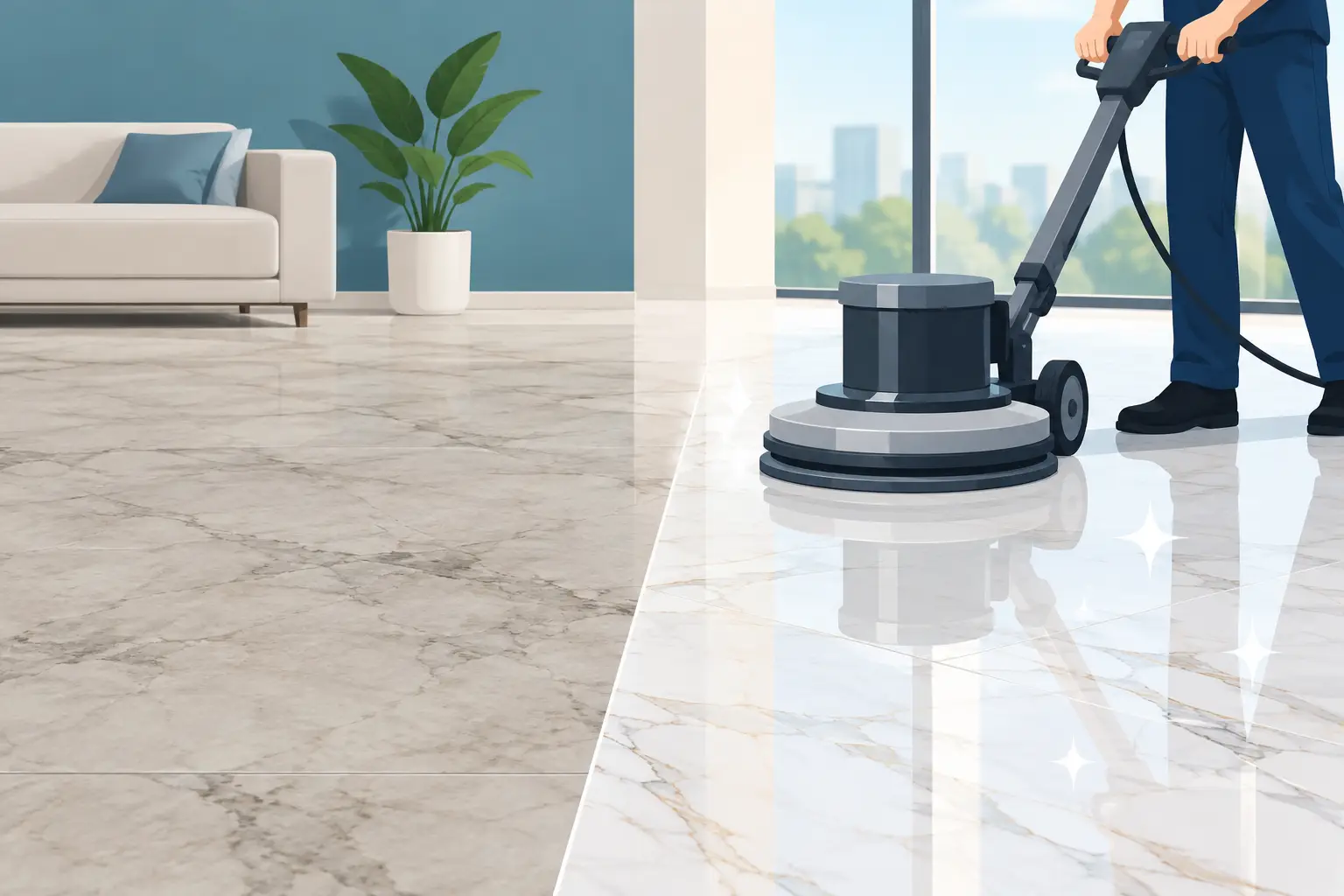
Polishing goes further. It refines the stone surface to reduce visible wear and improve its sheen. If you mop a marble floor and the dull rings, etched spots, or scuff-like marks remain, cleaning alone will not solve the problem.
Some floors need both. A professional service may begin with deep cleaning, address grout lines or edges, hone areas with damage, then polish the marble to an even finish. Honing is a more corrective step that helps level out scratches and etching before the final polish. The goal is not always a mirror-like shine. Many marble floors look best with a satin or low-sheen finish that feels clean, natural, and easier to maintain.
When Restoration Costs Less Than Replacement
Replacing marble involves more than buying new material. Old flooring must be removed and disposed of, the subfloor may need preparation, and new stone has to be selected, delivered, installed, grouted, and finished. The space may be out of use for days or longer, depending on its size and condition.
Polishing works with the floor you already own. That is why it can offer strong value when the marble itself is still in good shape. It preserves the character of the existing stone, avoids unnecessary waste, and usually causes far less disruption to your household or business.
The price of a polishing job depends on the square footage, layout, level of damage, desired finish, accessibility, and whether repairs or sealing are needed. Small bathrooms with tight corners can require detailed hand work. Large commercial areas may have more square footage but a simpler open layout. The best comparison is not just the initial service price. Consider the condition of the floor afterward, how long the improvement should last with proper care, and what replacement would require in time and expense.
What a Professional Marble Service Should Include
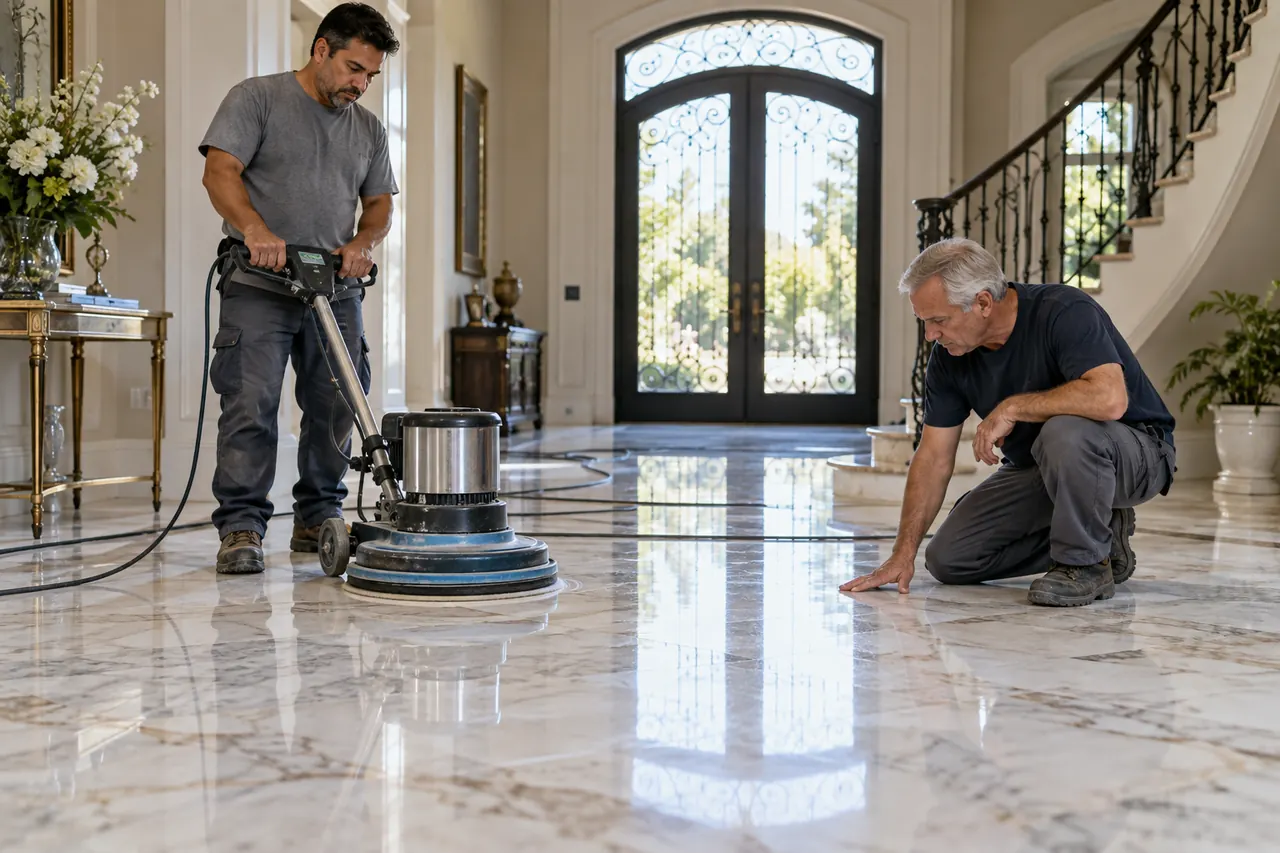
Good results start with an inspection, not a one-size-fits-all machine pass. Marble varies in hardness, color, pattern, and prior treatment. A technician should identify whether the surface has etching, scratches, wax buildup, coating failure, staining, or a combination of issues.
The work may include deep cleaning, honing damaged areas, polishing to the selected level of shine, detail work along edges, and grout cleaning where needed. Afterward, an appropriate penetrating sealer may be recommended. Sealer does not make marble stain-proof or stop etching from acid, but it can help slow the absorption of water-based spills and oils so cleanup is easier.
At First Choice Floor Care, the focus is on showing customers what their specific floor needs before recommending the work. Clear expectations matter. A skilled professional should explain what can be restored, what may remain visible, and how to care for the floor after service.
How Long Will Polished Marble Stay Beautiful?
A polished marble floor can stay attractive for a long time, but its lifespan depends on use and maintenance. A formal living room may hold its finish much longer than a busy restaurant entrance or a family kitchen with children and pets. South Florida properties also deal with fine sand, moisture, and frequent indoor-outdoor traffic, all of which can act like sandpaper under shoes.
The simplest protection is regular dry dust mopping to remove grit before it is walked into the stone. Use entry mats at exterior doors, clean spills promptly, and choose a pH-neutral cleaner made for natural stone. Avoid vinegar, bleach, abrasive powders, acidic bathroom cleaners, and generic cleaners that leave a heavy film.
Furniture pads help prevent scratches, while rugs in high-traffic zones can reduce wear. These habits do not eliminate future maintenance, but they can extend the time between professional polishing visits.
The Trade-Offs to Consider Before You Book
Polishing is an investment in appearance and preservation, but it is not the right answer for every goal. If you prefer a casual, matte look, a high polish may feel too formal. If the floor has extensive structural damage, repairing or replacing individual tiles may be the smarter first move.
There is also a maintenance reality: marble remains marble after it is polished. It will still react to acidic spills, and it can still scratch if grit is left on the floor. The value comes from restoring the surface and then caring for it properly, not expecting the stone to become maintenance-free.
For many owners, that trade-off is worthwhile. They get to keep the natural stone they chose, improve the look of the space quickly, and avoid replacing a floor that has plenty of life left in it.
If your marble has lost its glow but is still solid underfoot, do not assume it is beyond saving. A professional assessment can show whether a careful clean, hone, polish, and protective plan will bring back the kind of finish that makes the room feel good to come home to - or good to welcome customers into.
Unsure what your surface needs?
A clear assessment is more useful than guessing. Tell us what you’re seeing and we’ll discuss the next step.
Request an Estimate