Outdoor patio tile cleaning removes Florida grime, mildew, and stains while protecting grout and stone. Learn when careful DIY care needs a pro soon.
A patio can look worn out long before the tile itself is ready to be replaced. In South Florida, rain, humidity, pool splashes, leaves, foot traffic, and outdoor cooking can leave a film of dirt and mildew that makes once-bright tile look dull. Proper outdoor patio tile cleaning brings back the cleaner, more welcoming surface underneath without taking unnecessary risks with the tile, grout, or surrounding landscaping.
The key is not simply using more pressure or stronger chemicals. The right approach depends on what your patio is made of, how deeply the grime has settled in, and whether the surface has existing damage, loose grout, stains, or a failing sealer.
Why Patio Tile Gets Dirty So Quickly in South Florida
Outdoor tile faces a completely different kind of wear than indoor flooring. Indoors, most dirt stays on the surface until it is swept or mopped. Outside, moisture and heat create the conditions for organic growth, while wind carries in fine dust, pollen, sand, and debris from nearby trees.
Mildew and algae are especially common on shaded patios, covered lanais, pool decks, and areas where water sits after a storm. They can leave dark, greenish, or black marks along grout lines and tile edges. Besides affecting appearance, buildup can make a patio slippery when wet.
Pool areas may also develop calcium deposits or a cloudy film from splashing water. Grease near an outdoor kitchen or grill can attract more dirt and create stubborn dark spots. Rust stains can appear beneath metal furniture, planters, or sprinkler components. Each problem calls for a different cleaning method, which is why one all-purpose cleaner does not always produce the result homeowners expect.
Start With the Tile Material, Not the Stain
Before cleaning, identify the surface. Porcelain and ceramic tile are usually durable and can handle a thorough cleaning when the grout is in good condition. Still, harsh products may discolor grout or affect nearby painted surfaces, screens, or plants.
Natural stone needs more care. Travertine, marble, limestone, slate, and some terrazzo surfaces can be permanently etched by acidic cleaners. A product that removes mineral buildup from a porcelain tile may damage a polished or honed stone patio. Stone can also absorb oil, leaf tannins, and other stains more readily than glazed tile.
Textured tile presents another challenge. Its grip is useful around pools and entryways, but those grooves hold dirt. A quick rinse may make the surface look better temporarily while leaving embedded grime behind. Cleaning needs to reach the texture without grinding dirt deeper into the finish.
Grout deserves just as much attention as the tile. It is porous, so it often darkens first and stays dirty longer. Cracked or missing grout also lets moisture work behind the tile, where a simple surface wash cannot solve the issue.
A Careful DIY Routine for Light Buildup
For routine upkeep and light surface dirt, begin by moving furniture, planters, rugs, and décor off the patio. Sweep away leaves and loose debris first. If this step is skipped, wet debris can turn into muddy residue during cleaning.
Use a pH-neutral cleaner that is appropriate for your tile type, especially if your patio includes natural stone. Apply it according to the label directions, give it time to loosen buildup, and scrub small sections with a soft or medium-bristle deck brush. Work grout lines carefully, but avoid using wire brushes or highly abrasive pads that can scratch tile or roughen grout.
Rinse thoroughly so no cleaner remains on the surface. Leftover residue can leave a haze, attract dirt, or create slippery spots. Let the patio dry completely before putting furniture back in place.
For many homes, this level of care every few weeks is enough to keep a patio presentable between deeper cleanings. Covered patios may need less frequent washing, while pool decks and shaded areas may need more attention during the rainy season.
When a Pressure Washer Can Help - and When It Can Hurt
Pressure washing can remove a surprising amount of outdoor buildup, but it is not automatically the best first choice. Used incorrectly, high pressure can chip tile edges, strip grout, force water into cracks, damage seals, or drive dirt into porous stone.
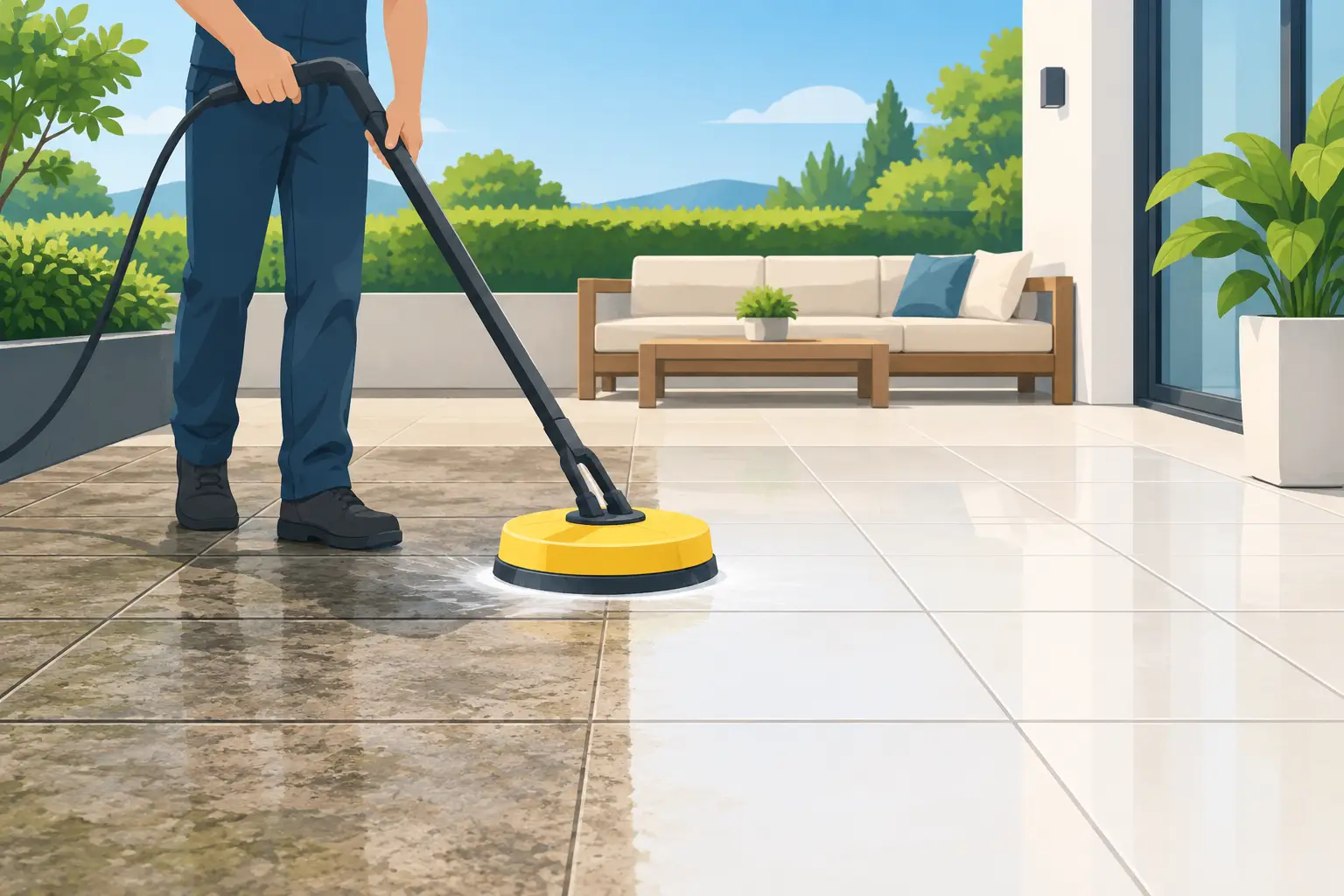
Porcelain and ceramic tile in sound condition may tolerate controlled pressure cleaning. The operator should keep a safe distance, use a fan-shaped tip rather than a narrow blasting nozzle, and avoid aiming directly at grout joints, cracks, door thresholds, or pool coping. Test a small, less visible area first.
Natural stone, older grout, cracked tiles, and delicate finishes require more caution. In these cases, professional surface cleaning often uses the right combination of solution, agitation, controlled rinsing, and extraction rather than relying on pressure alone. That process targets the grime while protecting the surface that gives the patio its value.
If the patio looks clean immediately after pressure washing but develops white haze, rough grout, loose material, or recurring dark spots soon after, the method may have been too aggressive or failed to address the cause of the buildup.
Tough Patio Stains Need a Specific Plan
Dark mildew is one of the most common calls from South Florida property owners, but it is not the only issue. A dark mark beneath a flowerpot may be organic staining. A reddish-brown mark could be rust. A cloudy white coating around a pool may be mineral buildup. Grease stains near a grill need a degreasing approach, while leaf stains often respond differently than oil.
Mixing products can be dangerous and can also make stains worse. Bleach-based products, acids, degreasers, and specialty stain removers should never be combined. Strong chemicals can harm plants, damage certain stone surfaces, and create fumes in enclosed patio areas.
A professional inspection is helpful when stains have been sitting for months, the tile is natural stone, or the patio has several problems at once. The goal is to treat the stain without creating a larger repair issue. Sometimes the safest result is significant improvement rather than complete removal, especially when a stain has penetrated porous stone or damaged the material itself.
Don’t Skip Grout and Sealer Protection
A patio can look cleaner after washing, but unprotected grout will absorb dirt and moisture again quickly. Once the tile and grout are fully dry, sealing may be worth considering. A quality penetrating sealer can help reduce absorption and make future maintenance easier.
Sealing is not right for every surface, and it is not a fix for failing grout or loose tiles. The surface must be properly cleaned and dry first. Applying sealer over trapped dirt or moisture can lock in discoloration and leave an uneven appearance.
For heavily used patios, pool areas, rental properties, and restaurant outdoor seating, scheduled cleaning and periodic protection can be more cost-effective than waiting until the surface looks neglected. Regular care helps maintain curb appeal, supports a cleaner outdoor space for guests, and can delay expensive restoration work.
Signs It’s Time to Call a Professional
DIY cleaning is useful for ordinary upkeep, but there are clear signs that a deeper service is the better choice. Persistent black or green growth, deeply darkened grout, widespread haze, grease buildup, mineral deposits, rust stains, and uneven color often need more than a brush and hose.
It is also wise to bring in a trained surface care team if you are unsure whether the patio is porcelain, ceramic, travertine, marble, or another natural stone. The wrong cleaner can cause permanent damage in a single afternoon. Property managers and business owners may also benefit from professional cleaning when they need a consistent result without disrupting tenants, customers, or daily operations.
First Choice Floor Care provides practical inspection, deep cleaning, and optional protection for surfaces that need more than a quick rinse. A clear photo of the patio can often help determine the likely material, level of buildup, and best next step before service is scheduled.
Keep the Fresh-Cleaned Look Longer
After a thorough cleaning, the easiest way to protect the result is to keep debris from sitting on the patio. Sweep after storms, rinse off food spills and pool residue promptly, and move planters occasionally so moisture does not collect beneath them. Check drainage, too. A patio that stays damp in one corner will keep attracting mildew no matter how often it is cleaned.
Your patio should feel like an extension of the home or business, not another surface you avoid looking at. With the right cleaning method and a little ongoing care, tired tile can look fresher, safer, and ready for the next family dinner, pool day, or customer visit.
Unsure what your surface needs?
A clear assessment is more useful than guessing. Tell us what you’re seeing and we’ll discuss the next step.
Request an Estimate