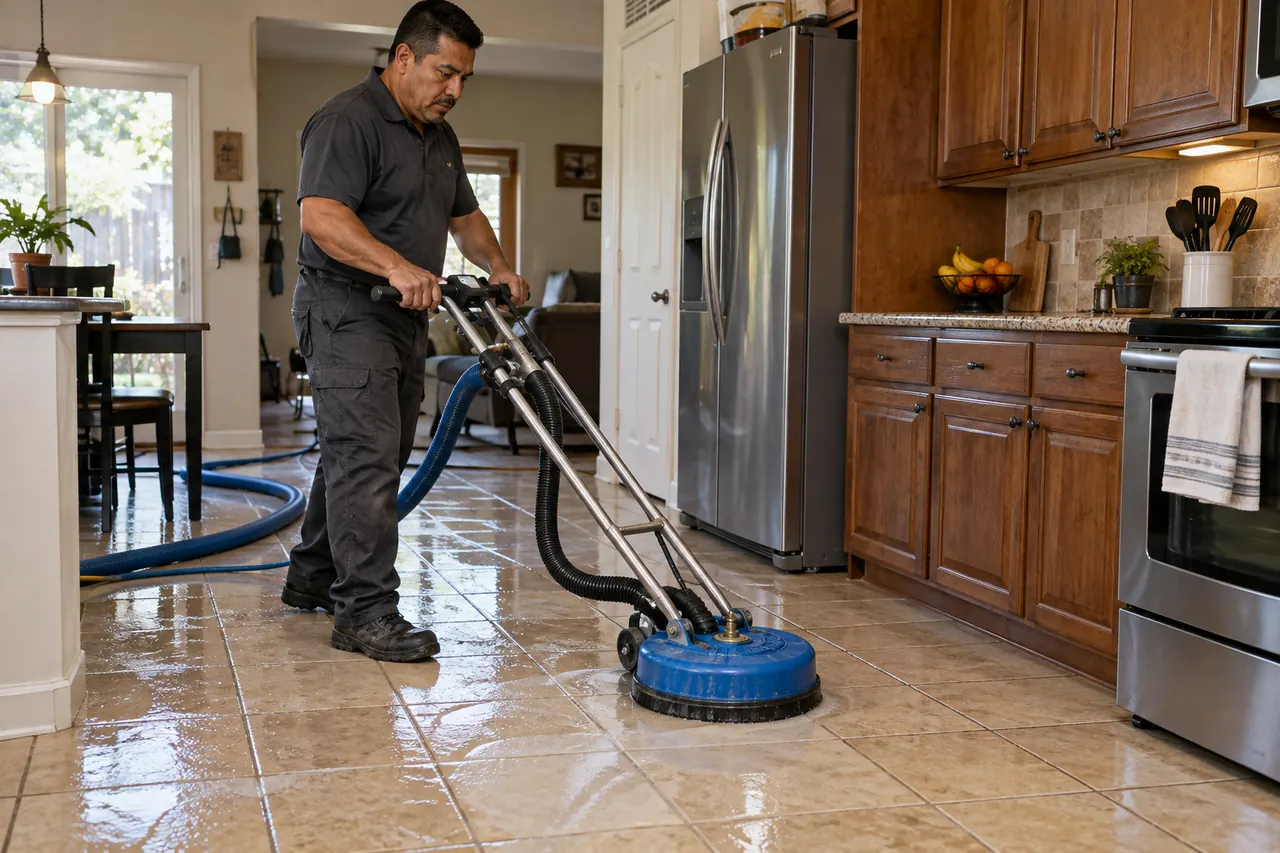

An honest professional tile cleaning review: learn what good service includes, what results to expect, and how to choose a Florida cleaning professional.
A professional tile cleaning review should be about more than whether a floor looks better for an afternoon. The real question is whether the service removes the dirt trapped below the surface, improves the look of worn grout, respects the material underfoot, and leaves you with a result worth paying for. For South Florida homes and businesses, where sand, humidity, pets, pool traffic, and everyday foot traffic add up fast, those details matter.
Tile can be one of the most durable surfaces in a property, but it is not maintenance-free. A kitchen floor may look dull even after mopping. Bathroom grout can turn dark around the shower and vanity. In a lobby, restaurant, or rental property, light-colored grout lines can make an otherwise clean space feel neglected. Professional cleaning is meant to address that deeper buildup without putting your flooring at risk.
What a Professional Tile Cleaning Review Should Measure
A fair review starts with the condition of the floor before anyone arrives. Some tile needs a deep clean and grout restoration. Other floors also need sealing to help slow future staining. Natural stone, such as marble, travertine, or terrazzo, is a different category altogether and may need polishing or specialized care rather than the same approach used on ceramic or porcelain tile.
That is why a good cleaning company should begin with an inspection. They should look at the tile type, grout condition, stains, traffic patterns, and any existing damage. A dark grout line may be ground-in soil, but it could also be permanent discoloration, missing grout, or old coating residue. Honest service means explaining the difference before work begins instead of promising a brand-new floor no matter what.
The strongest results are usually visible in the grout lines. Surface mopping removes loose dirt, but it rarely reaches the porous grout that holds oils, residue, tracked-in dirt, and cleaning product buildup. A professional process typically uses the right cleaning solution for the surface, agitation to loosen embedded soil, and extraction or rinsing to remove it from the floor rather than simply moving it around.
A floor should feel clean as well as look clean. After a proper service, tile should not be left with sticky residue, cloudy streaks, or a heavy fragrance used to cover odors. The room should look brighter, grout should appear more even in color, and the floor should be ready for normal use after the recommended drying time.
Results Depend on the Tile, Grout, and Wear
The phrase "deep cleaning" can create unrealistic expectations if nobody explains the limits. Professional tile cleaning can make a dramatic difference, especially when grout is simply dirty. It cannot repair cracked tile, replace missing grout, erase every chemical burn, or reverse years of damage caused by harsh products.
Porcelain and ceramic tile are generally durable, but grout is often the weak point because it is porous. White or light beige grout shows soil quickly, particularly in entryways, kitchens, bathrooms, and pet-friendly homes. Dark grout may hide dirt longer, but it can still collect residue and lose its original finish.
Natural stone requires more caution. Marble and terrazzo can dull or etch from acidic products. Travertine may have pits and filled areas that need special attention. If a company treats every floor with the same chemical or aggressive tool, that is a concern. The best result is not always the most forceful cleaning method. It is the method that safely fits the material.
Commercial floors bring their own challenges. A busy office, store, restaurant, or vacation rental often needs cleaning scheduled around customers, guests, staff, or turnover dates. In those settings, punctuality, clear communication, and realistic drying guidance are part of the service. A clean floor that disrupts operations is not a convenient solution.
Signs the Service Is Being Handled Well
You do not need to be a flooring expert to recognize careful work. The technician should protect nearby surfaces, identify problem areas before starting, and explain what they can reasonably improve. They should not rush through a large floor without paying attention to edges, corners, transitions, and grout lines where buildup is often worst.
Fair pricing also matters. A trustworthy estimate should account for the square footage, condition of the floor, type of tile, and whether sealing or specialty restoration is needed. The lowest starting price is not automatically the best value if the work skips the deep-cleaning steps that produce the visible change you called for.
Before agreeing to the service, ask whether the quote includes cleaning the grout lines, whether the floor will be rinsed or extracted, and whether sealing is recommended. These are practical questions, not complicated ones. Clear answers help you compare services without guessing what is included.
Is Grout Sealing Worth Adding?
Sealing is not mandatory for every floor, but it can be a smart follow-up after a deep grout cleaning. It is most useful when grout is porous, light in color, and exposed to regular spills or heavy traffic. Kitchens, bathrooms, entryways, rental units, and commercial spaces often benefit from added protection.
A sealer does not make grout invincible. Spills should still be wiped up, and routine mopping still matters. What it can do is reduce how quickly water, oil, and soil absorb into the grout. That makes regular cleanup easier and can help the freshly cleaned appearance last longer.
There is a trade-off. If grout is already damaged, crumbling, or unevenly stained, cleaning and sealing may improve its appearance without making it perfect. In that case, repairs or regrouting may be the better long-term choice. A reliable professional will tell you when cleaning is the right investment and when a repair should come first.
How Often Should Tile Be Professionally Cleaned?
There is no single schedule for every property. A quiet guest bathroom may only need professional attention occasionally. A family kitchen with children, pets, and daily cooking may need it more often. Beach-area homes can also see extra sand and moisture around entryways, patios, and pool access points.
For many homes, a professional tile and grout cleaning every 12 to 18 months helps keep buildup from becoming overwhelming. High-traffic commercial properties may benefit from more frequent service, especially when floor appearance is part of the customer experience. Property managers may choose cleaning between tenants or before listing a unit so the space shows better without the expense of replacing sound flooring.
Between appointments, use a neutral cleaner that is suitable for your tile and grout. Avoid oily soaps, waxy products, and harsh acids unless the surface manufacturer specifically recommends them. These products can leave film behind, attract more dirt, or damage sensitive stone. Regular sweeping or vacuuming also matters because grit can wear down finishes over time.
Choosing a Local Tile Cleaning Team
A good professional tile cleaning review should leave you with confidence in the process, not just excitement over before-and-after photos. Look for a local team that listens to the problem, asks for photos or offers an inspection, provides straightforward pricing, and explains the work in everyday language.
Responsiveness is especially valuable when you are preparing for guests, turning over a rental, opening a business, or trying to solve a stubborn floor issue before it gets worse. First Choice Floor Care focuses on the practical details that make service easier: prompt communication, clear estimates, deep cleaning, and optional protection when it makes sense for the floor.
If your tile looks tired but is still structurally sound, replacement may be unnecessary. A careful cleaning can bring back the cleaner, fresher look that made you choose the floor in the first place. Start with a few clear photos of the problem areas, note the rooms with the heaviest traffic, and ask for an honest recommendation that fits the surface and your schedule.
Unsure what your surface needs?
A clear assessment is more useful than guessing. Tell us what you’re seeing and we’ll discuss the next step.
Request an Estimate