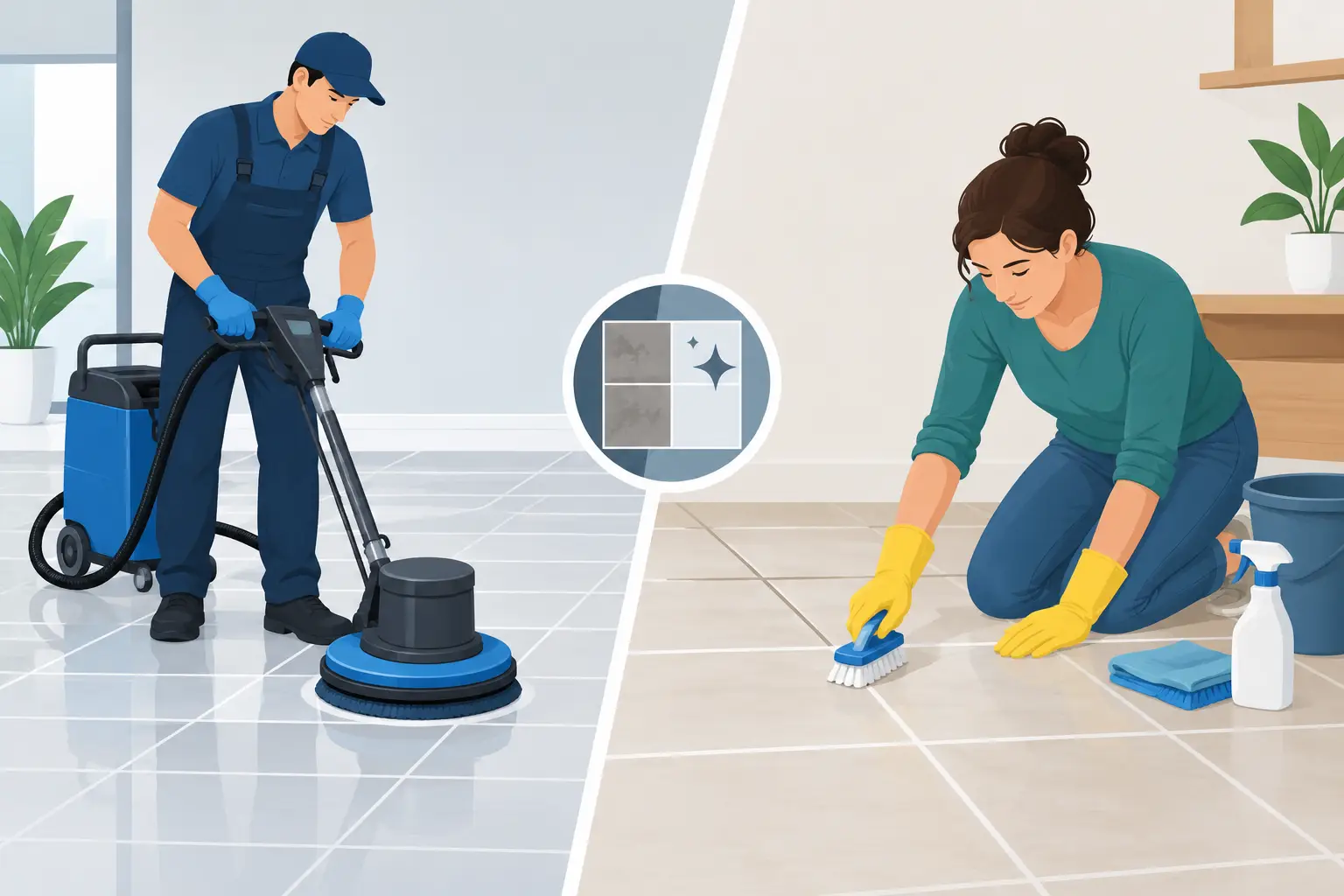
Professional versus DIY grout cleaning: compare cost, effort, safety, and results to choose the right care for South Florida tile floors with confidence.
A freshly mopped tile floor can still look dirty when the grout lines are dark, stained, or unevenly colored. That is why professional versus DIY grout cleaning is not simply a question of who has the stronger cleaner. It is a decision about your time, the condition of your floors, and whether you need a quick improvement or a deeper restoration that lasts.
For homeowners and businesses across South Florida, grout takes a beating. Sand, humidity, cooking residue, pet traffic, spills, and daily foot traffic settle into porous grout lines over time. The right choice depends on how far that buildup has gone and how much work you are prepared to take on.
What DIY Grout Cleaning Can Do Well
DIY cleaning makes sense when grout is lightly soiled and you stay on top of regular maintenance. A neutral tile-and-grout cleaner, warm water, a stiff nylon brush, and some patient scrubbing can lift surface dirt from many ceramic or porcelain tile floors.
This approach is especially useful for smaller areas, such as a guest bathroom, kitchen backsplash, or the tile around a laundry room. It is also a practical way to maintain grout after a professional cleaning. Regular care keeps oils and dirt from building up again so quickly.
The main benefit is the upfront cost. Store-bought cleaners and basic tools are generally inexpensive, and you can work on your own schedule. For renters trying to freshen up a small tiled area before move-out, DIY cleaning may be all that is needed.
Still, good results require more than spraying cleaner and wiping it away. Grout is porous, meaning dirt can settle below the surface where household products have limited reach. If the lines have been dark for years, a single cleaning session is unlikely to restore their original appearance.
The Time and Effort Add Up
Grout cleaning is one of those jobs that looks simple until you are on your hands and knees scrubbing hundreds of narrow lines. A small bathroom may take an hour or two. A large kitchen, entryway, or open commercial space can take much longer, particularly if you need to repeat the process.
There is also the issue of consistency. It is easy to get bright results in one section and leave other areas looking uneven. When grout has deep staining, the floor can still look tired even after a full afternoon of effort.
Common DIY Mistakes to Avoid
The wrong product or method can create a bigger problem than dirty grout. Harsh acidic cleaners can damage certain types of tile and grout, while bleach may lighten some areas unevenly without fully removing embedded dirt. Using a metal brush can scratch tile surfaces, and too much water can leave moisture sitting in grout lines.
Avoid mixing cleaning products. Combining chemicals can produce dangerous fumes, especially in small bathrooms with limited ventilation. It is also wise to test any new cleaner in a hidden spot first, particularly on natural stone, colored grout, or older tile.
Professional Versus DIY Grout Cleaning: The Real Difference
The biggest difference is not just equipment. Professional service starts with identifying what is actually on the floor. Is the grout dark because of surface soil, grease, mold-related staining, mineral buildup, old sealers, or years of embedded traffic? Each issue responds differently to cleaning.
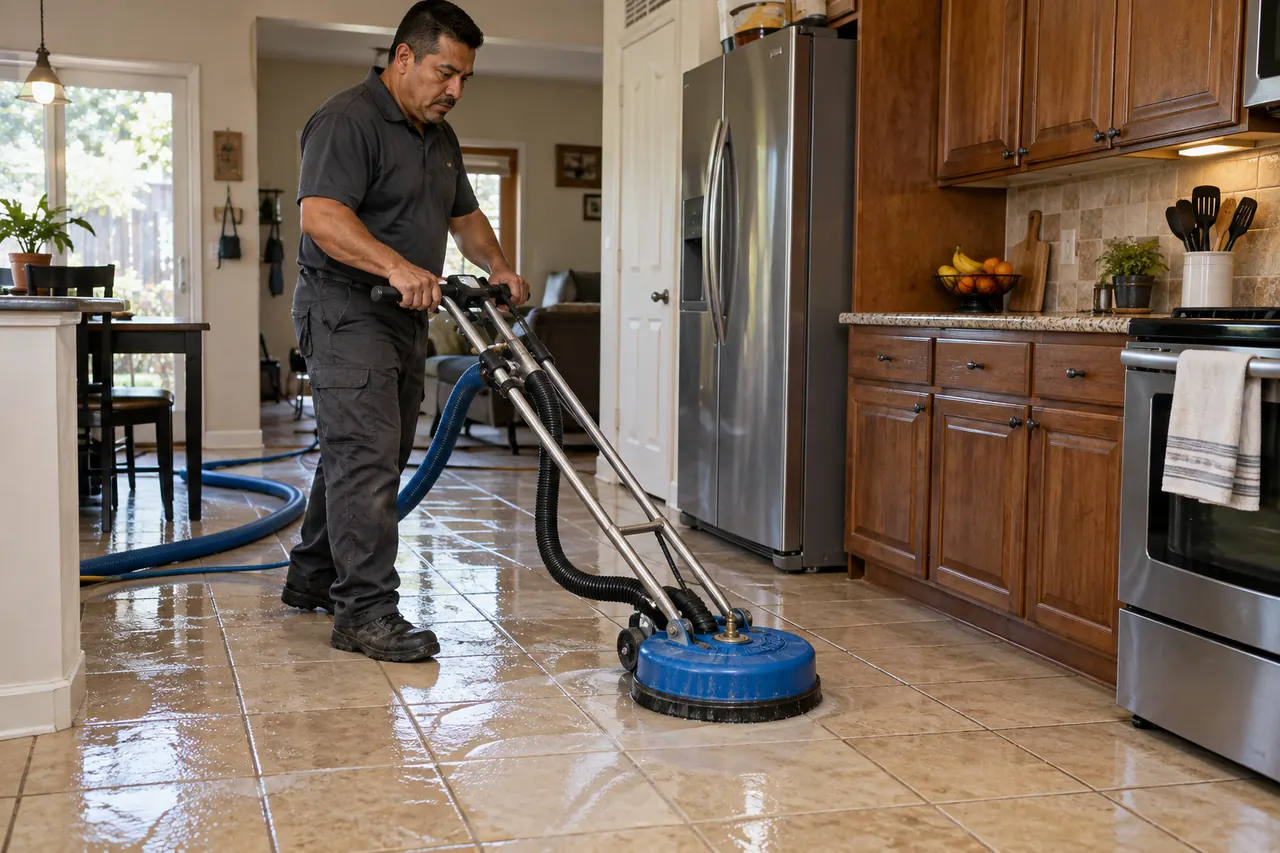
A professional tile and grout cleaning team uses commercial-grade solutions and extraction equipment designed to flush out loosened soil instead of spreading it around the floor. Agitation, controlled rinsing, and high-powered extraction help remove grime from deep within grout lines while collecting the dirty water.
That process is particularly valuable in busy South Florida homes, rental properties, restaurants, lobbies, and offices. These areas often have more buildup than ordinary household tools can handle, and the difference after a deep cleaning can be visible right away.
Professional cleaning also reduces the guesswork. Rather than trying several products and hoping one works, you receive an assessment based on the tile type, grout condition, and level of staining. If sealing is appropriate, it can help protect the freshly cleaned grout from absorbing new spills and dirt as quickly.
When Professional Cleaning Is Worth It
Professional service is usually the better value when grout remains dark after repeated mopping and scrubbing, when there are large areas to clean, or when the flooring is expensive or delicate. Natural stone floors, including marble and travertine, deserve special care because common household products may etch or dull the surface.
It is also a smart choice before listing a home, after tenant turnover, or when preparing a business for customers. Clean grout makes tile look sharper, brighter, and better cared for without the cost and disruption of replacement.
For property managers, the value often comes down to speed and presentation. A trained crew can restore a large tiled area far more efficiently than assigning staff to scrub it by hand. The result can help make a unit, lobby, restroom, or dining area feel cleaner and more welcoming.
Comparing Cost, Results, and Long-Term Value
DIY grout cleaning has a lower initial price, but the real cost includes your time, supplies, and the chance that the results may be temporary. If you buy several cleaners, brushes, and stain-removal products without getting the look you want, the savings start to shrink.
Professional cleaning costs more upfront because it includes specialized labor, equipment, and a deeper process. Yet it can be more economical when it restores grout that you thought needed replacement. Tile replacement involves demolition, material costs, installation, and downtime. Deep cleaning and optional sealing can often extend the life and appearance of the floor for a fraction of that expense.
There is no single answer for every room. Lightly soiled grout in a small space may respond well to careful DIY cleaning. Deeply stained grout across a heavily used floor is usually a better job for a professional.
How to Keep Grout Cleaner After Either Option
Whether you clean the grout yourself or hire a service, maintenance matters. Sweep or vacuum grit regularly, because small particles act like sandpaper under foot traffic. Use a cleaner suited to your tile, wipe spills promptly, and avoid leaving wet bath mats or standing water against grout lines.
In kitchens, pay extra attention to areas near the stove, sink, and trash can. Cooking oils can travel farther than most people realize, leaving a sticky film that attracts more dirt. In entryways, mats at exterior doors can make a noticeable difference by trapping sand and moisture before they reach the tile.
Sealed grout is easier to maintain, but it is not stain-proof. It still needs routine cleaning, especially in homes with pets, children, or frequent guests. Think of sealing as added protection, not a replacement for good floor care.
A Practical Choice for Your Floor
If your grout looks a little dull but improves with regular cleaning, DIY maintenance can keep it in good shape. If it stays dark, looks blotchy, or makes the entire room feel unclean, professional help can save time and deliver a more even result.
At First Choice Floor Care, the goal is straightforward: restore the surfaces you use every day with clear communication, careful work, and results that make the room feel fresh again. A quick assessment can help you decide whether your floor needs simple maintenance, deep cleaning, or protection after restoration.
Your tile has likely seen years of family meals, wet shoes, pets, customers, and everyday life. Giving the grout the right level of care can make the whole space easier to enjoy.
Unsure what your surface needs?
A clear assessment is more useful than guessing. Tell us what you’re seeing and we’ll discuss the next step.
Request an Estimate