Compare steam carpet cleaning versus dry methods for South Florida homes and businesses. See drying time, stain results, and the best fit for your space.
A living room carpet can look fine from across the room and still hold tracked-in soil, pet oils, food spills, and odors below the surface. That is why the choice between steam carpet cleaning versus dry cleaning matters. One method is built for a deeper rinse, while the other is built for speed and low moisture. The right answer depends on what your carpet has been through, how soon the room needs to be used, and the condition of the fibers.
For homes and businesses across South Florida, humidity is also part of the decision. A carpet that stays wet too long can feel uncomfortable, attract more soil, and create concerns in poorly ventilated rooms. A professional cleaning plan should balance strong results with proper drying, not simply use the fastest method available.
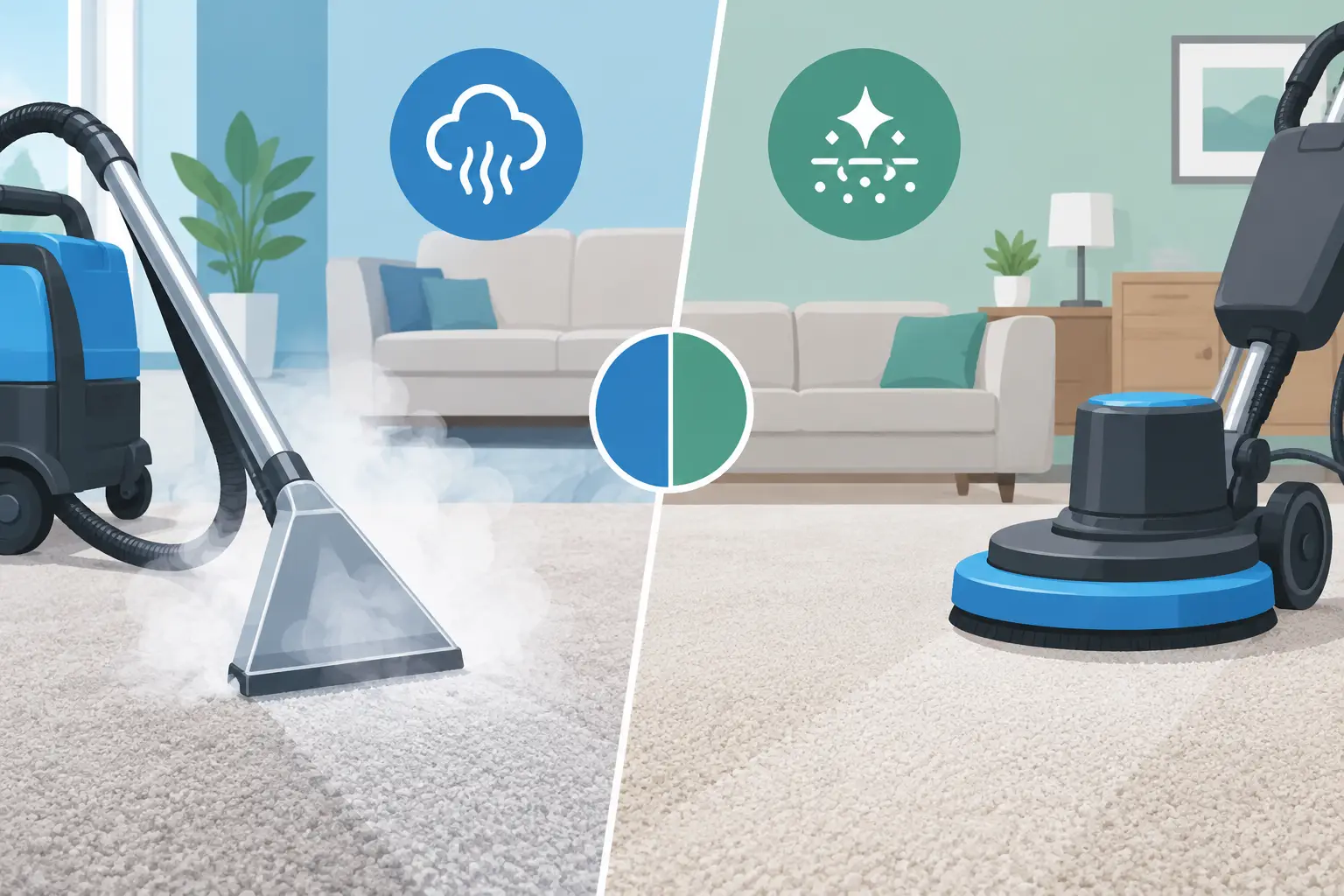
Steam Carpet Cleaning Versus Dry Cleaning at a Glance
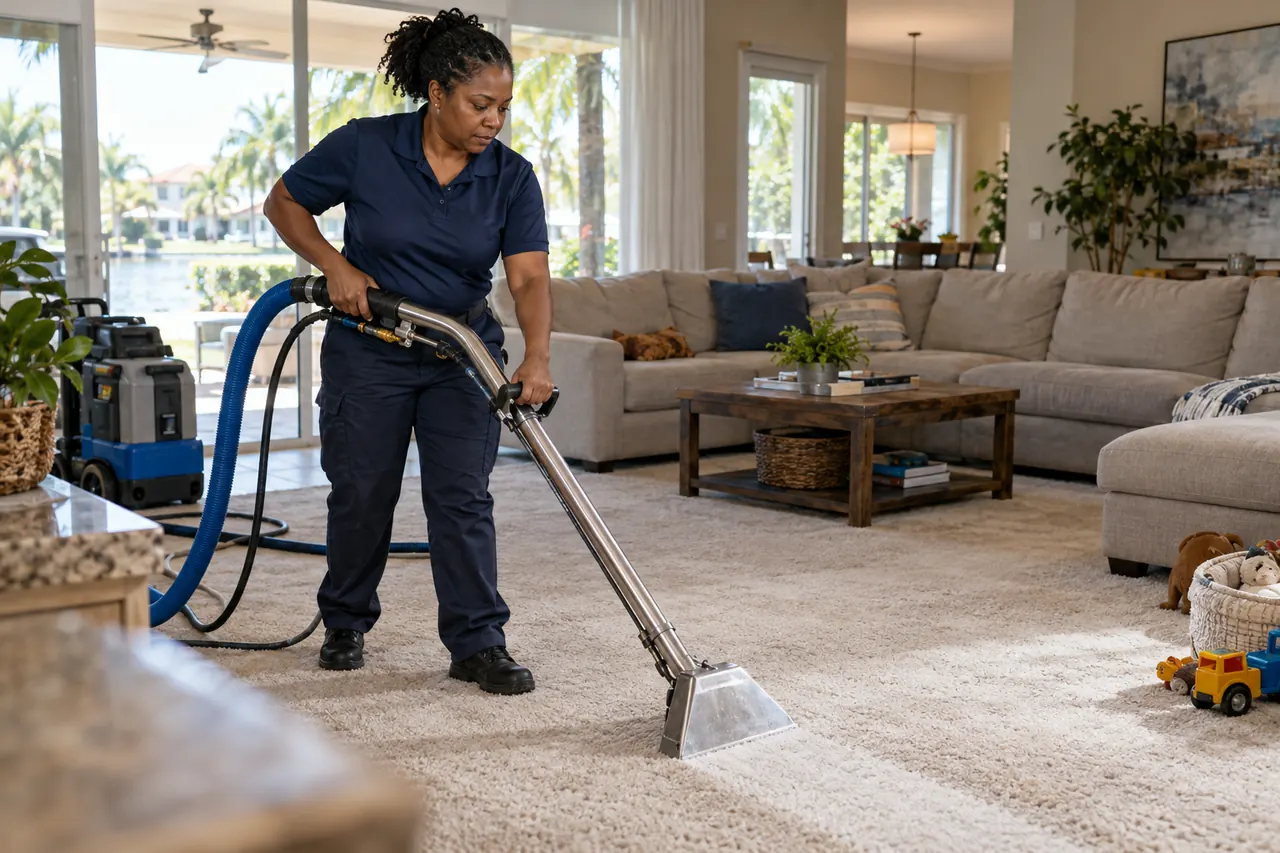
Steam carpet cleaning usually refers to hot water extraction. A technician applies a measured cleaning solution, agitates problem areas when needed, then uses powerful extraction equipment to rinse out loosened soil, residue, and moisture. Despite the name, it is not usually a cloud of steam pushed into the carpet. It is a controlled hot-water cleaning process with suction.
Dry carpet cleaning uses very little water. Depending on the system, a technician may apply absorbent cleaning compounds, encapsulation products, or a low-moisture solution that dries into crystals and is vacuumed away. The carpet can often be walked on much sooner.
Neither approach is automatically better in every situation. Dry cleaning has a real advantage when a business needs a hallway, office, or guest area back in service quickly. Hot water extraction is often the stronger choice when carpets have visible traffic lanes, embedded dirt, old spills, pet odors, or a heavy buildup that regular vacuuming cannot reach.
When Steam Cleaning Is the Better Choice
Steam cleaning is designed for carpets that need more than a surface refresh. It can flush out a substantial amount of the soil trapped deep in the pile, especially in family rooms, bedrooms, rental turnovers, and commercial spaces with steady foot traffic.
It is often a good fit after children, pets, entertaining, rainy-day foot traffic, or months of normal daily use. If the carpet feels stiff, looks darker near walkways, or gives off an odor that returns after vacuuming, deeper extraction may be the more useful solution.
The biggest benefit is the rinse. A careful technician does not just spread cleaning product through the carpet. They work to remove the loosened dirt and cleaning solution afterward. That helps carpet fibers look brighter and feel softer while reducing the sticky residue that can make a carpet re-soil quickly.
Steam cleaning can also be especially helpful for spot treatment. Not every stain can be fully removed, particularly if it has set for a long time or changed the color of the fiber. Still, professional pre-treatment and extraction give coffee spills, food spots, tracked-in grime, and many pet-related accidents a much better chance of improvement than a basic rental machine or store-bought spray.
There is one trade-off: drying time. Most professionally cleaned carpets dry within several hours, but the timing can vary based on carpet thickness, humidity, airflow, soil level, and how much rinsing the carpet needs. In Fort Lauderdale and surrounding areas, air conditioning, ceiling fans, and good ventilation can make a meaningful difference.
When Dry Carpet Cleaning Makes More Sense
Dry cleaning is practical when downtime is the main concern. A small office, retail floor, hotel area, or busy household may not be able to keep a room off-limits for several hours. Low-moisture methods can make carpets ready for normal use much sooner, sometimes in as little as one to two hours.
This approach also works well for routine maintenance. If a carpet is generally clean but needs a fresher appearance before guests arrive, after a light season of use, or between deeper cleanings, dry cleaning can lift surface soil and improve the overall look without soaking the backing.
Some delicate carpet types may also require a low-moisture approach. Natural fibers, certain woven carpets, and carpets with installation concerns need to be inspected carefully before any cleaning method is chosen. Applying too much water to the wrong material can create problems such as shrinkage, color bleeding, browning, or delayed drying.
The limitation is that dry cleaning may not provide the same level of flushing for heavily soiled carpets. Absorbent compounds and encapsulation products can collect dirt effectively, but they may not be the first choice for deep pet odors, thick grease, sticky spills, or dark traffic lanes that have built up over time.
Drying Time Is More Than a Convenience Issue
Fast drying feels convenient, but it also protects the cleaning result. Carpet that remains damp for too long can develop a musty smell, particularly in warm and humid South Florida conditions. The goal is not simply to use less water. The goal is to use the right amount of moisture and remove it effectively.
With hot water extraction, proper equipment and technique matter. Over-wetting can happen when too much solution is applied, extraction is weak, or a technician rushes through the job. A professional service should inspect the carpet, adjust the process for its condition, and make enough extraction passes to leave it damp rather than soaked.
After cleaning, keep air moving through the room. Run the air conditioning, turn on ceiling fans, and avoid placing rugs or heavy furniture back on the carpet until it is fully dry. If furniture must be moved, protective tabs or blocks can help prevent wood stain or rust from transferring to damp carpet.
What About Odors, Pets, and Stubborn Stains?
For pet households, the source of the problem matters more than the cleaning label. A light surface odor may improve with either method. Urine that has soaked through the carpet into the padding needs more targeted treatment. Simply cleaning the top fibers may make the room smell better briefly without addressing what remains underneath.
A professional inspection can identify whether stains are on the surface, deep in the fibers, or affecting the backing and padding. This is also why promises to remove every stain should be treated carefully. Some spots are permanent damage caused by bleach, dye, heat, or chemical reactions. Honest service means explaining what can likely be removed, what can be improved, and what may remain visible.
For food, drinks, and everyday dirt, steam cleaning usually offers the strongest reset. For lightly soiled carpet that needs to be available quickly, dry cleaning can be a smart maintenance choice. Many properties benefit from using both methods at different times rather than relying on one approach forever.
How Often Should Carpet Be Cleaned?
A quiet adult household may need professional carpet cleaning about once a year. Homes with pets, children, frequent visitors, or allergies often benefit from service every six to nine months. Busy commercial areas may need more frequent maintenance, especially near entrances, hallways, waiting rooms, and workstations.
Waiting until the carpet looks very dirty is rarely the most cost-effective plan. Soil acts like fine grit underfoot. Over time, it can wear down fibers and leave traffic patterns that become harder to correct. Routine care helps protect the carpet's appearance and can delay the cost of replacement.
Between professional appointments, vacuum regularly and address spills promptly. Blot spills with a clean white towel rather than scrubbing them deeper into the fibers. Avoid using too much store-bought cleaner, since leftover residue can attract dirt and make a spot look worse after it dries.
Choosing the Right Method for Your Property
Start with the condition of the carpet, not the name of the method. If you need a deep clean after pets, stains, or heavy use, hot water extraction is usually the better starting point. If the carpet is lightly soiled and the room must reopen quickly, dry cleaning may be the more practical option.
A good carpet cleaning service will ask about odors, stains, fiber type, drying needs, and how the room is used before recommending a process. First Choice Floor Care takes that results-first approach because a clean carpet should do more than look better for a day. It should feel fresher, dry properly, and make the space easier to enjoy.
The best choice is the one that fits your carpet's condition and your schedule. A quick refresh has value, and so does a deep reset when daily life has left its mark. With the right method and proper care afterward, your carpet can feel like part of a renewed room again.
Unsure what your surface needs?
A clear assessment is more useful than guessing. Tell us what you’re seeing and we’ll discuss the next step.
Request an Estimate