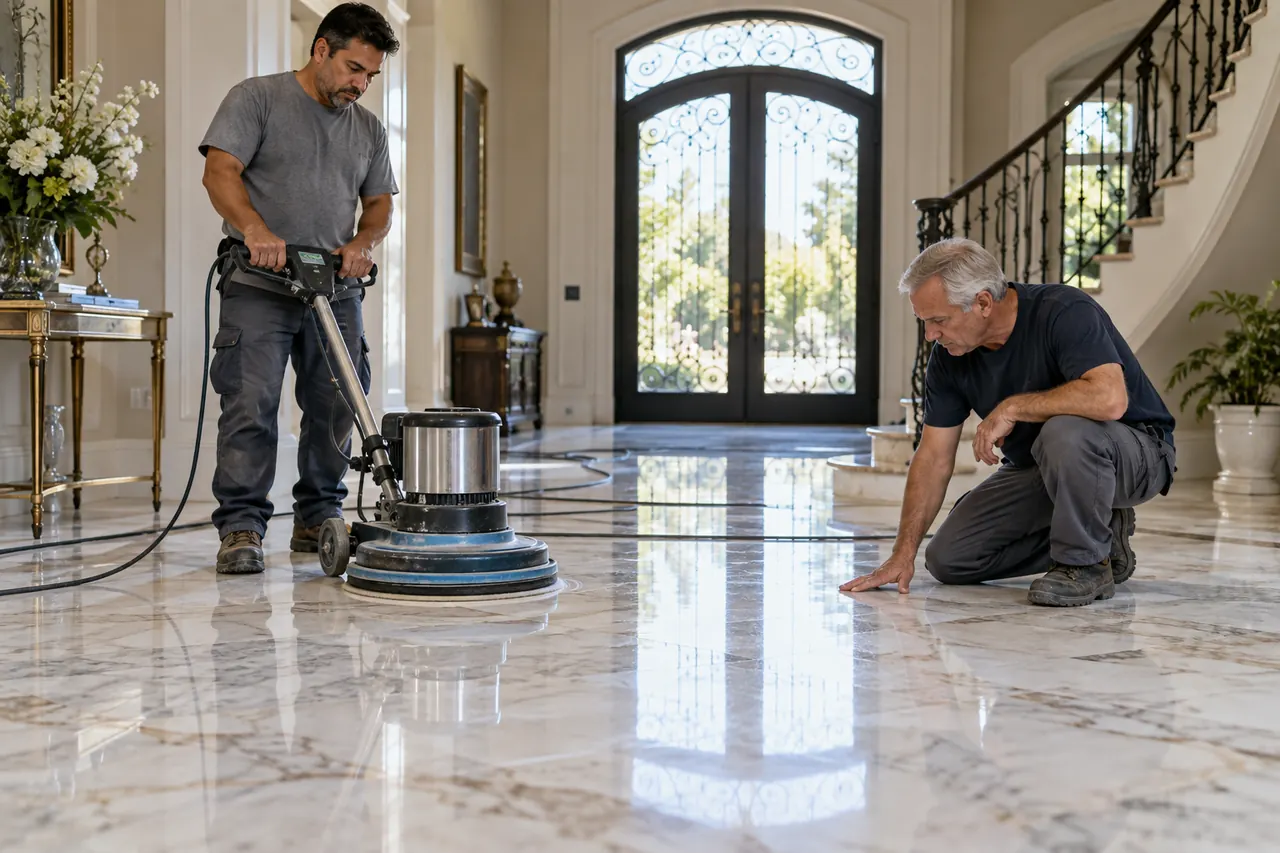
This terrazzo floor care guide explains daily cleaning, stain response, polishing, and sealing steps that keep South Florida floors clean and bright longer.
A terrazzo floor can make an entryway, lobby, kitchen, or common area feel polished before anyone says a word. But when its shine turns cloudy, the surface looks worn even when the rest of the room is clean. This terrazzo floor care guide covers the practical habits that protect your investment, reduce staining, and help you recognize when professional polishing is the better answer.
Terrazzo is durable, but it is not maintenance-free. Traditional terrazzo combines marble or stone chips with a cement or epoxy base, then is ground smooth and finished. That mix gives every floor its character, but it also means the wrong cleaner, standing water, or gritty foot traffic can slowly dull the surface.
Start With Dirt Control, Not Strong Chemicals
Most everyday terrazzo wear starts with sand, dust, and tiny bits of grit brought in on shoes, wheels, and pet paws. In South Florida, moisture and outdoor debris make this especially common. Those particles work like fine sandpaper under foot traffic, creating small scratches that scatter light and take away the floor's clean reflection.
Sweep, dust mop, or vacuum with a hard-floor setting several times a week in active areas. A vacuum with a beater bar can scratch the finish, so keep rotating brush heads off terrazzo. At entrances, use quality mats both outside and inside the door, then shake or vacuum them often. This simple step can reduce the amount of abrasive soil reaching the floor.
For homes with children, pets, or pool traffic, a quick dry mop is often more useful than waiting for a weekly deep clean. In a business, restaurants, office entrances, and hotel common areas may need attention every day. The right schedule depends on traffic, not a fixed calendar.
Use a Neutral Cleaner and a Damp Mop
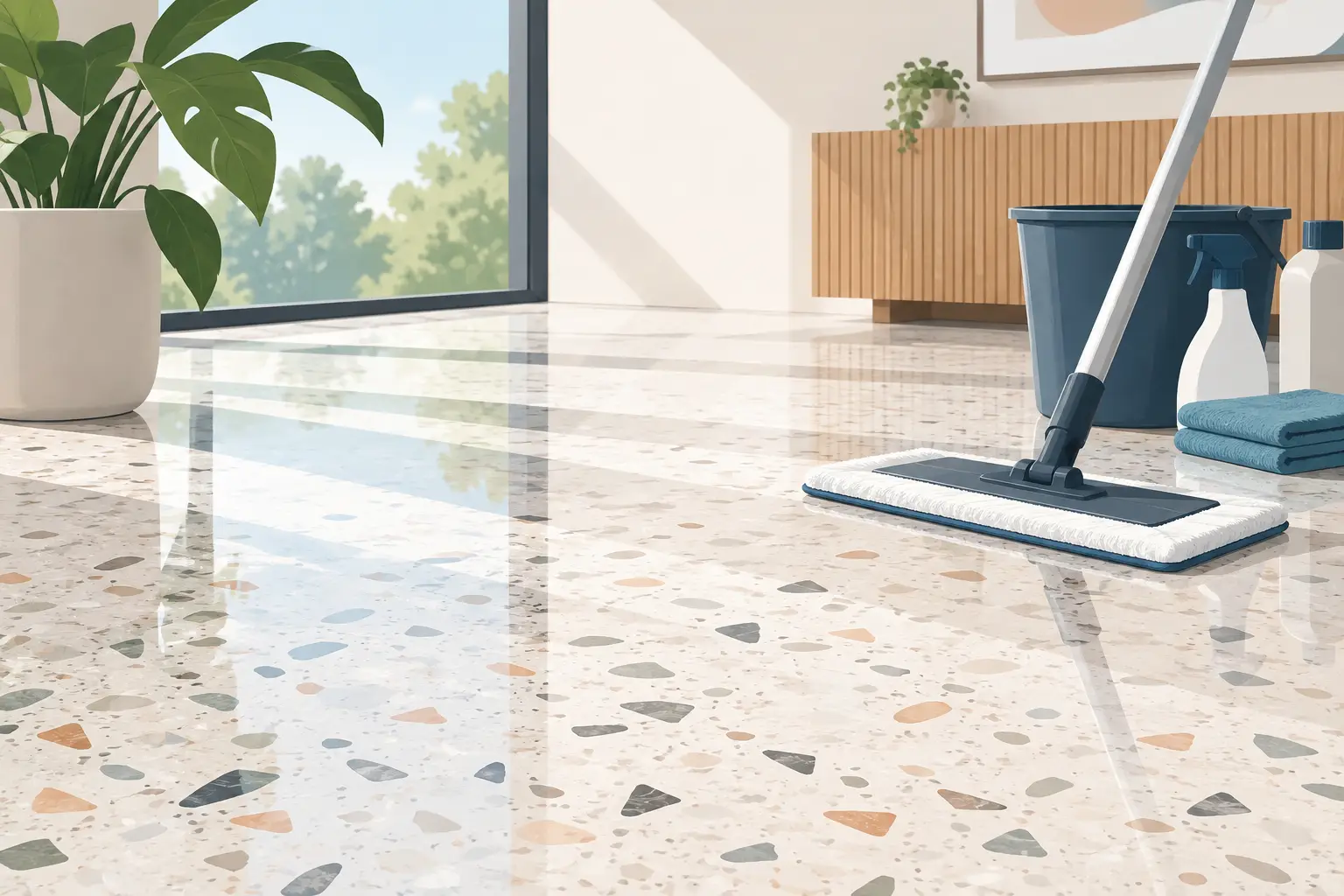
When terrazzo needs washing, less is usually more. Use a pH-neutral cleaner made for natural stone or terrazzo, diluted exactly as directed. Mop with clean water and a well-wrung microfiber mop or soft mop. The goal is to lift soil without leaving excess liquid or a sticky residue behind.
Change the water once it turns gray. Mopping repeatedly with dirty water can leave a film that makes terrazzo look hazy, especially on lighter floors. After washing, allow the surface to air dry or buff it dry with a clean microfiber pad if streaking is a concern.
Avoid soaking the floor. Cement-based terrazzo is more porous than epoxy terrazzo and can absorb moisture if its protective finish has worn down. Water that sits along edges, cracks, or low spots can also carry dirt into the surface.
Cleaners to Keep Off Terrazzo
Acidic products can etch the marble chips and damage cement-based terrazzo. That includes vinegar, lemon-based cleaners, many bathroom cleaners, and products designed to remove mineral buildup. Harsh alkaline degreasers, bleach, ammonia, and abrasive powders can also weaken a sealer or leave the finish uneven.
Skip oily soaps and wax-heavy floor products as well. They may create short-term shine, but they collect dirt and can make later restoration more difficult. If a cleaner leaves the floor slippery or streaky, stop using it rather than adding more product to cover the problem.
Deal With Spills Before They Become Stains
A quick response is one of the best ways to protect terrazzo. Blot spills with a clean white towel or paper towel, then clean the area with a neutral cleaner and dry it. Do not scrub aggressively, especially if the spill contains something gritty.
Coffee, wine, cooking oil, grease, makeup, pet accidents, and rust from metal furniture can all leave marks if they sit too long. Oil-based spills deserve extra attention because they can travel below the surface of unprotected cement terrazzo. A soft cloth and stone-safe cleaner may handle a fresh spot, but a dark or spreading stain may require professional treatment.
Avoid guessing with homemade stain remedies. A product that works on ceramic tile can permanently etch terrazzo or strip a coating. If the floor has a stubborn stain, take a clear photo and note what caused it. That information helps a surface care professional choose a safer treatment.
Know Whether Your Terrazzo Needs Polishing or Cleaning
Not every dull terrazzo floor needs replacement, and not every problem can be solved with a mop. The difference comes down to what is on the floor versus what has happened to the finish.
If the surface feels smooth but looks cloudy or dirty, deep cleaning may be enough. Built-up cleaning residue, embedded soil, and old topical products often hide the floor's natural color and shine. Professional equipment can remove that buildup more evenly than household scrubbing.
If the terrazzo has light scratches, traffic lanes, etched areas, worn shine, or uneven reflection, polishing may be the better solution. Polishing refines the surface rather than simply coating over the damage. For floors with deeper chips, cracks, or loose material, repair may need to come first.
A good inspection matters because terrazzo varies. Epoxy terrazzo, cement terrazzo, older poured floors, and terrazzo tiles can respond differently to moisture, cleaners, and restoration methods. The safest approach is based on the floor's condition, not a one-size-fits-all product.
Sealing Helps, but It Is Not a Free Pass
Sealer adds protection by helping slow down the absorption of spills and soil. It is especially valuable for cement-based terrazzo in kitchens, entryways, bathrooms, and busy commercial spaces. Still, sealing does not make a floor stain-proof or eliminate routine cleaning.
A properly sealed floor gives you more time to clean up spills before they settle in. Over time, that protection wears away from traffic, frequent washing, and abrasive dirt. How often a floor should be resealed depends on its finish, use, and cleaning routine. A quiet guest room may hold protection far longer than a busy lobby or family kitchen.
One simple sign to watch for is how water behaves on the surface. If small drops spread quickly and darken the terrazzo rather than beading briefly, the protective layer may be wearing thin. That is a good time to schedule an evaluation instead of waiting for visible staining.
A Realistic Terrazzo Floor Care Schedule
For most homes, dry dust removal several times a week and damp mopping as needed will keep terrazzo looking cared for. Clean spills immediately, particularly around food prep areas, dining spaces, bathrooms, and exterior doors. Inspect furniture pads regularly so chairs, tables, and planters do not scratch the finish.
Commercial properties need a more frequent plan because traffic changes the equation. Daily dust mopping, prompt spill response, and scheduled professional cleaning can protect the appearance of reception areas, hallways, retail spaces, and community rooms. This is often less costly than waiting until a heavily worn floor needs major restoration.
Seasonal checkups also make sense in South Florida. Rainy periods, pool use, sand, and high humidity can bring more moisture and grime indoors. A floor that looked fine a few months ago may need extra attention after a busy season.
When to Call a Terrazzo Professional
Call for help when the floor has deep discoloration, persistent haze, rough patches, cracking, chips, widespread scratching, or shine that will not return after proper cleaning. These issues are not always permanent, but they need the right equipment and process. Attempting to polish terrazzo with rental machines or aggressive pads can make uneven areas more visible.
Professional terrazzo cleaning and polishing is also a practical choice before listing a home, welcoming guests, reopening a business area, or preparing a rental between tenants. Restoring a floor can change the feel of a room without the cost and disruption of replacement.
First Choice Floor Care works with homeowners and businesses that want straightforward answers about what their floors need. An inspection can determine whether deep cleaning, polishing, sealing, or repair is the most sensible next step, with clear pricing before work begins.
Your terrazzo has already done the hard work of standing up to daily life. Give it consistent, gentle care, and address dullness early so the natural color and character of the floor can keep welcoming people in.
Unsure what your surface needs?
A clear assessment is more useful than guessing. Tell us what you’re seeing and we’ll discuss the next step.
Request an Estimate