Compare terrazzo polishing versus replacement to see when restoration can save money, brighten worn floors, and protect your South Florida home today.
A terrazzo floor can look permanently worn long before it is actually beyond repair. Dull traffic paths, dark stains, scratches, and a cloudy finish often lead property owners to consider a major renovation. But terrazzo polishing versus replacement is not always a close call. In many Fort Lauderdale homes, condos, hotels, and commercial spaces, professional restoration can bring back the floor's color and shine for far less disruption than a full tear-out.
The right choice comes down to the condition below the surface, not just how tired the floor looks. A hands-on inspection can show whether your terrazzo needs skilled cleaning and polishing, localized repairs, or replacement because of deeper structural damage.
Terrazzo Polishing Versus Replacement: The Real Difference
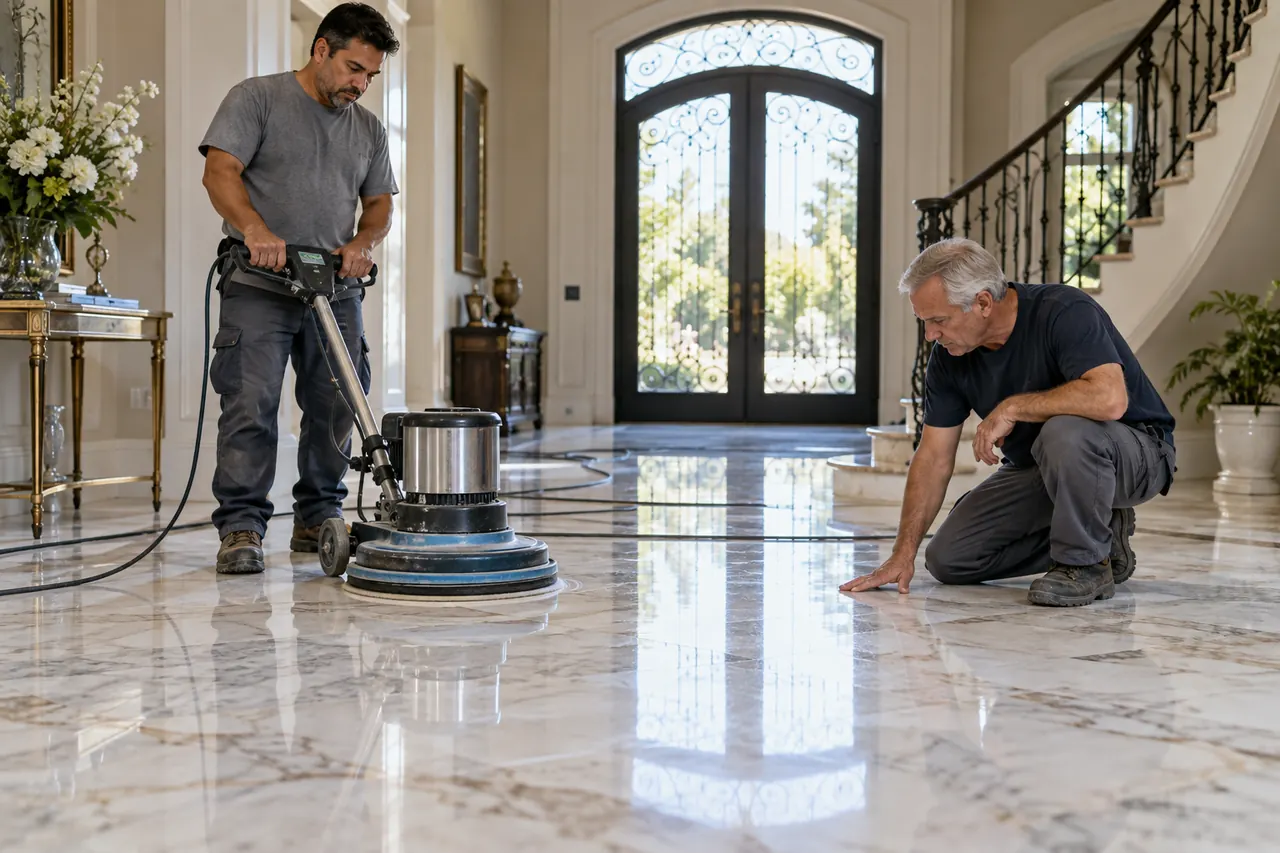
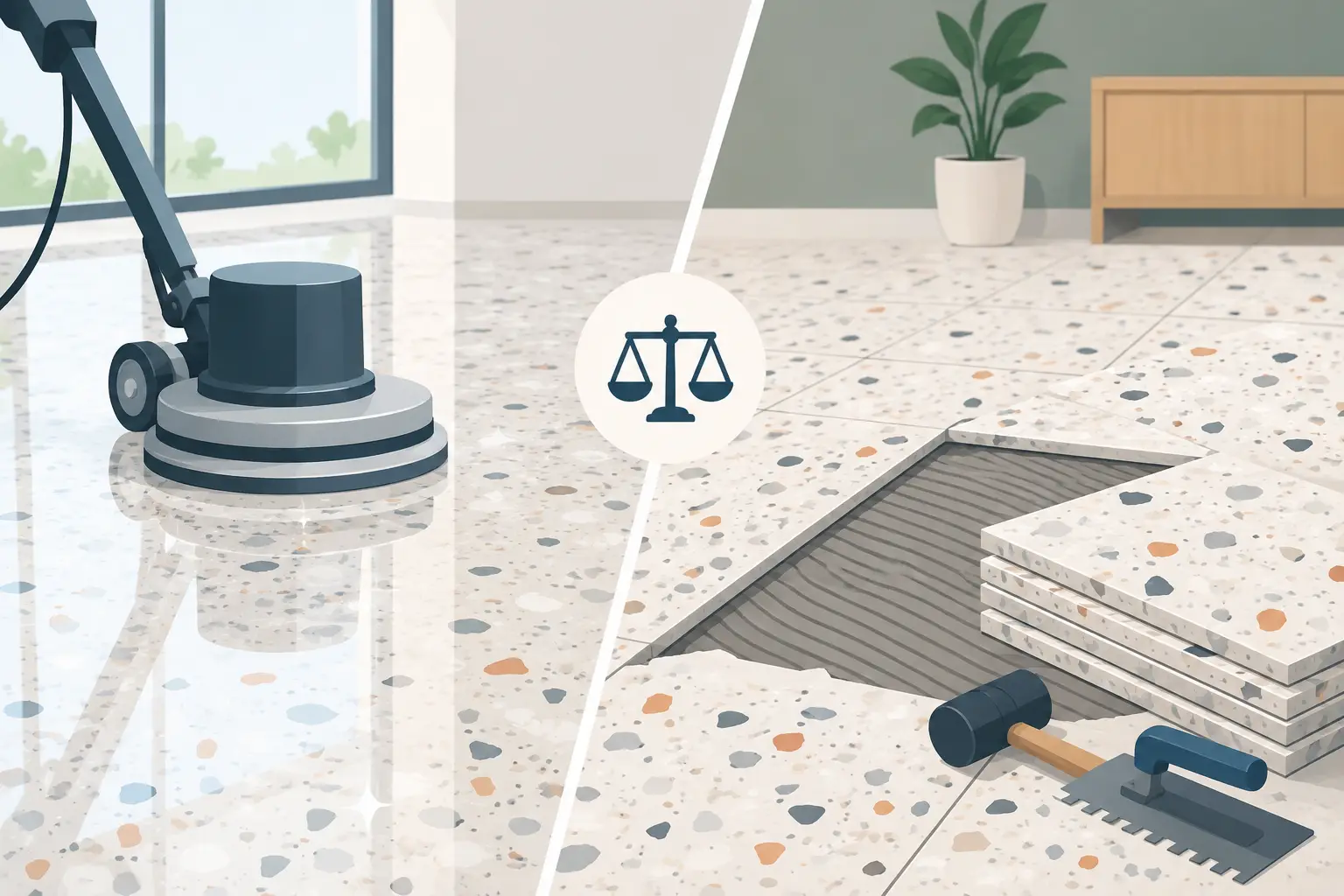
Polishing restores the terrazzo that is already in place. A professional starts by assessing the floor, addressing suitable cracks or small holes, and using diamond abrasives to remove surface wear. The floor is then refined through progressively smoother polishing steps until the aggregate and matrix look clearer, cleaner, and more even. Depending on the floor and its use, sealing or a protective treatment may follow.
Replacement means removing the existing terrazzo and installing a new floor system. That process can involve demolition, disposal, subfloor preparation, moisture testing, repairs to the concrete slab, installation, curing, grinding, and finishing. It may also require moving furniture, closing off work areas, and coordinating other trades.
The visual difference between a polished original floor and a new one can be dramatic, but so is the difference in time, cost, and inconvenience. If the terrazzo is fundamentally sound, preserving it is usually the more practical place to start.
When Polishing Is Usually the Better Value
Terrazzo is known for its long service life. It can handle plenty of daily activity, but it still loses its finish over time. Sand tracked in from outside, furniture movement, cleaning products, spills, foot traffic, and routine mopping can leave the surface looking flat. In a busy lobby or family room, the walkways may become noticeably duller than the areas around them.
Polishing is often a good solution when the problems are mainly cosmetic. This includes a hazy appearance, fine scratches, worn shine, surface-level discoloration, old wax or coating buildup, and uneven-looking traffic lanes. Floors that look dirty even after mopping may also be hiding embedded soil or residue that proper restoration can remove.
A professionally polished terrazzo floor offers benefits that matter to homeowners and managers alike: the original materials stay in place, the room often looks brighter, and regular maintenance becomes easier once the surface is clean and properly protected. There is also no need to select a new flooring style or try to match an existing terrazzo design that may be difficult to reproduce.
For a property preparing for guests, tenants, showings, or reopening after a refresh, polishing can provide a noticeable before-and-after result without turning the space into a demolition zone.
Polishing is not just cleaning
A standard cleaning can improve surface dirt, but it will not remove scratches or correct a finish that has worn down. Likewise, a topical shine product may make a floor look better temporarily while covering up the underlying problem. If the coating wears unevenly, it can leave the terrazzo looking patchy, cloudy, or harder to clean.
True terrazzo polishing works on the surface itself. The goal is not to create a quick artificial gloss. It is to refine the terrazzo so its natural color and aggregate can show more clearly. That is why the right equipment, abrasive sequence, and experience matter.
Signs Replacement May Be Necessary
Replacement is the bigger project, but there are situations where it makes sense. A floor with widespread cracks caused by slab movement, major sections that are loose or separating, extensive moisture damage, or large missing areas may not be a strong candidate for polishing alone.
Deep damage also matters. A small chip or hairline crack can sometimes be filled and blended as part of restoration. But if cracks run across multiple rooms, continue to open, or indicate movement in the substrate, cosmetic repairs may not last. The underlying issue needs attention before putting money into the final finish.
Replacement may also be worth considering when a renovation calls for a completely different layout, floor height, design, or material. For example, a commercial property changing its use may need flooring with specific slip-resistance, drainage, or access requirements. In that case, restoring an existing terrazzo floor may not meet the larger project goals.
The key is to avoid replacing terrazzo simply because it looks old. Age is not the same as failure. Some of the most attractive terrazzo floors in South Florida are decades old and respond very well to professional restoration.
Compare the Cost Beyond the Initial Quote
It is reasonable to focus on the price, especially when managing a home improvement budget or a commercial property. Still, the lowest starting number does not always show the full cost of each option.
Polishing typically involves less labor, less material, and less disposal than replacing a floor. It also avoids the expense of demolition and can reduce the need for follow-up work around baseboards, doors, cabinetry, and transitions. If the floor can be restored, those avoided costs can make a meaningful difference.
Replacement has its place, but the quoted installation price may not include every related expense. Moving furniture, removing old material, correcting the slab, handling dust containment, repairing surrounding finishes, and losing access to a room or business area all affect the total project. For hospitality and retail properties, downtime can be one of the biggest costs of all.
A fair comparison starts with an inspection and a clear scope of work. Ask what condition issues are present, whether repairs are included, what finish is expected, how long the area will be unavailable, and what maintenance will help the result last. A photo can be useful for a fast initial estimate, but an on-site look is best for identifying cracks, hollow spots, and moisture concerns.
What to Expect From Professional Terrazzo Restoration
A quality service should begin with an honest assessment, not a promise that every floor can be made perfect. Older terrazzo may have permanent stains, prior repairs, or color variations that remain visible even after polishing. A skilled technician should explain those limits before work begins.
The restoration process is tailored to the floor. Heavily soiled terrazzo may need deep cleaning before the polishing stages. Small cracks and chips may be repaired where appropriate. The surface is then honed and polished to reduce wear and improve clarity. Final protection can help resist soil and make everyday cleaning easier, especially in entryways, kitchens, hallways, and commercial areas.
At First Choice Floor Care, the focus is on helping customers make the sensible choice for their floor, not pushing a replacement project when restoration can do the job. The goal is a cleaner, brighter surface and a process that respects your property, schedule, and budget.
Maintenance helps protect the investment
After restoration, simple habits make a real difference. Use walk-off mats at entrances, clean spills promptly, avoid harsh acidic or abrasive cleaners, and use felt pads beneath furniture that moves. For commercial spaces, regular professional maintenance can prevent traffic lanes from becoming deeply worn again.
Terrazzo does not need to be treated like a fragile floor. It simply needs the right care. A gentle neutral cleaner, clean mop water, and routine removal of grit will do more for the finish than heavy products that leave residue behind.
A Practical Way to Make the Decision
Start with the question of whether the terrazzo is sound. If it is stable, mostly intact, and suffering from a dull finish or surface wear, polishing is usually the first option worth exploring. If there are broad areas of failure, persistent moisture problems, or structural cracks, replacement or more extensive repairs may be necessary.
Do not let a faded floor make the decision for you. A professional evaluation can separate surface problems from serious damage and give you a realistic idea of what your existing terrazzo can become. The right next step may be far simpler than removing a floor that still has years of life left.
Unsure what your surface needs?
A clear assessment is more useful than guessing. Tell us what you’re seeing and we’ll discuss the next step.
Request an Estimate