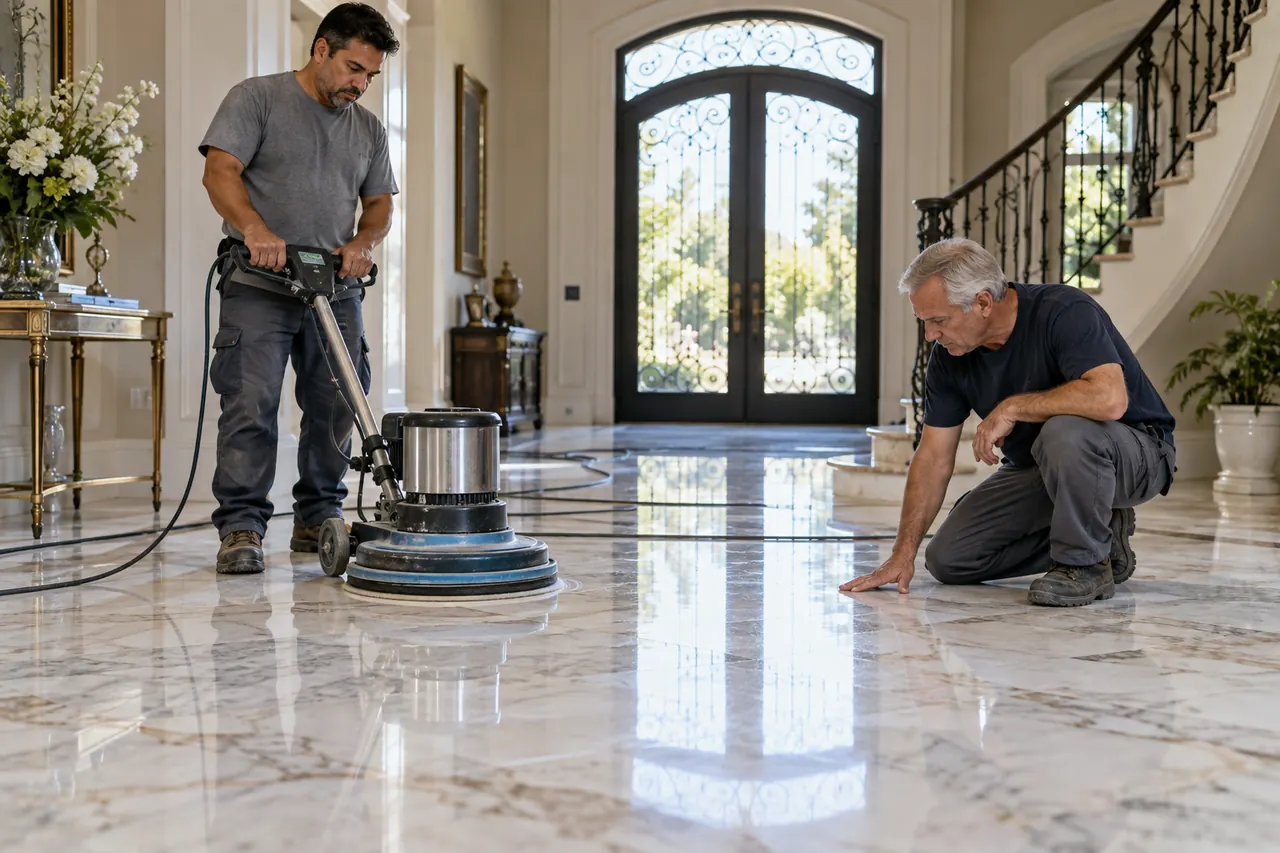

Learn when terrazzo repair can remove chips, cracks, stains, and dullness, and how professional polishing helps South Florida floors look bright again.
A terrazzo floor can look permanently worn long before it actually needs replacement. Small chips near doorways, hairline cracks, cloudy finish, and dark traffic paths can make an otherwise beautiful floor feel dated. Professional terrazzo repair addresses those problems at their source, then restores the smooth, clean finish that makes the floor feel bright again.
Terrazzo is built to last, which is one reason it remains common in South Florida homes, condos, lobbies, and commercial spaces. But lasting a long time does not mean it never needs care. Daily foot traffic, dragged furniture, dropped objects, moisture, cleaning products, and years of missed maintenance all leave their mark. The good news is that many of these issues can be corrected without the cost and disruption of replacing the floor.
What Terrazzo Repair Can Fix
Terrazzo is a composite surface made with stone, marble, glass, or other aggregate set in a cement or resin base. Its appearance comes from both the decorative chips and the smooth, polished surface around them. When that surface is damaged, a repair needs to do more than fill a hole. It needs to blend with the surrounding floor and prepare the area for proper honing and polishing.
Common repair needs include chipped edges, small holes, cracks, loose or missing aggregate, etching, stains, and areas where the finish has become dull or uneven. In a busy home, damage often appears around kitchen entries, patio doors, hallways, and dining areas. In commercial properties, it is usually most noticeable in walkways, reception areas, elevators, and entrances.
A crack does not always mean the terrazzo itself has failed. Sometimes it reflects movement in the slab beneath the floor. That distinction matters. A surface crack may be repairable and nearly disappear after color-matched filling and polishing. If there is ongoing structural movement or moisture pressure below the floor, the repair may need a more careful plan to avoid having the crack return.
Why Dull Terrazzo Is Not Always a Cleaning Problem
Many property owners try stronger cleaners when terrazzo loses its shine. That can make the situation worse. Acidic cleaners, harsh degreasers, abrasive powders, and improper stripping products can dull the finish, weaken the surface, or leave a cloudy film behind.
Sometimes the floor is simply dirty and needs deep cleaning. More often, especially in an older or heavily used floor, the shine is gone because the surface has fine scratches and worn areas that ordinary mopping cannot remove. A professional can inspect the floor and determine whether it needs cleaning, spot repair, honing, polishing, sealing, or a combination of these services.
This is where the right process saves money. Polishing a floor that still has open chips or cracks can leave the damage more noticeable. Filling a crack without addressing surrounding dullness can create a repaired spot that does not match. The best results come from treating the floor as one complete surface rather than chasing one issue at a time.
The Professional Terrazzo Repair Process
Every floor has its own condition, but a dependable repair process begins with an inspection. The technician looks at the type of terrazzo, the depth of the damage, the condition of the existing finish, and whether moisture or movement may be involved. This also helps set clear expectations about what can blend in and what may remain faintly visible.
The damaged areas are then cleaned and prepared. Loose material, old filler, embedded dirt, and weakened edges need to be removed before repairs can hold properly. For chips, holes, and some cracks, a suitable repair compound is color-matched as closely as possible to the base color and aggregate pattern of the terrazzo.
After the repair material cures, the area is leveled so it sits flush with the surrounding floor. The floor may then be honed with professional diamond equipment to reduce scratches, smooth uneven wear, and bring repaired sections into better visual balance. Polishing follows when the goal is to restore a clearer, more reflective finish.
A protective sealer may be recommended after polishing, particularly in kitchens, entryways, rental units, and commercial spaces. Sealing does not make terrazzo indestructible, but it can make routine cleaning easier and give spills less time to soak into porous areas. The right product and maintenance plan depend on whether the terrazzo is cement-based or epoxy-based, as well as how the space is used.
When Repair Is Better Than Replacement
Replacement is usually the biggest expense because it can involve demolition, dust control, subfloor work, new material, and downtime. In a condo, hotel, office, or occupied home, it can also interrupt daily life far more than people expect.
Repair and restoration are often the better choice when the floor is fundamentally sound but has cosmetic damage or surface wear. A few chips, isolated cracks, stains, and dull traffic patterns are good candidates for restoration. Even floors that look tired across an entire room can improve dramatically after deep cleaning, honing, polishing, and protection.
There are limits. If large sections are loose, the slab has significant movement, moisture damage is ongoing, or the terrazzo has been severely compromised, repair may not be the complete answer. A straightforward assessment is valuable here. It is better to understand the condition of the floor before investing in work that will not last.
Care After Terrazzo Repair and Polishing
Once a terrazzo floor has been restored, simple habits help protect the result. Use a neutral cleaner made for stone or terrazzo, rather than vinegar, bleach, acidic bathroom cleaners, or gritty powders. Sweep or vacuum regularly so sand and fine grit do not act like sandpaper under shoes and furniture.
Place mats at exterior doors, especially in high-traffic entrances where rain, dust, and grit are carried inside. Use felt pads under furniture legs, and lift heavy pieces rather than dragging them across the floor. Wipe up spills promptly, particularly oils, wine, coffee, and strongly colored foods that may stain if left sitting on a porous surface.
For commercial spaces, regular maintenance matters even more. A polished lobby floor can quickly lose its clean appearance if dirt is allowed to build up in daily traffic lanes. Scheduled professional cleaning and periodic polishing can protect the appearance of the floor while reducing the need for more extensive restoration later.
Choosing a Terrazzo Repair Service in South Florida
Terrazzo restoration is specialized work. A good provider should inspect the floor before promising a result, explain whether the issue is cleaning or actual damage, and give a clear plan for repair, polishing, and protection. Ask how chips and cracks will be filled, whether the floor will be honed before polishing, and what maintenance is recommended afterward.
It also helps to choose a local team that understands the realities of South Florida properties. Humidity, sandy foot traffic, busy rental turnover, and frequent indoor-outdoor living all affect how floors wear. First Choice Floor Care takes a practical, results-first approach to restoring hard surfaces, with careful inspection and service designed around the actual condition of the floor.
A terrazzo floor does not have to stay dull just because it has been lived on, walked on, or worked on for years. With the right repair and polishing plan, the chips, wear, and cloudy finish that catch your eye every day can give way to a cleaner surface you are happy to come home to or welcome customers across.
Unsure what your surface needs?
A clear assessment is more useful than guessing. Tell us what you’re seeing and we’ll discuss the next step.
Request an Estimate