Use this terrazzo restoration maintenance guide to clean, protect, and polish worn floors, prevent dullness, and plan professional care before damage grows.
A terrazzo floor can handle decades of family traffic, guests, rolling chairs, and busy business days, but it will eventually show the story of that use. Dull pathways, scratches, stained spots, and a cloudy finish do not always mean the floor needs replacement. This terrazzo restoration maintenance guide explains what you can safely handle between services, what can damage the surface, and when professional polishing is the practical choice.
For homeowners and property managers in South Florida, the goal is usually simple: keep a beautiful floor looking clean and cared for without making a small problem more expensive. The right routine protects both the appearance of terrazzo and the investment underneath your feet.
Know What Your Terrazzo Floor Needs
Terrazzo is made from decorative chips, often marble, glass, or stone, set in a cement or resin base. Older floors are commonly cement-based, while many newer installations use epoxy or resin. Both can look polished and smooth, but they do not always respond to cleaners, stains, and refinishing in the same way.
That difference matters. Cement terrazzo is more porous and can absorb spills if it is not properly sealed. Epoxy terrazzo is generally less porous, but it can still lose its shine from abrasive dirt, harsh chemicals, and frequent foot traffic. Before using a new cleaning product, check the installer’s guidance if it is available or test the product in a hidden corner.
A floor that looks dirty may simply have a worn finish or a buildup of old waxes and cleaners. On the other hand, a floor with deep scratches, uneven sheen, open cracks, or etched areas may need restoration rather than stronger cleaning. Using the wrong product to chase a shine can leave residue behind and make the floor look even duller.
Daily Care That Prevents Dullness
The most effective maintenance step is also the least complicated: remove grit before it gets ground into the floor. Sand, dust, pet debris, and fine dirt act like sandpaper under shoes and furniture feet. In entryways, kitchens, lobbies, and hallways, regular dry dust mopping can make a real difference.
Use a soft microfiber mop, a clean dry dust mop, or a vacuum with a hard-floor setting that will not scratch the surface. Avoid stiff rotating brushes and worn vacuum attachments. Place quality mats at exterior doors, and clean those mats often. A dirty mat stops protecting the floor and starts transferring grit right back inside.
For damp cleaning, use warm water with a pH-neutral cleaner made for stone or terrazzo. Wring the mop well so the floor is damp, not flooded. Standing water is not helpful, especially around seams, cracks, baseboards, or damaged areas where moisture can work below the surface.
After cleaning, allow the floor to dry fully. If it still feels sticky or looks hazy, the issue may be cleaner residue. Mop again with clean water and less product next time. More cleaner does not create a cleaner floor.
What Not to Use on Terrazzo
Many common household products are too aggressive for terrazzo, particularly on cement-based floors. Acidic cleaners can etch marble-based chips and weaken the finish. Harsh alkaline products can also leave the surface cloudy or strip protective coatings.
Keep vinegar, lemon-based cleaners, acidic bathroom products, bleach-heavy mixtures, ammonia, and abrasive powders away from terrazzo unless a qualified flooring professional has confirmed they are safe for your specific floor. Skip steel wool, scouring pads, and gritty scrubbers as well. They may remove a spot, but they can leave behind a larger dull patch.
Wax is another common troublemaker. Some floors receive wax in an attempt to restore shine quickly, but wax can yellow, attract dirt, and create an uneven appearance as it wears. A professionally polished terrazzo floor gets its clarity from a properly refined surface, not from a thick layer of temporary coating.
Handle Spills and Stains Quickly
Blot spills as soon as you notice them. Do not scrub aggressively, especially if the spill contains coffee, wine, cooking oil, makeup, rust, or pet accidents. Blotting lifts the spill instead of spreading it across a larger area.
Then clean the spot with a pH-neutral product and a soft cloth. Rinse lightly with clean water and dry the area. If color remains after the surface is clean, the stain may have moved into a porous area or beneath an old, worn sealer. Repeated scrubbing is rarely the answer.
Oil-based stains and rust stains often need specialized treatment. So do dark marks around planters, metal furniture, and air-conditioning areas. It depends on the source of the discoloration, the type of terrazzo, and whether the floor has been sealed. A professional inspection can prevent a stain-removal attempt from creating a bleached or etched spot that is harder to blend.
Protect High-Traffic Areas Before They Wear Down
Most terrazzo floors do not wear evenly. A hallway may look dull while the edges still shine. Restaurant entrances, condominium lobbies, retail spaces, and busy family rooms often develop visible traffic lanes long before the rest of the floor needs attention.
Use walk-off mats at entrances and felt pads beneath chairs, tables, and furniture that moves. Replace felt pads when they collect grit or become flattened. For offices and reception areas, choose chair mats that are safe for hard flooring or use soft casters designed for terrazzo.
Move furniture by lifting rather than dragging it. Heavy items can scratch or chip a polished floor, especially at corners or along groutless terrazzo seams. If you are preparing a home for guests, a showing, or a rental turnover, do not wait until the last minute to assess the floor. Polishing and sealing decisions are easier when there is time to let the surface cure properly.
When Cleaning Is Not Enough
Routine cleaning cannot remove scratches below the surface, etching, uneven wear, or years of trapped residue. Those are restoration issues. Professional terrazzo restoration generally begins with an inspection to identify the floor type, current finish, damage level, and any previous coatings.
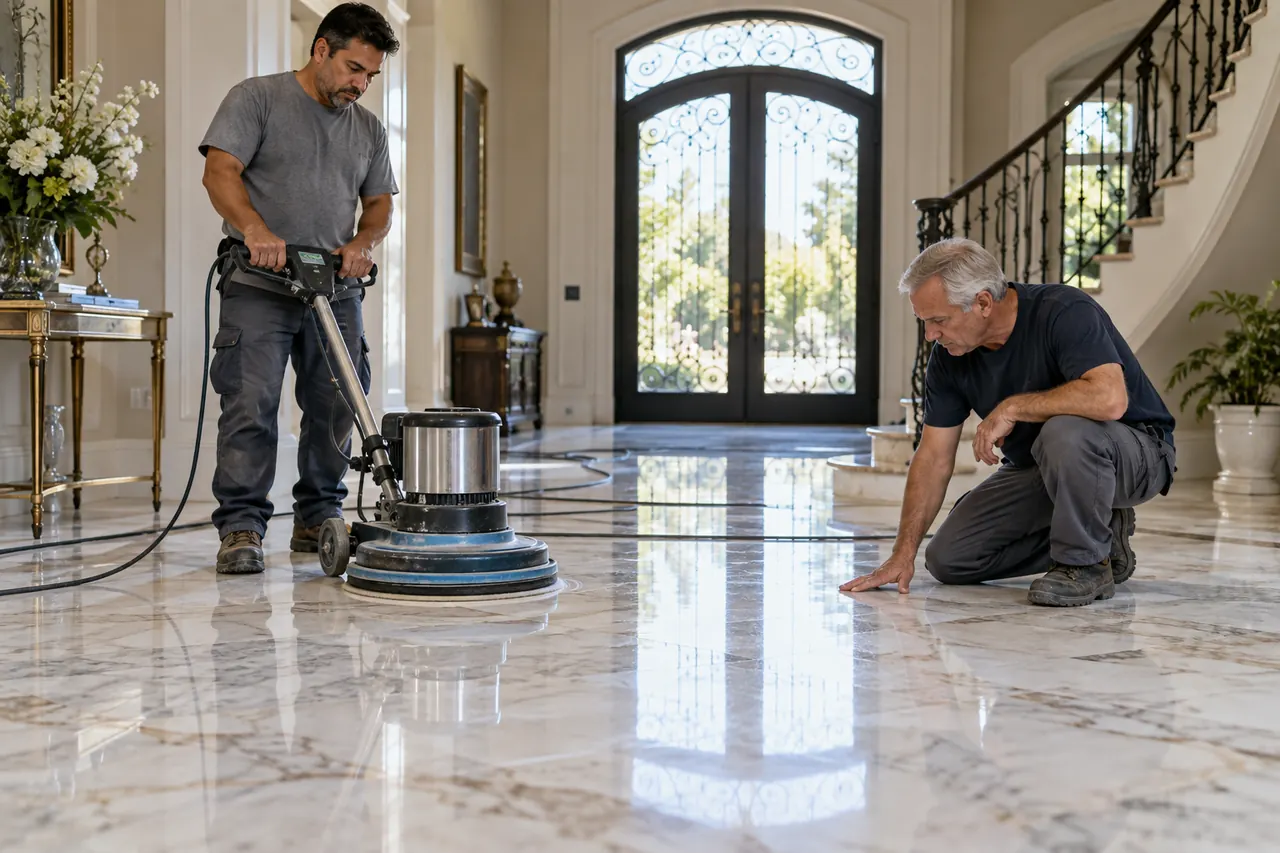
Depending on the condition, the process may include deep cleaning, coating removal, crack or chip repair, diamond honing, polishing, and sealing. Honing removes a very thin layer to reduce scratches, stains, and unevenness. Polishing then refines the surface to the appropriate sheen. Some floors look best with a natural satin finish, while others are restored to a brighter gloss.
Higher shine is not always the best answer. A glossy lobby floor can look impressive, but a satin finish may be more forgiving in a home with children, pets, or constant outdoor traffic. The right result should fit the space, the amount of maintenance you want to do, and the condition of the material.
First Choice Floor Care helps South Florida homeowners and commercial clients evaluate worn terrazzo honestly, with a focus on visible improvement and practical protection. A clear assessment should tell you whether your floor needs cleaning, polishing, sealing, repairs, or a combination of those services.
Terrazzo Restoration Maintenance Guide: Set a Simple Schedule
A consistent schedule keeps small issues from turning into major restoration work. In busy areas, dry mop or vacuum several times each week and damp mop as needed with a neutral cleaner. In quieter rooms, weekly dust removal and occasional damp cleaning may be enough.
Plan a closer inspection every few months. Look for loss of shine near doorways, sticky buildup, new chips, darkened groutless seams, or areas that seem to absorb water quickly. If clean water darkens the surface rather than beading lightly, the protective sealer may be wearing down.
Professional deep cleaning and polishing needs vary widely. A lightly used residential floor may go years between major restoration visits. A hotel corridor, restaurant, office, or high-traffic rental property may need service much sooner. Rather than following a fixed calendar, use the floor’s appearance and performance as your guide.
A Cleaner Floor Is Easier to Keep Beautiful
Terrazzo has earned its reputation for lasting beauty because it can be renewed instead of replaced. With gentle cleaning, quick spill response, and timely professional care, a worn floor can regain the clean, polished look that makes a room feel fresh again. If your terrazzo looks tired even after you mop it, that is a good time to have it assessed before everyday wear settles in deeper.
Unsure what your surface needs?
A clear assessment is more useful than guessing. Tell us what you’re seeing and we’ll discuss the next step.
Request an Estimate