Our tile and grout cleaning guide explains safe cleaning, stain removal, sealing, and when professional service can restore tired South Florida floors well.
A floor can look clean from across the room and still feel worn once you get close. Dark grout lines, sticky residue near the kitchen, dull tile by the entryway, and mildew around a shower all build up through normal daily life. This tile and grout cleaning guide helps you clean more effectively without damaging the finish or wasting a Saturday on products that never quite work.
The goal is not to make every grout line look brand new with one quick scrub. It is to remove the soil that has settled into the surface, use the right method for your tile type, and protect the floor so it stays easier to maintain. For many homes and businesses in South Florida, humidity, sand, pets, and heavy foot traffic make that routine matter even more.
Start by Identifying Your Tile and Grout
Not every hard floor should be cleaned the same way. Ceramic and porcelain tile are generally durable and handle routine wet cleaning well. Natural stone, including marble, travertine, limestone, and terrazzo, needs more care because acidic or abrasive cleaners can dull, etch, or scratch the surface.
Grout also varies. Cement-based grout is porous unless it has been properly sealed, so it readily absorbs dirt, spills, and moisture. Epoxy grout is less absorbent and more stain resistant, but it can still collect surface film and soil. If you are unsure what material you have, use the gentlest method first and avoid strong acids, bleach-heavy products, and rough scouring pads.
A simple clue is the finish. If the tile has lost shine, feels rough, or shows light spots after cleaning, stop using the product and reassess. That is especially true with marble and other natural stone, where the wrong cleaner can create permanent damage that needs professional polishing to correct.
The Tile and Grout Cleaning Guide: A Safe Routine
Consistent maintenance does more for tile floors than occasional heavy scrubbing. Start by vacuuming or dry sweeping thoroughly. Loose sand and grit act like tiny abrasives under shoes and mop heads, gradually taking the clean look out of the floor.
Next, mop with warm water and a neutral cleaner made for your tile type. Use a clean microfiber mop rather than a sponge mop, which can push dirty water into grout joints. Change the water when it turns gray. Mopping with a bucket of dirty water often leaves a dull film behind, even when the floor initially looks better.
For regular grout care, spray a mild pH-neutral cleaner onto a small section and let it sit for a few minutes. Then gently work the grout with a nylon grout brush. Avoid wire brushes or highly abrasive scrubbers. They can wear away grout, scratch glazed tile, and create rough spots that hold even more dirt later.
Rinse the area with clean water and dry it with a towel or microfiber cloth. Drying is a small step that makes a visible difference, particularly on glossy tile. It prevents dirty rinse water from settling back into grout lines and reduces water spots.
What to Use for Common Floor Soil
Greasy kitchen buildup usually responds better to a neutral degreasing cleaner than to plain water. Soap scum in bathrooms needs a cleaner that can break down body oils and mineral residue without harming the tile. Muddy entryways often need a thorough vacuum first, followed by a controlled wet cleaning rather than repeated mopping.
For a small food or drink spill on grout, clean it as soon as possible. Blot up liquid, apply a safe cleaner, gently brush, rinse, and dry. The longer a colored spill sits on unsealed grout, the more likely it is to leave a stain behind.
Why Grout Still Looks Dirty After Mopping
Grout is lower than the surface of the tile, and its texture traps soil. A mop mostly glides over the tile itself, carrying moisture across the grout without pulling out the embedded dirt. In a busy home, the floor can also develop a combination of residue from cleaning products, body oils, pet traffic, cooking grease, and dust.
That is why grout lines may look darker even when you mop often. It does not always mean the grout has changed color permanently. Deep cleaning can remove a surprising amount of buildup and bring back a cleaner, more even appearance.
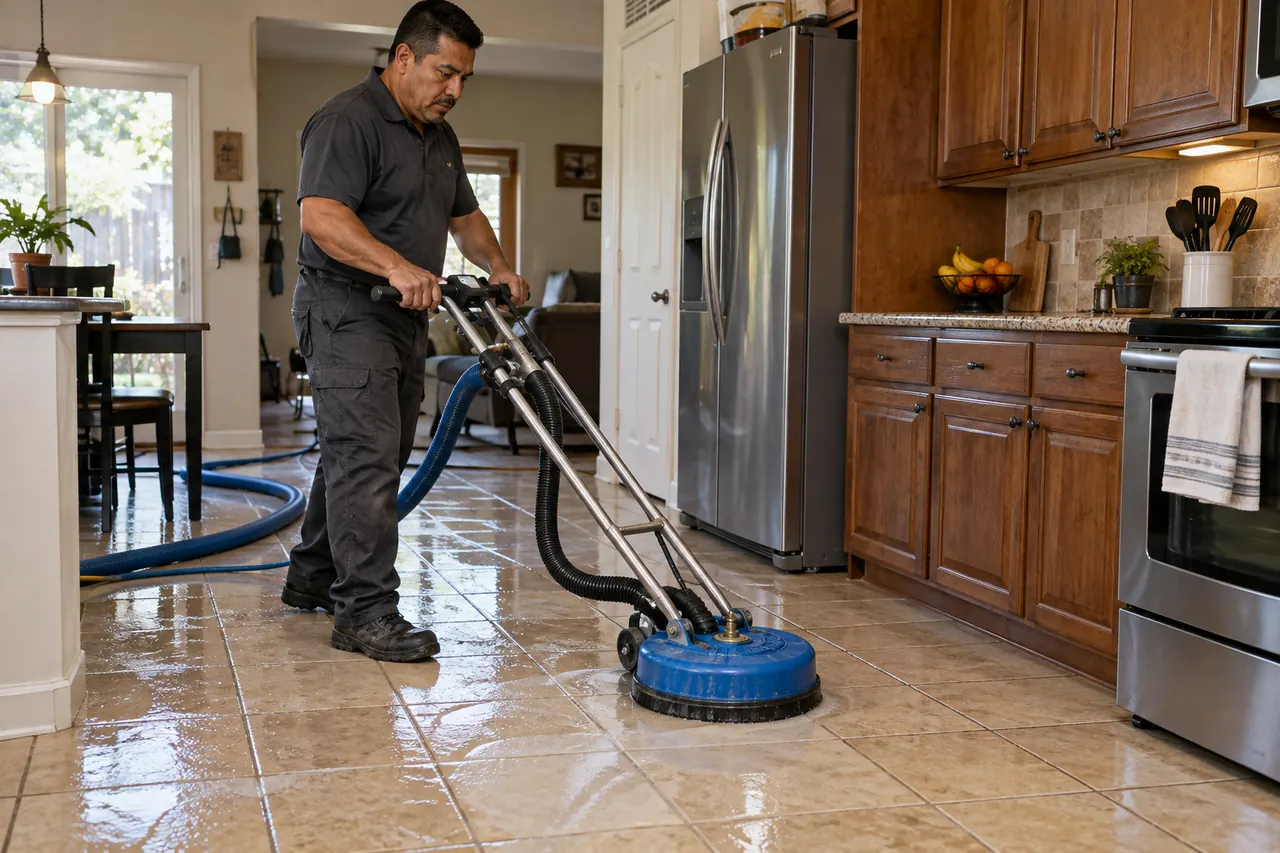
There is a limit to what do-it-yourself cleaning can fix. Old stains, mildew discoloration, damaged grout, and years of embedded soil may need professional equipment and targeted solutions. High-pressure cleaning and extraction, when performed correctly, remove loosened soil instead of spreading it around the room.
Cleaning Bathroom Tile Without Feeding Mildew
Bathrooms need a slightly different approach because moisture lingers longer. After showers, run the exhaust fan and wipe standing water from walls, floors, and shower ledges when practical. That one habit can reduce the damp conditions mildew prefers.
Use a non-acidic cleaner for routine shower tile and grout cleaning. Give it enough dwell time to work, but do not let products dry onto the tile. Brush gently, rinse fully, and dry the area as much as possible. Bleach may brighten some surface discoloration, but it does not solve every moisture issue and can be too harsh for regular use or certain materials.
If you see cracked grout, missing caulk, or recurring dark growth along joints, cleaning alone may not be enough. Moisture can be getting behind the surface. Addressing the damaged area protects both the appearance of the room and the condition of the surrounding materials.
When Sealing Makes Sense
A quality grout sealer helps slow down absorption. It is not a force field against spills, and it does not replace cleaning, but it gives you more time to wipe up messes before they settle into porous grout.
Sealing is most helpful after a deep clean, when the grout is fully dry and free of residue. Applying sealer over dirty grout can trap the problem beneath a protective layer. How often you need to reseal depends on the grout type, traffic level, cleaning routine, and whether the space is exposed to moisture. A kitchen used by a busy family and a lightly used guest bathroom will not wear the same way.
Natural stone may also need a specific penetrating sealer, but the right product and application method depend on the stone. Marble polishing and sealing are different services, so avoid treating natural stone like standard ceramic tile.
Avoid These Common Tile Cleaning Mistakes
A few well-meaning habits can leave floors looking worse over time. Avoid using vinegar or other acidic cleaners on marble, travertine, limestone, terrazzo, or unknown stone. Do not use too much soap, as residue attracts dirt and creates a cloudy appearance. Steam cleaning can be useful in the right setting, but it is not ideal for every installation, especially where grout is cracked, tiles are loose, or moisture could reach vulnerable areas.
Also resist the urge to scrub harder when a stain does not lift. More pressure is not always more effective. A better cleaner, enough dwell time, and proper extraction usually matter more than aggressive force.
When Professional Tile Cleaning Is Worth It
Professional service is often the practical choice when grout lines are dark across an entire room, the tile has become dull despite regular cleaning, or a property needs to look ready for guests, tenants, or customers. It can also save time before a move-in, after renovation work, or when you are preparing a home for sale.
A dependable technician should inspect the floor first, identify the material, explain what results are realistic, and provide clear pricing before work begins. Deep cleaning may be followed by grout sealing or surface protection when appropriate. For natural stone, restoration may involve specialized cleaning and polishing rather than standard grout cleaning methods.
At First Choice Floor Care, the focus is on visible improvement and straightforward service for homes and commercial spaces in Fort Lauderdale and nearby South Florida communities. A proper cleaning can make a room feel brighter without the expense and disruption of replacing a floor that still has plenty of life left.
Your tile does not need to be perfect to be worth caring for. A steady routine, quick attention to spills, and professional help when buildup has gone beyond surface cleaning can keep the floors under your feet cleaner, fresher, and easier to enjoy.
Unsure what your surface needs?
A clear assessment is more useful than guessing. Tell us what you’re seeing and we’ll discuss the next step.
Request an Estimate