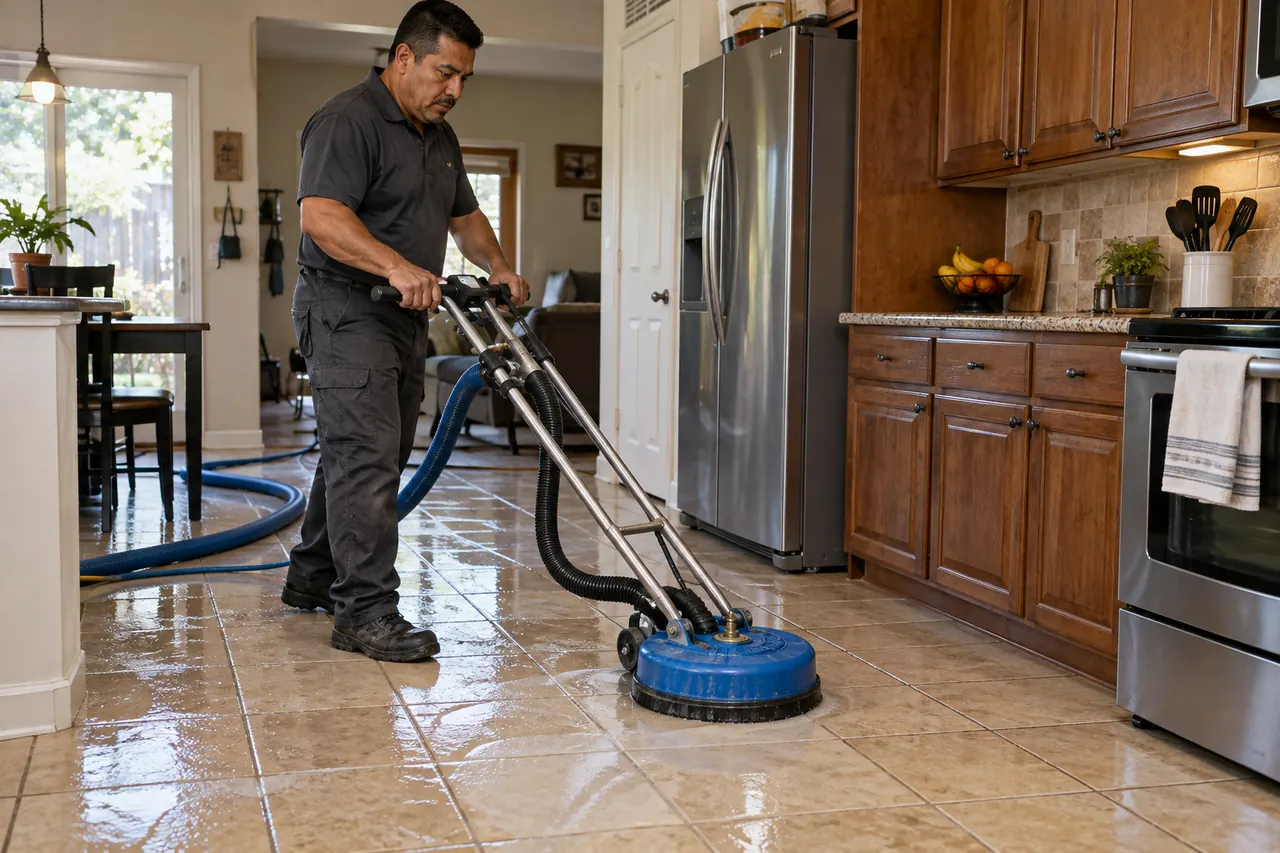
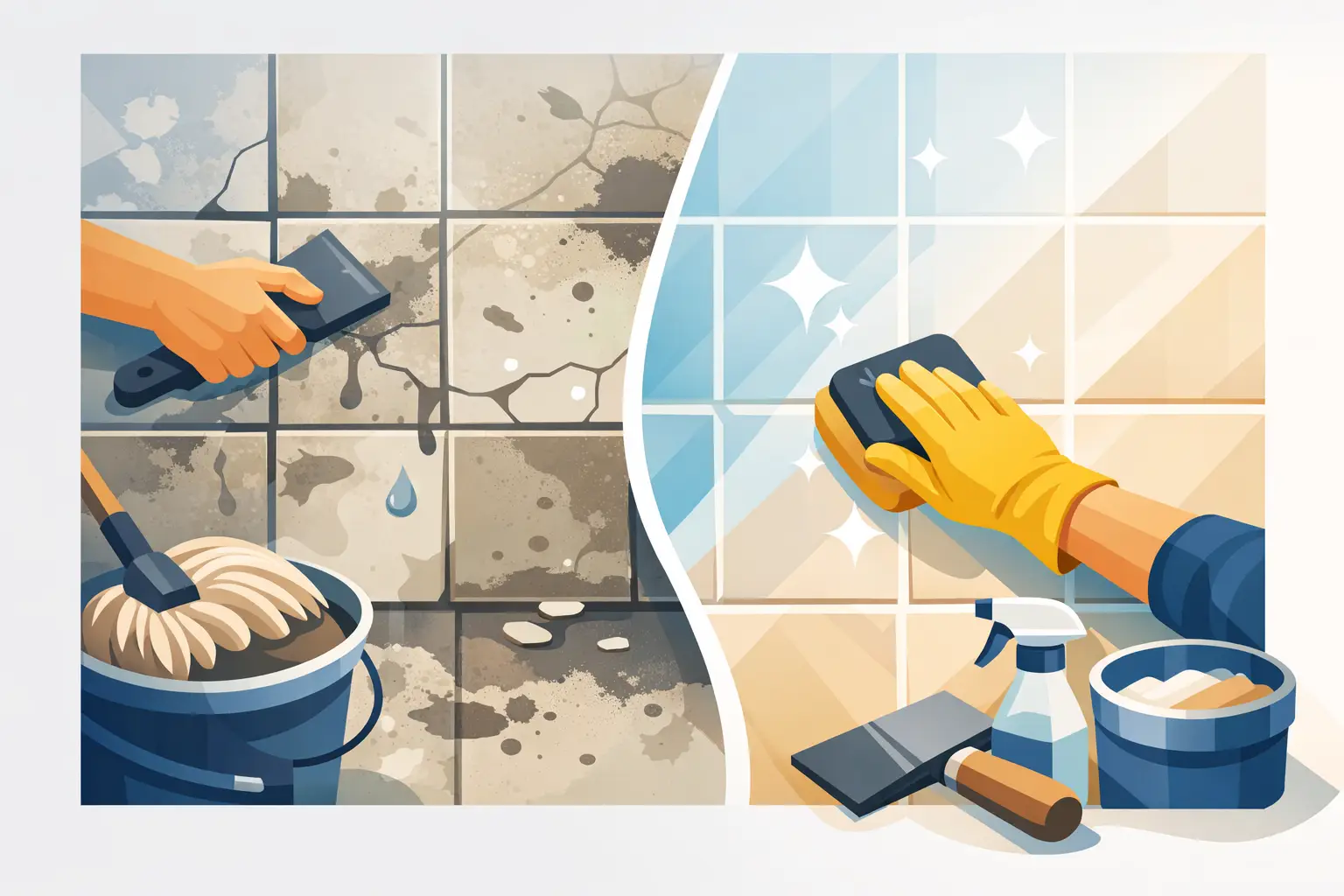
See tile restoration examples that show how deep cleaning, grout care, polishing, and sealing can refresh South Florida floors without replacement costs.
A floor can look ready for replacement when the real problem is years of soil, soap residue, hard-water minerals, or worn grout. These tile restoration examples show what professional cleaning, polishing, repairs, and sealing can realistically improve - and when a floor may need more than a deep clean.
For homeowners and business owners, restoration is often the practical middle ground between living with a tired-looking surface and paying for a full renovation. The best results come from identifying what is actually causing the discoloration or dullness before choosing a treatment.
Tile Restoration Examples From Everyday Spaces
1. Kitchen tile with dark, greasy grout lines
A common kitchen complaint is, “The tile still looks okay, but the grout makes the whole floor look dirty.” In busy family kitchens, cooking oils, crumbs, spills, and foot traffic settle into porous grout. Mopping helps the surface, but it can leave the embedded buildup behind.
Professional tile and grout cleaning uses the right solution, agitation, and extraction to pull contamination out of the grout lines rather than simply spreading it across the floor. The result is often a dramatic contrast: grout returns closer to its original color, tile edges look sharper, and the room feels cleaner before anything else changes.
If the grout is permanently stained or uneven in color, cleaning may not make every line look brand new. In that case, color sealing can create a more consistent appearance while also helping protect the grout from future spills. It is a sensible option for kitchens that get daily use and need to stay easier to maintain.
2. Bathroom tile affected by soap scum and hard water
South Florida bathrooms can develop a stubborn film from body oils, soap, shampoo, and mineral-heavy water. Shower walls may look cloudy, while bathroom floor tile can become dull and discolored around the toilet, vanity, and shower entrance.
A proper restoration starts with identifying the surface. Ceramic and porcelain tile usually tolerate professional deep cleaning well, but natural stone requires more care. Acidic products may damage marble, travertine, or limestone, leaving etching that looks like permanent water spots.
For standard tile, cleaning can remove the mineral film and built-up residue that ordinary bathroom cleaners miss. Grout restoration can also brighten the joints between tiles, where mildew and moisture leave dark marks. When the issue is damaged caulk, cracked grout, or loose tile, cleaning alone is not enough. Those areas should be repaired to help prevent moisture from reaching the material underneath.
3. A dull marble foyer that lost its shine
Not all tile restoration is about dirt. Marble floors often lose their polish because of fine scratches, acidic spills, abrasive grit, and repeated foot traffic. A foyer can look hazy even after it has been cleaned, especially near entry doors where sand and moisture are tracked in.
Marble polishing is designed for this type of wear. Depending on the condition, a technician may clean the stone first, address etching or light scratches, then polish the surface to bring back clarity and reflection. The improvement can be striking because the original stone color and pattern become easier to see again.
There is a trade-off: polishing is not a one-time fix if daily habits continue to scratch or etch the floor. Entry mats, prompt spill cleanup, and stone-safe maintenance products help preserve the finish. For a heavily damaged floor, honing may be needed before polishing, which is more involved but can produce a more even result.
4. Porcelain tile in a rental between tenants
Property managers often face a difficult decision after a tenant moves out. The porcelain tile may be intact, but the grout has dark traffic lanes, stains around appliances, and a general gray cast that makes the unit feel less cared for.
This is one of the strongest examples of restoration delivering value quickly. Deep cleaning can remove the soil left behind by everyday living, while grout cleaning improves the visual definition of the floor. The unit may not need new flooring at all. It may simply need the existing surface brought back to a clean, presentable condition.
For rental properties, sealing grout after cleaning can be worth considering, particularly in kitchens, bathrooms, and entryways. It does not make grout maintenance-free, but it gives spills less opportunity to soak in and can make turnover cleaning more manageable later.
5. Restaurant or lobby tile with worn traffic paths
Commercial tile faces a different kind of wear. Restaurant entrances, hotel corridors, retail spaces, and office lobbies collect fine grit, moisture, food residue, and scuff marks every day. The floor can look dull in a narrow path where customers walk most often, even though the surrounding tile still has color and shine.
Restoration may involve deep cleaning, removal of residue from incorrect maintenance products, and polishing when the material allows it. Commercial work also requires practical timing. A business may need service performed around opening hours, with enough drying time to return the space to use safely.
The goal is not only a cleaner floor. It is a space that looks cared for when clients, guests, and employees walk in. For hospitality and retail properties, that first visual impression matters. Regular maintenance after the restoration can also help avoid the need for more aggressive work later.
6. Outdoor patio tile with embedded grime
Patio tile can become discolored from rain, landscaping debris, sunscreen, mildew, and pool-area traffic. In some cases, the tile itself is in good condition, but dirt settles into textured surfaces and grout joints, making the patio look older than it is.
The restoration method depends on the tile type, drainage, surrounding surfaces, and whether there are nearby plants or pool features that need protection. A one-size-fits-all pressure wash is not always the answer. Too much pressure can damage grout, force water into weak areas, or leave uneven results on some surfaces.
A careful cleaning process can lift buildup while protecting the surrounding area. If the grout is deteriorating, repointing or repair may be necessary before sealing. The best outcome is a patio that looks refreshed without creating new maintenance problems.
What Tile Restoration Can and Cannot Fix
Tile restoration can make a major difference when the problem is embedded dirt, surface film, discoloration, dullness, minor etching, or neglected grout. It is often less expensive and far less disruptive than replacement. A restored floor also keeps the original material in place, which is especially helpful when matching discontinued tile would be difficult.
Still, honest expectations matter. Deep cracks, hollow-sounding loose tiles, water damage below the floor, severe chips, and widespread grout loss may require repair or replacement work. Likewise, a stain that has penetrated deeply into porous stone may improve without disappearing completely.
An inspection is the best place to start. A professional should look at the material, the condition of the grout, the type of staining, and the amount of wear before recommending a service. Clear advice protects the customer from paying for a cleaning that cannot solve a structural problem.
How to Help Restored Tile Stay Cleaner
Once a floor has been restored, daily care becomes much easier. Sweep or vacuum grit before mopping, especially near doors and in high-traffic areas. Use a cleaner made for the floor type, and avoid harsh acids or heavy soap products that leave dull residue behind.
For natural stone, use stone-safe products and wipe up citrus, wine, vinegar, and other acidic spills promptly. For ceramic or porcelain tile, focus on keeping grout lines clean and addressing spills before they settle in. Periodic professional cleaning is useful when routine mopping no longer brings back the fresh appearance you expect.
At First Choice Floor Care, the focus is on practical results: inspect the floor, treat the source of the problem, and recommend protection when it makes sense for the space. Whether it is a family kitchen, a rental unit, or a busy commercial entry, a well-restored tile floor can make the entire room feel cleaner, brighter, and ready to enjoy again.
Unsure what your surface needs?
A clear assessment is more useful than guessing. Tell us what you’re seeing and we’ll discuss the next step.
Request an Estimate