Learn the top signs of marble etching, what causes dull spots and rings, and when professional polishing can restore your South Florida stone floors today.
A beautiful marble floor can look clean one day and strangely blotchy the next. You may notice pale rings near the kitchen counter, cloudy patches in a bathroom, or dull traffic paths that do not improve no matter how carefully you mop. These are often the top signs of marble etching - a common surface problem that can make valuable natural stone look worn before its time.
Etching is especially frustrating because it is easy to mistake for dirt, soap residue, or a stain. The difference matters. A stain has soaked into the stone and changed its color. Etching changes the surface itself, leaving it less smooth and less reflective. Knowing what you are seeing can help you avoid cleaners or home remedies that make the damage worse.
What Marble Etching Actually Looks Like
Marble contains calcium carbonate, which reacts with acids. When something acidic touches the stone, it can lightly dissolve the polished surface. The result is an etched area that scatters light differently from the surrounding marble.
On polished marble, etching commonly appears as a dull, hazy, or cloudy spot. It may look lighter than the rest of the stone, although on dark marble it can sometimes look slightly darker. On honed marble, which has a softer matte finish to begin with, etching can be harder to spot. Instead of a shiny dull spot, you may see a rough-looking patch, a faint change in texture, or an area that looks less even when light hits it from the side.
The key is that etching is not simply sitting on top of the marble. It is a change in the finish. Wiping it with water may make it temporarily less noticeable, but the mark returns as the surface dries.
Top Signs of Marble Etching to Watch For
Dull Rings Around Drinks, Bottles, or Toiletries
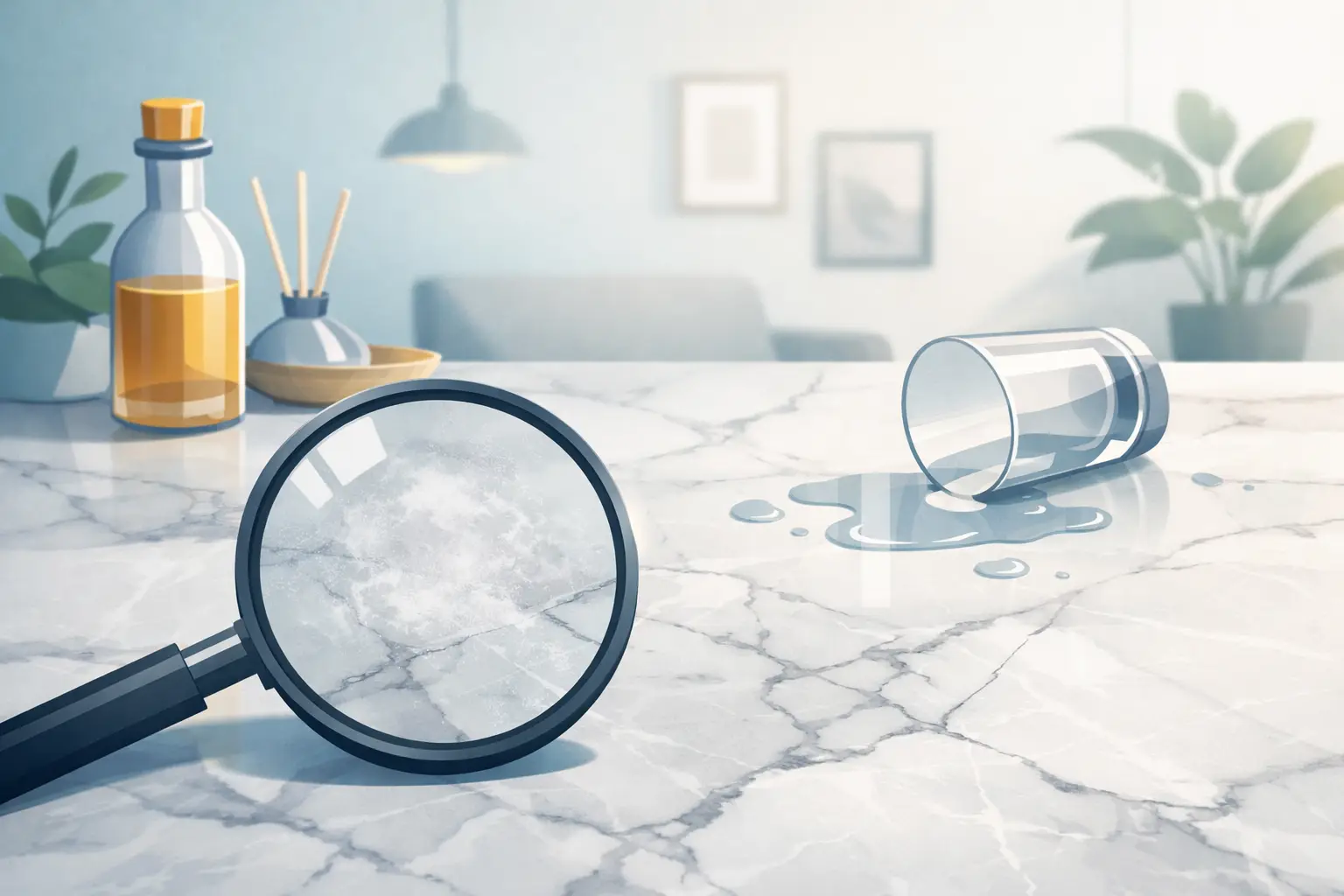
A circular mark is one of the clearest clues. Citrus drinks, wine, cocktail mixers, vinegar-based products, perfume, hair products, and some bathroom toiletries can leave rings on marble vanities, tables, and bar tops.
The ring may be subtle at first, especially in a bright room. Run your hand gently across it. If the area feels slightly less slick than the surrounding stone, it is likely etched rather than stained. Do not scrub it with a rough pad. Abrasion can expand the dull area and make the finish uneven.
Cloudy Spots That Stay After Cleaning
A clean marble floor should not look permanently cloudy in isolated areas. If a milky patch remains after normal cleaning and drying, etching is a strong possibility. This often happens near kitchen islands, bathroom sinks, or entry areas where people set down drinks, bags, wet shoes, or cleaning products.
South Florida homes can also see this issue around pool-adjacent spaces. Splashing beverages, sunscreen, acidic outdoor debris, and frequent damp foot traffic can all affect a marble surface over time. Humidity does not cause etching by itself, but it can make it easier for spills to sit unnoticed.
Drip Marks, Splash Patterns, and Small Dots
Etching does not always form a large obvious circle. A few drops of lemon juice, soda, tomato sauce, or an acidic cleaner may leave tiny dull dots or streak-like drip marks. These spots are common on marble kitchen counters and vanities, where a single product spill can dry before anyone sees it.
Look closely near faucets, soap dispensers, coffee stations, and areas where food is prepared. A pattern of small faded spots is usually more consistent with surface etching than with ordinary soil.
A Rough or Uneven Feel Under Your Hand
Polished marble normally feels smooth and cool. When etching becomes more pronounced, the affected section may feel slightly rough, draggy, or uneven under your fingertips. This is not a reason to rub the surface aggressively, but it is a useful way to compare a suspected mark with an unaffected area nearby.
Texture changes are particularly noticeable along countertop edges, shower thresholds, and high-use vanity areas. On floors, the difference may show up as a dull path that catches on socks or looks uneven from across the room.
Loss of Shine in High-Use Areas
Not every dull marble floor is etched. Daily foot traffic, embedded grit, improper cleaning products, and old coating residue can all reduce shine. Still, a loss of reflection in specific spots or pathways can be one of the top signs of marble etching, particularly when the dullness is near places where acidic spills occur.
A marble foyer may lose its shine because sand and grit have scratched it. A marble floor below a breakfast bar may be etched from frequent drink and food spills. Sometimes both issues are present. A proper inspection helps separate surface scratches, residue, wear, and etching so the right restoration method is used.
Marks That Look Better When Wet, Then Return When Dry
This is a practical clue many property owners notice. After mopping, the marble may briefly look more even. As it dries, pale rings or dull patches return. Water temporarily changes how light reflects from the surface, but it does not repair an etched finish.
If the mark disappears only while wet, avoid assuming a stronger cleaner is the answer. Acidic cleaners can create more etching, while heavy household products may leave residue that makes the surface look even more cloudy.
Etching or Staining: Why the Difference Matters
A stain usually changes the color of marble. It may appear darker from oil, makeup, or moisture, or it may take on color from coffee, wine, rust, or dye. The stone can still feel smooth because the polished surface has not necessarily been damaged.
Etching changes the shine or texture. It tends to look chalky, dull, or faded rather than deeply discolored. Of course, one spill can cause both problems. Red wine, for example, can leave color behind while its acidity also dulls the marble. In that situation, cleaning the stain alone may still leave a visible etched spot.
This is why random DIY products can be disappointing. A cleaner designed for stains may not restore the polish. A polishing powder used incorrectly may leave swirl marks or create an uneven sheen. Marble varies by color, finish, density, and condition, so there is no one product that fits every surface.
What Usually Causes Marble Etching
The most frequent causes are everyday acidic items: lemon and lime juice, vinegar, wine, soda, sports drinks, coffee, tomato-based foods, and some fruit juices. Bathroom products can also be a problem, including certain soaps, shampoos, cosmetics, toilet bowl cleaners, and descaling products.
The biggest preventable issue is using the wrong cleaner. Products labeled for general bathroom cleaning, grout cleaning, or hard-water removal may be too acidic for marble. Even natural cleaning methods, such as vinegar and lemon, are unsafe choices for calcium-based stone.
For routine care, use a cleaner made specifically for natural stone or a mild pH-neutral option recommended for marble. Wipe spills promptly with a soft cloth, then rinse and dry the area. Coasters, trays, and mats are simple protection in locations where drinks, cosmetics, or food are regularly used.
Can Etched Marble Be Restored?
Light etching on a small polished surface may sometimes be improved with the correct marble polishing product and careful technique. But this is one of those jobs where the risk depends on the stone and the finish. A do-it-yourself attempt can leave a bright spot, hazy patch, or uneven gloss that stands out more than the original damage.
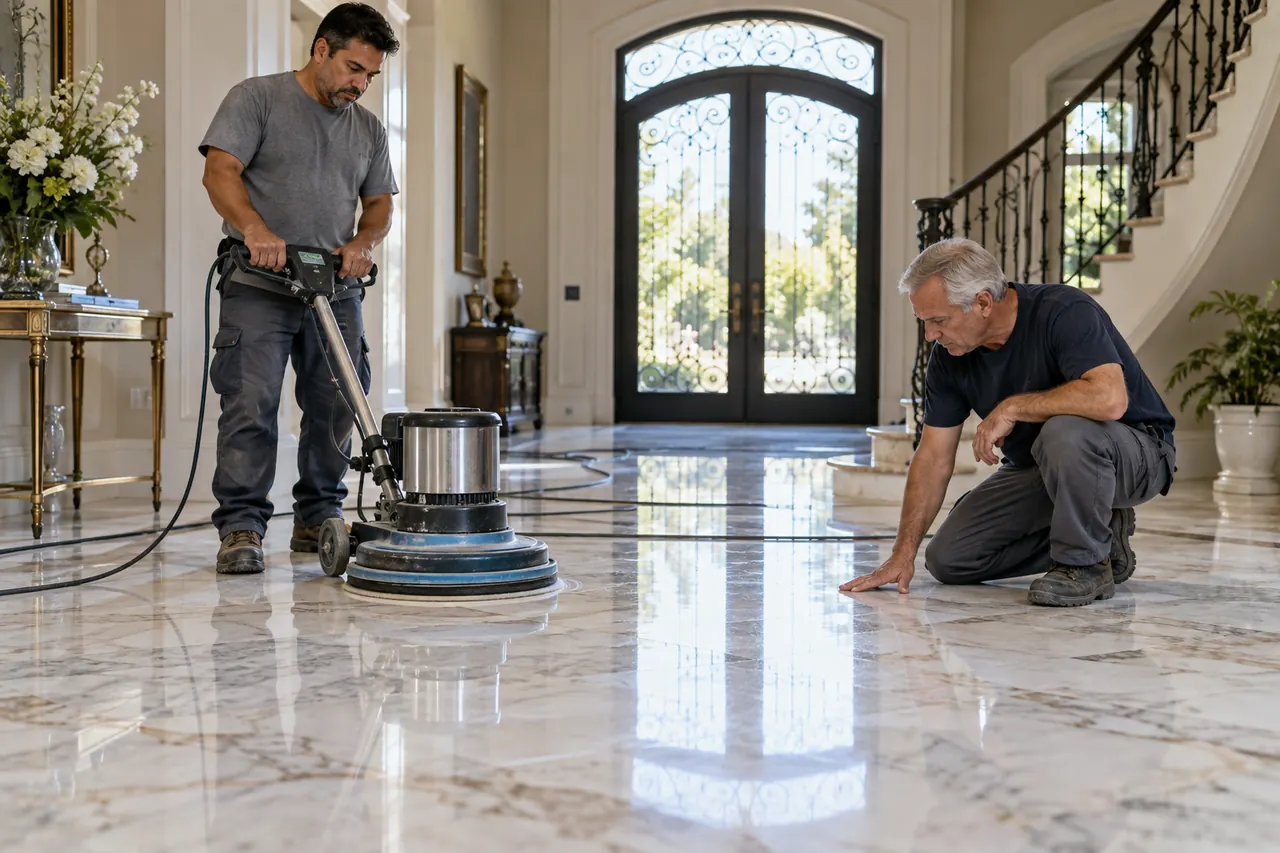
Larger floor areas, dark marble, honed finishes, deep etches, and surfaces with both scratches and etching are better handled professionally. Restoration may involve deep cleaning, honing to level the affected surface, polishing to bring back the desired reflection, and sealing when appropriate. Sealer can help reduce absorption and make cleanup easier, but it does not make marble acid-proof.
For homes, condos, restaurants, and other busy properties, professional service is often the more economical path when marble is visibly dull across multiple areas. First Choice Floor Care evaluates the condition of the stone before recommending cleaning, polishing, or protection, so the work matches what the surface actually needs.
When It Is Time to Call for Help
Consider professional marble polishing when dull spots are spreading, the floor has lost its consistent shine, marks have not responded to safe cleaning, or you are preparing a property for guests, tenants, or sale. It is also worth getting an expert opinion before using an acidic cleaner, abrasive pad, or rental machine on natural stone.
Marble is meant to be lived on, not feared. Quick spill cleanup and stone-safe cleaning go a long way, and early attention to dull rings or cloudy spots can keep a small etch from becoming the feature everyone notices in the room.
Unsure what your surface needs?
A clear assessment is more useful than guessing. Tell us what you’re seeing and we’ll discuss the next step.
Request an Estimate